
A rare pregnancy complication turned Andrea Garfield's journey into a race against time, but early detection and coordinated care at UConn Health helped deliver her daughter safely against the odds
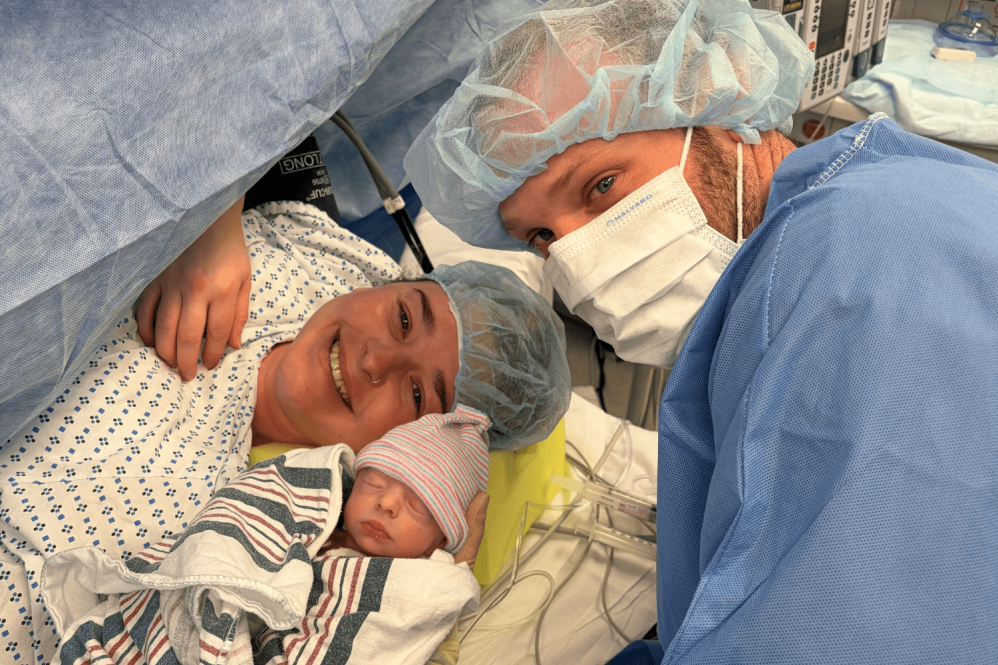
Baby Gracie with her mom and dad Andrea Garfield and Zachery Brown
For Andrea Garfield, the moment she learned she was pregnant will always be tied to another profound life event.

"I found out the day of my grandmother's funeral," she recalls. "It was very bittersweet."
At 34, Garfield entered her first pregnancy expecting a typical journey: routine appointments, growing excitement, and the milestones so often portrayed as joyful and seamless. Instead, her experience would become a powerful reminder that not all pregnancies follow a predictable path, and that early detection and expert care can make all the difference.
Because of her medical history and family background, Andrea was referred for additional monitoring at UConn Health where she underwent advanced imaging and testing with the maternal-fetal medicine team. Around 20 weeks, during a routine anatomy ultrasound, clinicians identified a rare and potentially life-threatening condition known as vasa previa, a diagnosis Garfield had never heard of before.
"I didn't know what it was," she says. "Then I looked it up, and it was terrifying."
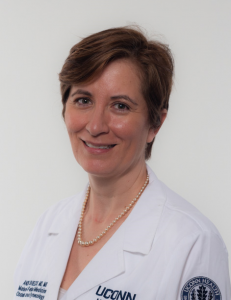
Dr. Andrea Shields, a maternal fetal medicine expert at UConn Health, explains that vasa previa occurs when fetal blood vessels run unprotected across or near the cervix.
"If those vessels rupture, the fetus can lose blood very quickly," she says. "In those cases, the mortality rate can be as high as 50%."
The condition is rare, occurring in approximately 1 in 2,500 pregnancies, and often goes undetected without careful ultrasound evaluation. In Andrea's case, it was identified early, something Shields says was critical.
"Years ago, we might not have caught this," she says. "Now, with routine anatomy scans, we're able to identify these risks and manage them. That early diagnosis changes outcomes."
Garfield's pregnancy quickly shifted into a high-risk category, requiring close monitoring and a carefully coordinated care plan. By 30 weeks, she was admitted to the hospital to ensure immediate intervention if complications arose. The reason was simple but urgent: if labor began naturally or her water broke, the exposed vessels could rupture, leaving only minutes to save her baby.
"It felt like a ticking time bomb," Garfield says. "If something happened, they would only have minutes."
Behind the scenes, her care required a highly coordinated, multidisciplinary effort. Specialists in maternal-fetal medicine, obstetrics, anesthesiology, neonatology, nursing, and surgical teams worked in close collaboration planning for every possible scenario and meeting regularly to adjust her care as her pregnancy progressed. From advanced imaging and vessel mapping to continuous fetal monitoring and delivery planning, each step reflected a level of coordination designed to anticipate risk and act quickly when needed.
"That kind of teamwork is essential in cases like this," Shields says. "It takes a coordinated, multidisciplinary approach to safely manage both the mother and the baby, especially when you're dealing with something this rare and high-risk."
The physical demands of pregnancy were matched by the emotional toll of prolonged hospitalization. Weeks in the hospital meant isolation, uncertainty, and letting go of expectations she once had. "I didn't have a baby shower. I didn't have that typical experience," she says. "Not all pregnancies are perfect and we don't talk about that enough."
The plan was to deliver her baby via scheduled cesarean section at 35 weeks. But at 32 weeks, during routine monitoring, her baby's heart rate dropped suddenly and significantly. Within moments, the plan changed.
"They told me, 'She's coming now,'" Garfield says.
What followed was an extraordinarily complex delivery. Garfield's case was even more unusual than typical vasa previa, involving multiple exposed vessels that made surgical entry particularly challenging. To prepare, Shields and the care team had performed detailed vessel mapping to determine the safest way to deliver the baby without disrupting any of the fragile blood vessels.
In a rare turn of events, Garfield's baby was delivered "en caul," still inside the intact amniotic sac, an occurrence more commonly seen in extremely premature births. "That actually helped us," Shields explains. "We were able to see the vessels clearly and open the sac safely, avoiding any rupture." The approach allowed the team to carefully navigate the complex anatomy and deliver the baby without catastrophic bleeding.
On December 22, 2025, Garfield's daughter, Gracie Claire, was born. Her middle name honors Garfield's grandmother, tying together the day her story began with the day her daughter entered the world.
Gracie spent her first month in the neonatal intensive care unit (NICU), another chapter Garfield says few people truly understand until they experience it themselves. "No one prepares you for leaving the hospital without your baby," she says. "You go home, and they stay behind."
Each day meant returning to the hospital, balancing hope with uncertainty, and answering difficult questions from well-meaning friends and family. "People ask when your baby is coming home, and you just don't know," she says. "That's really hard."
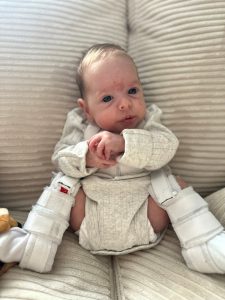
Today, Gracie is thriving. Though she continues to be treated for hip dysplasia related to her early birth, she is gaining weight and growing stronger every day. For Garfield, recovery has included not only physical healing but also processing the emotional weight of the experience.
"There was definitely some depression," she says. "It was a lot."
Shields notes that Garfield's experience reflects a broader reality for many patients facing high-risk pregnancies. "These situations can be traumatic," she says. "There can be anxiety, depression, even post-traumatic stress. That's why support systems both medical and personal are so important."
Garfield hopes her story will encourage other women to prioritize prenatal care and to understand that pregnancy does not always unfold as expected. "Go to your appointments. Get the testing if you can," she says. "It might save your baby's life."
For Shields, that message is central to modern maternal-fetal medicine. "Ultrasound is not just about seeing your baby," she says. "It's a medical exam that allows us to identify risks early and change the course of care. In cases like Garfield's, it can be lifesaving."
Garfield's journey was not the one she envisioned, marked by uncertainty, fear, and resilience. But because of early detection, advanced imaging, and coordinated care at UConn Health, it is also a story of survival and of a little girl who arrived against the odds.
"It was the hardest thing I've ever gone through," Garfield says. "But she's here and that's everything."


