
The enduring radioactive legacy of US nuclear bomb testing in the Marshall Islands took centre stage at the Human Rights Council on Thursday.
Addressing the impact of 67 known tests conducted between 1946 and 1958, UN deputy rights chief Awa Dabo said that it lives on in the bodies of Marshallese people, in "lands poisoned and communities displaced" today.
Justice must be served for the people unable to return to the atolls - or coral islands - contaminated by the detonations, Ms. Dabo insisted. she also highlighted the devastating health consequences of repeated nuclear testing, an issue highlighted this week at a high-level General Assembly meeting .
Everyone impacted
"Virtually every Marshallese family has been touched by the enduring health consequences of the nuclear testing, which include elevated rates of cancer," she said.
Marshallese women and their family members carry painful memories of miscarriages, stillbirths and severe congenital conditions.
Today, communities affected by harmful nuclear radiation face social stigma and are called "poison people", Ms. Dabo noted.
"Marshallese communities have the right to an effective remedy for the harm caused by the nuclear tests," she stressed, in a call on US authorities to declassify information about data on radiation exposure and testing records.
UN chief condemns FlyDubai attack
UN Secretary-General António Guterres has expressed deep concern over the violent incident on board a Tel Aviv-bound FlyDubai flight on Wednesday, which saw a co-pilot reportedly attempt to crash the aircraft, killing everyone on board.
The alleged attacker stabbed the pilot, causing the plane to plunge more than 17,000 feet in less than 30 seconds, according to media reports.
The flight's crew and passengers entered the cockpit, overpowered the co-pilot and the aircraft made an emergency landing in Tabuk, Saudi Arabia.
Mr. Guterres, in a statement on Thursday, said he was "relieved that tragedy was averted".
Civilian safety paramount
He strongly condemned any act that places civilians lives and the safety of civil aviation at risk.
The UN chief also expressed gratitude to authorities for ensuring the safety of all passengers and for conducting investigations.
"We will continue to monitor all developments related to this incident," the UN chief's spokesperson said.
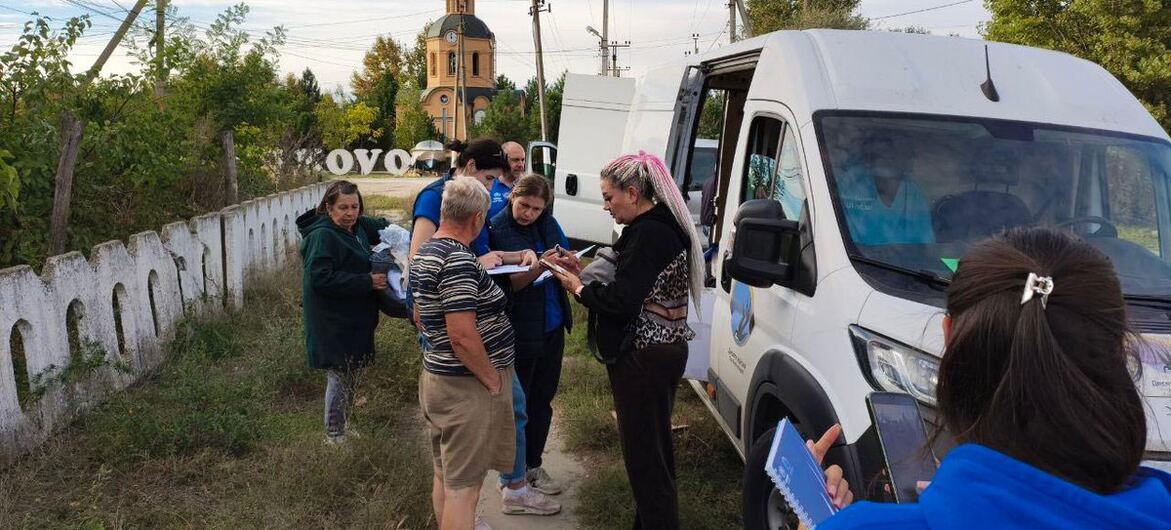
Ukraine: Winterisation efforts need to speed up
Aid teams in Ukraine say that winterisation efforts need to speed up amid ongoing Russian attacks on energy networks across the country.
In an alert on Thursday, UN humanitarians warned that last winter, millions of people went without heating, water or essential health services for prolonged periods, while temperatures remained well below freezing.
Populations in frontline and other areas that have come under attack recently face particularly severe consequences, marked by repeated displacement, damaged housing and limited resilience more than four and a half years since Russia's full-scale invasion.
Targetted attacks increasing
In an update, the UN health agency WHO highlighted the impact of increasing attacks on logistics and warehouse infrastructure, particularly those used to store food around Kyiv and other major distribution hubs.
Increasing disruption to electricity, heating, water supply and health services are also expected over the winter, it said.
In the first six months of 2026 in Ukraine, attacks killed nearly 1,400 civilians and injured almost 8,000. That's 37 per cent higher than in the same period last year.
Attacks on healthcare have also seen an alarming increase so far in 2026, with 325 recorded attacks, causing 142 injuries and 16 deaths.
West Bank: New era for breast cancer diagnosis
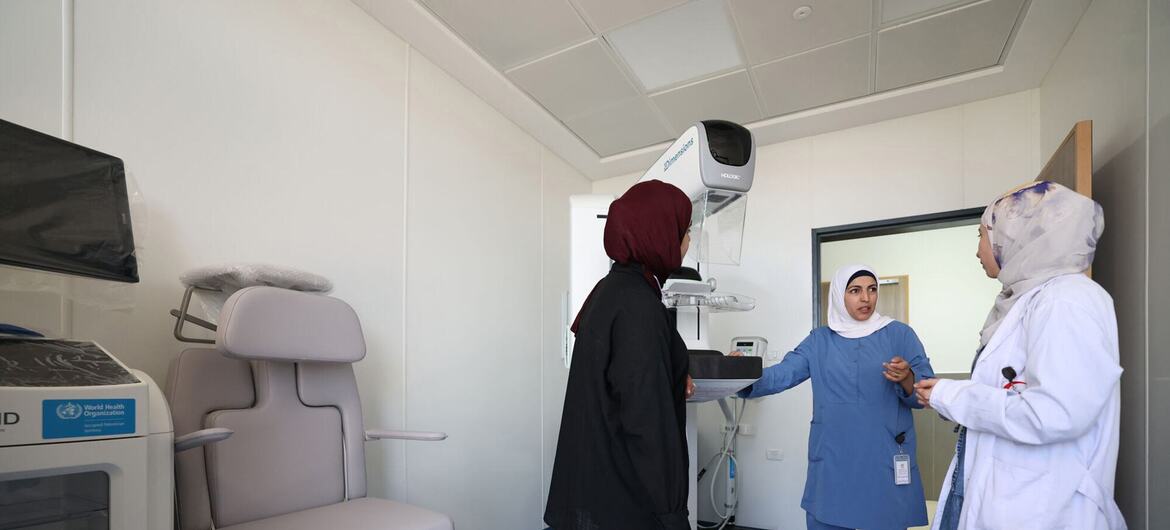
The World Health Organisation (WHO) is supporting authorities in the occupied West Bank to strengthen breast cancer services in two governates in Hebron and Jenin in the Occupied Palestinian Territory.
Through the initiative, two centres are being equipped with advanced technologies that can improve the accuracy and speed of diagnosis, including 3D digital mammography systems, specialised biopsy software, computer-aided detection tools and vacuum-assisted breast biopsy devices.
They are the first devices of their kind in these areas, representing a significant advancement in breast cancer diagnostics. Procurement has been completed for both centres.
In Dura, renovation works and equipment installation have been completed, and the centre was officially handed over in August 2026.
Investing in people
To help to ensure women receive high-quality care, a physician and an oncology nurse also completed specialised training at the King Hussein Cancer Centre in Jordan.
In Jenin, the equipment has already been delivered while renovation of the facility is ongoing, with services expected to begin in early 2027.
Beyond providing equipment, WHO is investing in the people who will care for patients every day. Twenty primary health care physicians are being trained in advanced mammography interpretation followed by specialised training for 16 radiology technicians.
Once operational, these centres will help more women to access earlier diagnosis and timely referral to treatment and reducing the need to travel long distances.


