Artificial light from major coastal cities can disrupt the nighttime biology of sharks, according to new research that provides the first-ever measurements of melatonin—a hormone tied to biological rhythms—in wild sharks.
The study, published in Science of the Total Environment, found that sharks living in brightly lit coastal waters near large urban areas had altered melatonin levels at night compared to sharks living in darker, less developed environments. The findings reveal that artificial light at night, an often-overlooked form of pollution, can influence marine predators and may have broader implications for ocean ecosystems.
Artificial light at night, or ALAN, is one of the most pervasive environmental effects of urbanization. While previous studies have shown that ALAN can suppress melatonin in bony fishes, its effects on sharks and other elasmobranchs had not been examined until now.
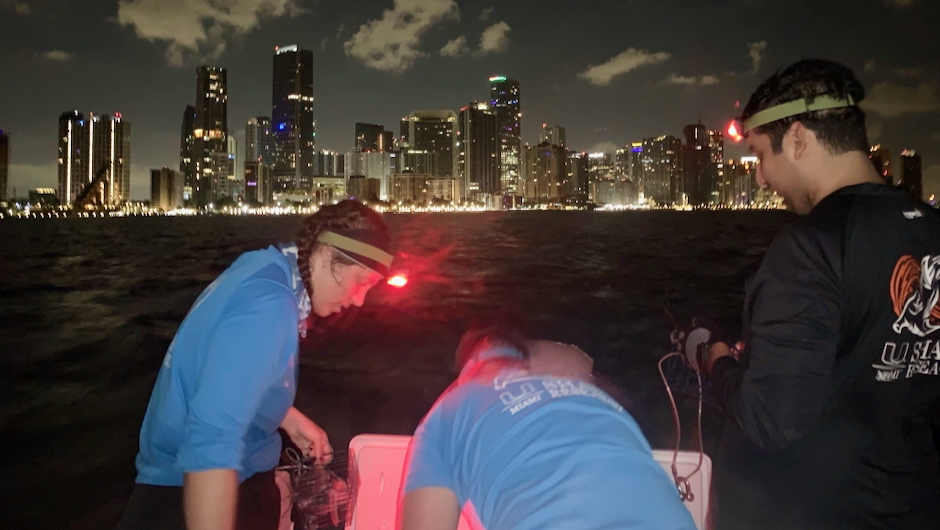
To address this gap, researchers at the Shark Research and Conservation Program at the University of Miami Rosenstiel School of Marine, Atmospheric and Earth Science conducted nighttime fieldwork off Miami, Florida—one of the most brightly lit coastal metropolitan regions in the United States—and compared sharks sampled in urban waters with individuals from nearby, darker coastal areas.
The team studied two shark species with contrasting movement patterns: nurse sharks, which are relatively less mobile and tend to remain in the same areas for long periods; and blacktip sharks, which are highly mobile and regularly move across broad coastal regions.
The results showed a clear species-specific response. Nurse sharks exposed to higher levels of artificial light at night had significantly lower melatonin concentrations than nurse sharks sampled in darker environments. In contrast, melatonin levels in blacktip sharks did not differ between brightly lit and darker areas.
"These findings suggest that exposure to artificial light at night can suppress melatonin levels in wild sharks, but vulnerability depends on behavior," said Abigail Tinari, the lead author of the study who conducted the research for her master's thesis at the Rosenstiel School. "Species that are highly resident in light-polluted areas appear more susceptible than species that regularly move between illuminated and darker habitats."
Melatonin plays an important role in regulating daily biological rhythms and is linked to overall health and physiological functioning across many animals. Disruptions to this hormone have been associated with sleep and metabolic disturbances in humans and terrestrial wildlife, but its role in sharks has remained largely unexplored.
"The first sharks started roaming the Earth's oceans more than 400 million years ago. That this study suggests sharks might respond like humans emphasizes the fundamental importance of this process, because it is highly conserved over evolutionary time," said Danielle McDonald, a co-author of the study and a professor in the Department of Marine Biology and Ecology and Director of the Glassell Family Center for Marine Biomedicine at the Rosenstiel School.
"It also reinforces concerns doctors have about LED lighting, screens, and urban light pollution as contributors to illness and chronic disease," McDonald said. "Furthermore, researchers might now look to other aspects of shark melatonin physiology to explore if there are differences in their melatonin receptors that may inform new therapies or targets for drug development for melatonin-related disorders."
The study represents the first assessment of blood melatonin levels ever reported in sharks, establishing baseline values for both nurse and blacktip sharks. These baseline data provide a critical foundation for future monitoring and for comparing how different shark species respond to increasing coastal development.
Researchers conducted the study over roughly one year, capturing sharks at night using short-duration research drumlines designed to minimize stress. Blood samples were collected immediately and analyzed for melatonin levels. The team also measured environmental variables such as light intensity, water depth, and temperature, allowing them to directly link urban light exposure with physiological changes. Nighttime sampling was conducted using low-impact red lighting to avoid interfering with sharks' natural light perception.
"Sharks play a key role in maintaining balanced marine ecosystems, and physiological changes in top predators could have cascading effects throughout the food web," added Neil Hammerschlag, the senior author of the study who contributed to the research while at the Rosenstiel School. "Our findings highlight light pollution as a meaningful environmental stressor that warrants consideration alongside more widely recognized threats such as habitat loss and chemical pollution."
The study, titled: "Sharks at night, exposed to city light: Melatonin concentrations in two shark species differ in response to artificial light at night," was published on January 20, 2026 in the journal Science of the Total Environment.
Funding for the study was provided by The Batchelor Foundation, Inc. and Canon Solutions USA.