
As AI tools promise to transform our lives, many never make it beyond the pilot stage. Philippa Webb KC , Co-founder and Director of the Oxford Institute of Technology and Justice and Professor of Public International Law at the Blavatnik School of Government , explains why involving communities from the outset could be the key to making AI work in practice.

As governments and technology companies race to develop AI, a more fundamental question is emerging: who gets to shape the technology, and who benefits from it? However brilliant the technology, an AI tool will always struggle to be accepted unless people believe it was built with them and for them.
Gartner, a technology research firm, found that by the end of 2025 at least 50% of all generative AI projects had been abandoned after the proof-of-concept stage. A 2024 study put the failure rate for AI projects at more than 80%, twice that of technology projects that do not involve AI.
When it comes to AI and justice systems, the stakes are especially high. DoNotPay, which marketed itself as the "world's first robot lawyer", agreed to pay $193,000 to settle charges brought by the US Federal Trade Commission over claims about its capabilities that had not been adequately tested. Researchers at Stanford also found that legal AI research tools, including LexisNexis's Lexis+ AI and Thomson Reuters's Ask Practical Law AI, " hallucinate between 17% and 33% of the time ". In a courtroom, where an error can cost someone their liberty, a tool that is wrong so often cannot earn trust through technical claims or efficiency gains alone.
Brazil, home to one of the world's most ambitious judicial AI programmes, has learned that enthusiasm can quickly outrun adoption. Its courts have adopted 178 AI initiatives, according to the National Council of Justice, yet 65% of judicial AI projects had been discontinued by 2023 . This raises important questions about how AI projects are supported, coordinated and sustained. Involving the people who will use these tools from the outset is an important part of ensuring they meet real needs, earn trust and stand the test of time.
Technology imposed from outside rarely survives contact with real life
Afghanistan offers important lessons for what happens when tech tools are imposed rather than co-created. After two decades and $145 billion of reconstruction costs, a US investigation concluded that the US government had struggled to tailor its efforts to the Afghan context or consider whether Afghan institutions could sustain them.
Digital projects followed the same arc. In 2019, USAID's contractor DAI commissioned a citizen-reporting app for Kabul Municipality. Rather than designing it with Kabul's residents, it called for adapting an app built for a small town in Guatemala to save time and money. The app launched in October 2020 and immediately lay dormant.

"Civic technology only becomes sustainable when people feel safe and confident using it to engage with their government, and that trust is built through co-creation with the community. As governments turn to AI, this matters even more. There are no shortcuts to this process."
Even world-class AI can stumble at the clinic door. Google Health built a deep learning system that could detect diabetic eye disease from retinal scans with more than 90% accuracy . Yet when Google's researchers followed it into 11 clinics across Thailand , practical challenges such as poor lighting meant the system rejected images it might otherwise have been able to read. The model worked in the lab but had not been designed with the nurses who would use it.
When communities build the tool, they keep it running
The counter-example comes from New Zealand's far north. Te Hiku Media, an iwi radio station, asked its community to help build speech recognition for te reo Māori. Within ten days, roughly 2,500 people had contributed 310 hours of paired speech and text . The system now reaches 92% accuracy for te reo Māori and is released under a Kaitiakitanga licence, which allows the data to be used only for the benefit of Māori people. Te Hiku has also turned away corporations seeking access to the language data . Technical excellence followed co-creation, and the sequencing worked.
Funders and industry are beginning to take notice. The Gates Foundation states that " AI tools are most effective when the people they are meant to serve help shape them " while the head of Microsoft's AI for Good Lab has stated that AI can expand access to justice when it is "built with and for the communities it serves". This growing recognition is an encouraging step towards making co-creation a more established part of how AI projects are funded and developed.
At the Oxford Institute of Technology and Justice, we are building tools for and with women and children, first responders, journalists and judges. We are also launching an executive programme on Leading AI through Co-Creation . In our experience, co-creation does three important things. First, it tests whether the problem a funder wants solved is the problem people actually experience. Second, it builds the trust that turns a tool people are told to use into one they choose to use. Third, it ensures sustainability; people have a stake in keeping the system running after the grant ends and the consultants leave.
In Malawi, our co-creation sessions have enabled first responders, including nurses, teachers, magistrate's clerks and shelter managers, to help choose the features of the tool designed to help access legal information on child marriage and sexual violence. One participant observed that because she was involved in co-creating the warm and reassuring voice and tone of the tool, she "feels a sense of ownership over it".
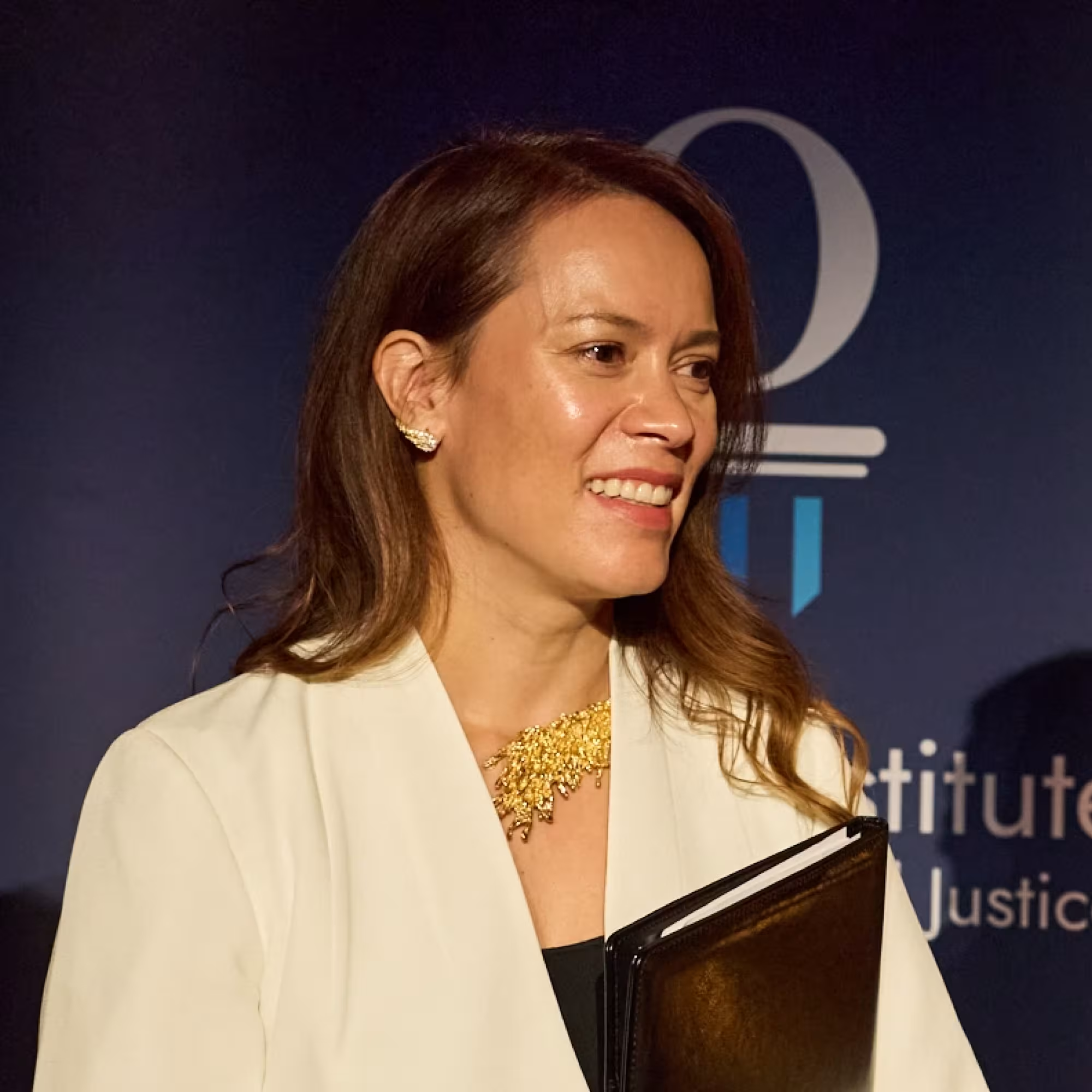
"Listening has to take place from the outset, co-creation sessions have to be written into budgets and timelines, and key performance indicators must consider whether people keep using what was built. AI tools that communities had no hand in shaping will keep ending up in the graveyard, however good the engineering."


