Our hands are sore and salty. White crust settles between our fingers as we grip our paddles and plunge them into the Salish Sea.
Our adventure is the capstone of the ecogeomorphology course, which the UC Davis Center for Watershed Sciences has offered for 24 years. The class has brought students to rivers and coastlines from Alaska to Mexico, but never here. My own journey with this group began a decade ago, rafting through the Grand Canyon. It was nothing short of life-altering, expanding my view of our planet and our place in it.
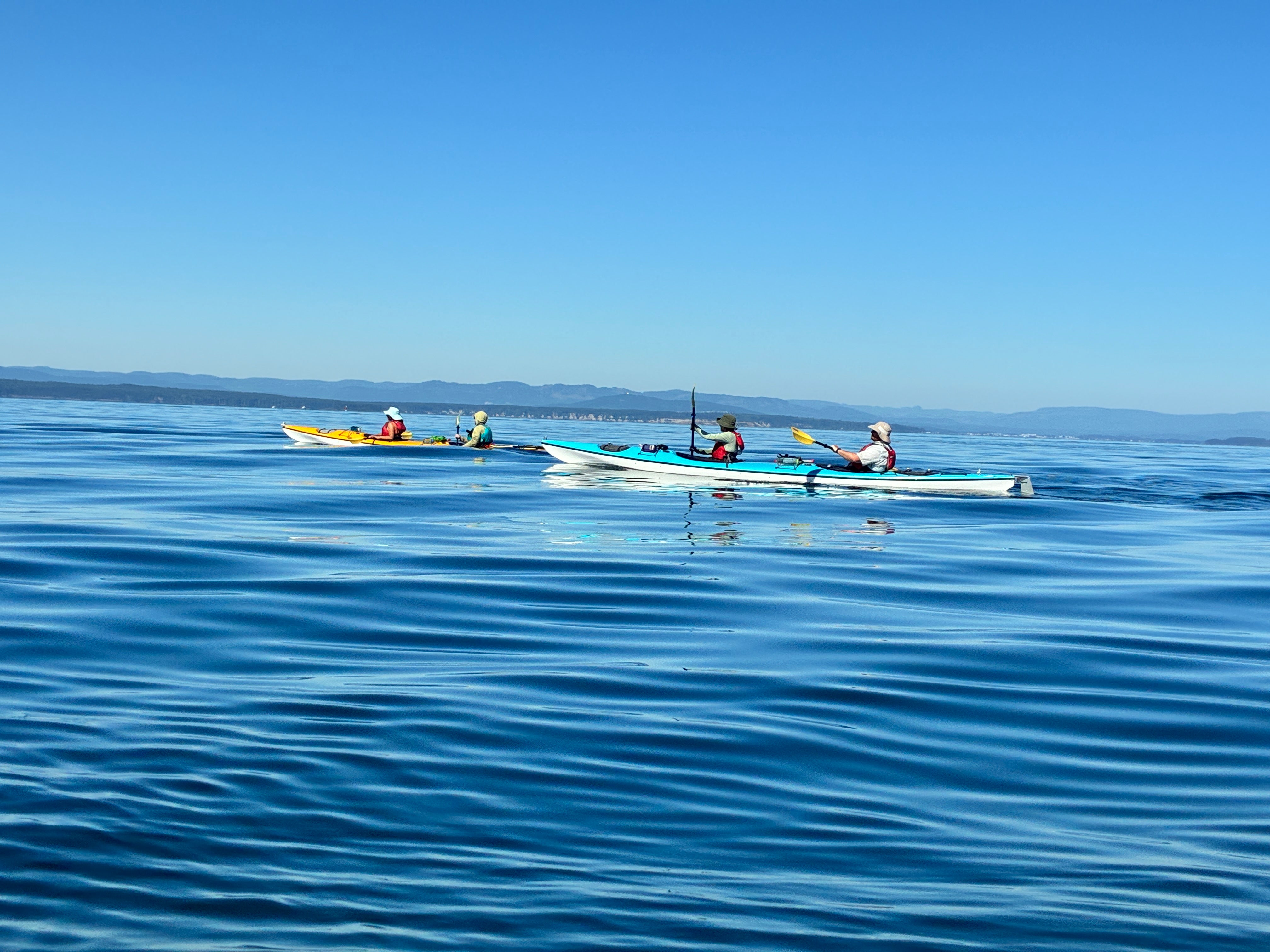
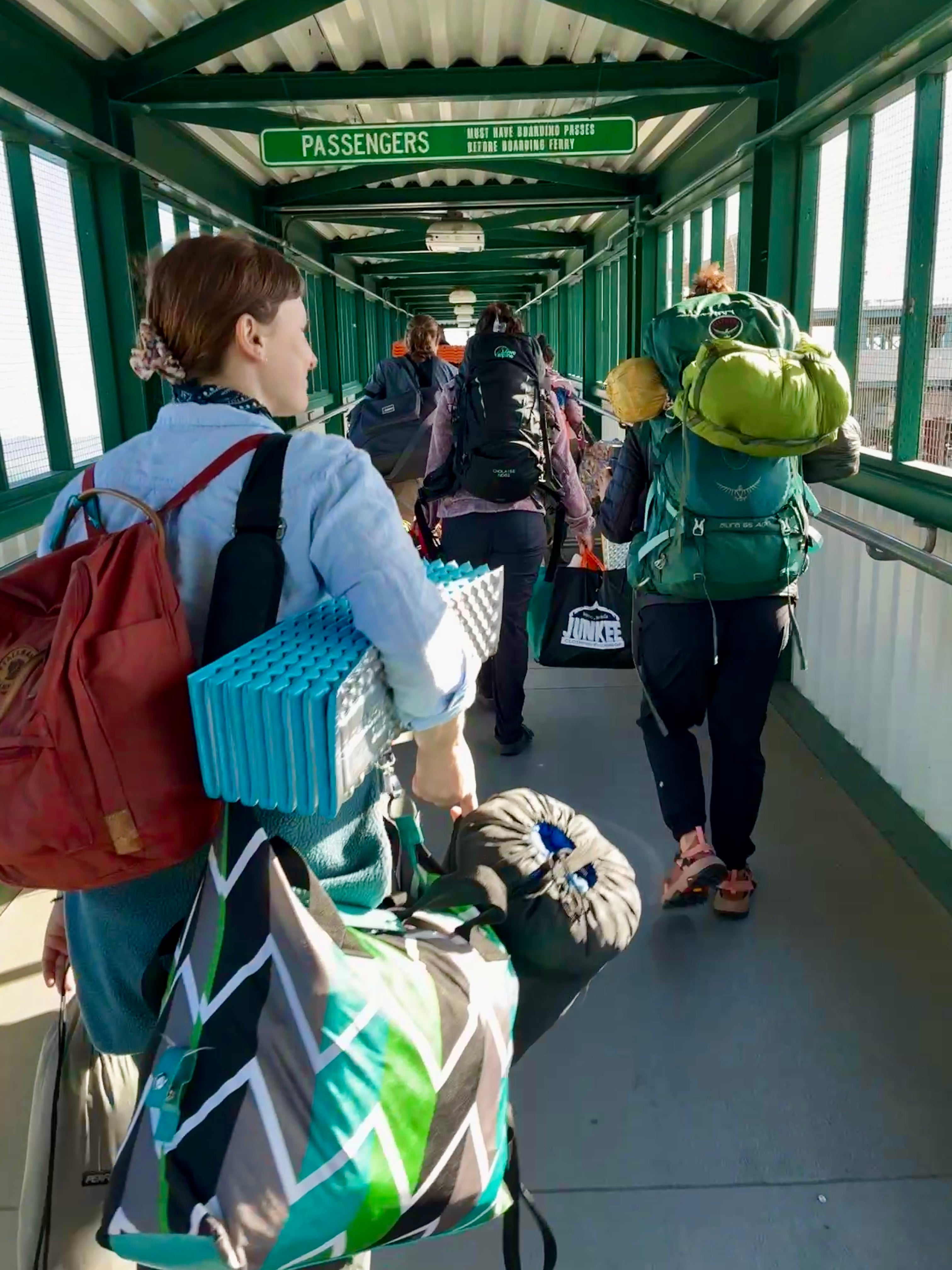
For six days, I joined a class of 11 creative writers and scientists from the University of California, Davis, and two outstanding guides as they sea kayaked across the San Juan Islands, off the coast of Washington. By the end of the week, we paddled 50 miles, visited seven islands and discovered we had a lot to learn from each other, and from this place.
"Every place we go brings a new viewpoint," said UC Davis geology professor and course instructor Nicholas Pinter. "This one is completely different. All the ecogeos have been focused on bumping the different disciplines of science together at the edges. This is next level. This is getting scientists and non-scientists - from M.F.A. writers to poets - to talk, bond and find commonalities. It's also just breathtakingly beautiful."
Why bring scientists and writers together? The idea is that when scientists are better storytellers and creative writers are more informed about science, they can help create a more informed, engaged and connected society.
"We scientists can't just crank out papers," Pinter said.
'Time together, in person'
Each day here is different. This sea can feel like a lake one moment, a river the next and a rollicking ocean another. One island is lush, the next arid. One holds a small city, while another is inhabited by a lone caretaker and their cabin.
Here, we look across the water to Canada and its Cascade Range and ponder the movement of glaciers as they sliced and carved their way across the miles to shape these lands. It's a place where you can paddle to ice cream and beer or sit in solitude and watch the sun go down. Water and whales know no borders here, while "private" and "keep out" signs abound next to public parks.
For scientists and writers, it is ripe for exploration, connection, inquiry and direct experience - something this generation of post-pandemic students has had in small doses, compared to those before them.
Post-pandemic paddling
Today's incoming college freshmen were in junior high when COVID-19 hit in 2020. Their teenage years were spent isolated from peers and masked. They were taught to fear others during a politically charged time while staring at screens and communicating in Zoom rooms. Society is just beginning to understand the ramifications of it all.
In 2025, more than 50% of adults reported feeling lonely, isolated and disconnected in a study conducted for the American Psychological Association. Eleven professors and graduate students paddling around the sea for a week won't solve that problem, but these kinds of experiences offer a way forward.
"Time together, in person, is so extremely valuable," said Michael Ziser, a UC Davis associate professor of English who is co-teaching the course with Pinter. "The younger generation has been deprived of it, so we actually have to train them up in this process. I think of this as a place to nurture those values, which are absolutely crucial to civilization."
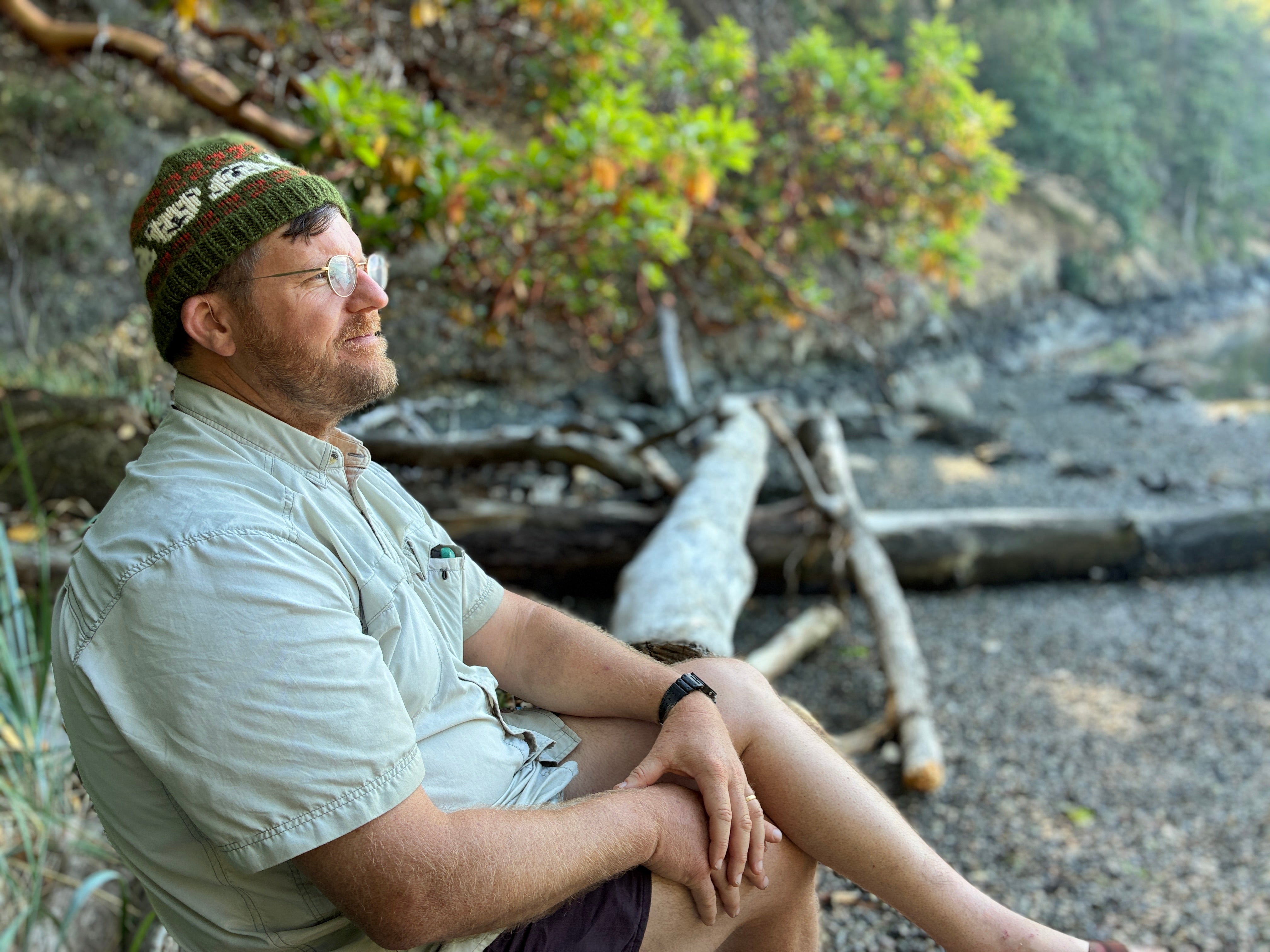
Creative writers and scientists in the same boat
On our second day, we awaken at Jones Island at 5:30 a.m., to try to beat expected winds. Last night was noisy with raccoons screeching and arguing with each other - they broke into a neighboring camper's kayak for their food stash. An eagle soars over at dawn. Sea jellies float and pulsate, transparent and mesmerizing as we shove off in tandem kayaks.
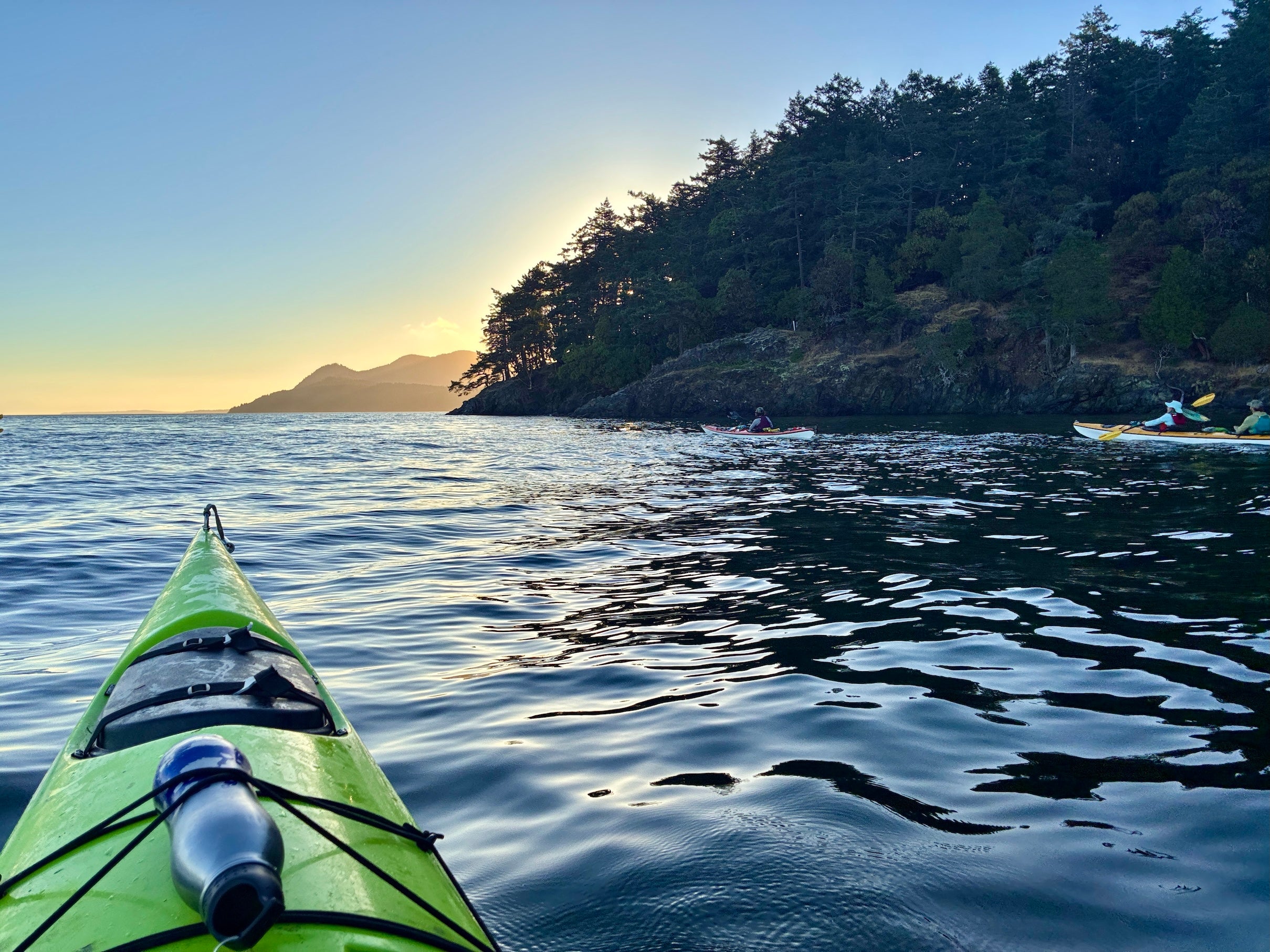
The group is easing into itself. Creative writing student Jennifer Fergesen is belting out murder ballads and winsome sea shanties. Pinter is talking about deglaciation. A little smelt jumps out of the water, and I smile at civil engineering student Olivia Seward, who earlier remarked on their cute and curious behavior. Other boats are discussing poetry and native species. My paddling partner, creative writing student Bapu Vaitla, suddenly wants to sing.
This kind of scene happens when you throw creative writers and scientists in boats together in a place like this.
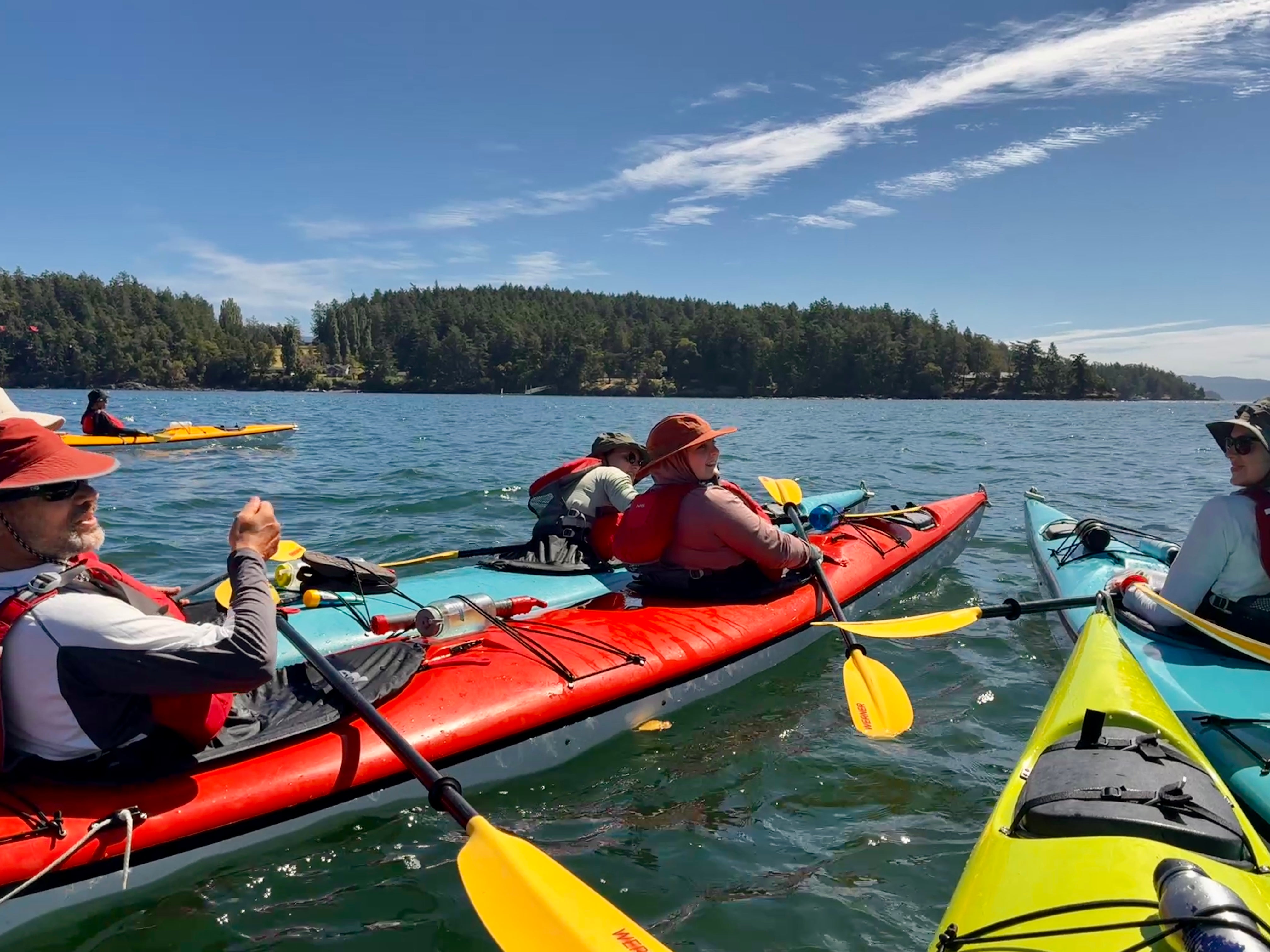
The students spent the past quarter cowriting everything from policy briefs and news articles to nature essays and poems. They heard from speakers like science fiction writer Kim Stanley Robinson and UC Davis Professor Joe Gaydos, who directs the SeaDoc Society based here at Orcas Island. They studied geology, ecology, oceanography and climate science. This built a solid foundation of trust among them, but this is the first time they've spent time together outside the classroom walls.
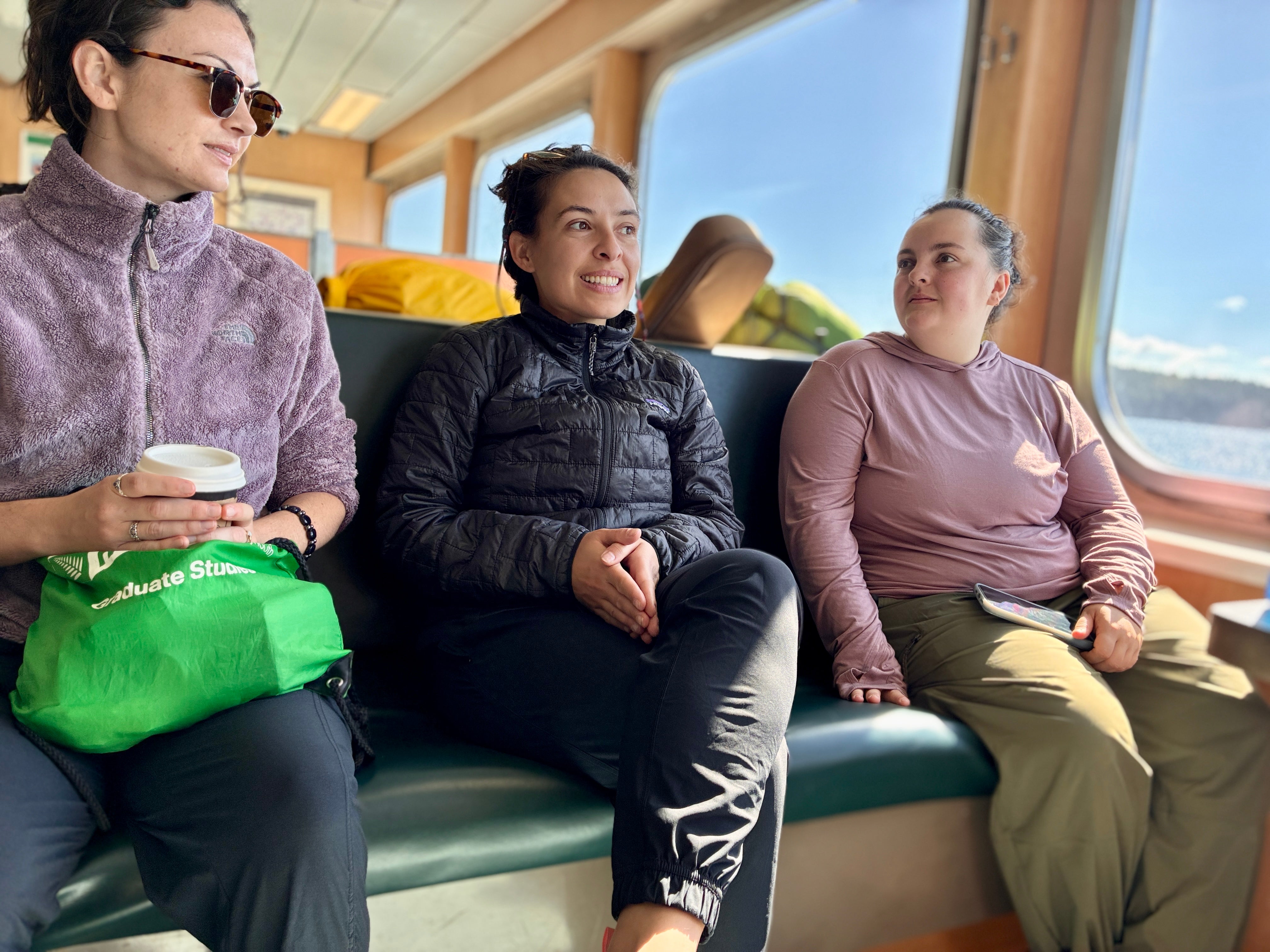
The power of the tides
All was calm as we set out this morning. Soft colors played over the water, sunlight dripped through trees - then it all changed. The wind picked up. Choppy waves now lift our kayak up and slam it down with a cheerful splash that goes right through my protective kayak "skirt," soaking my lap.
We take an unplanned layover at lovely Orcas Island to wait out the wind, find a patch of sun, dry off and stop shivering. A miraculous charcuterie spread appears, seemingly concocted from the air by our industrious guides, Maddy Kuhn and Cooper Curtin. Once the winds calm, we head back to Jones Island.
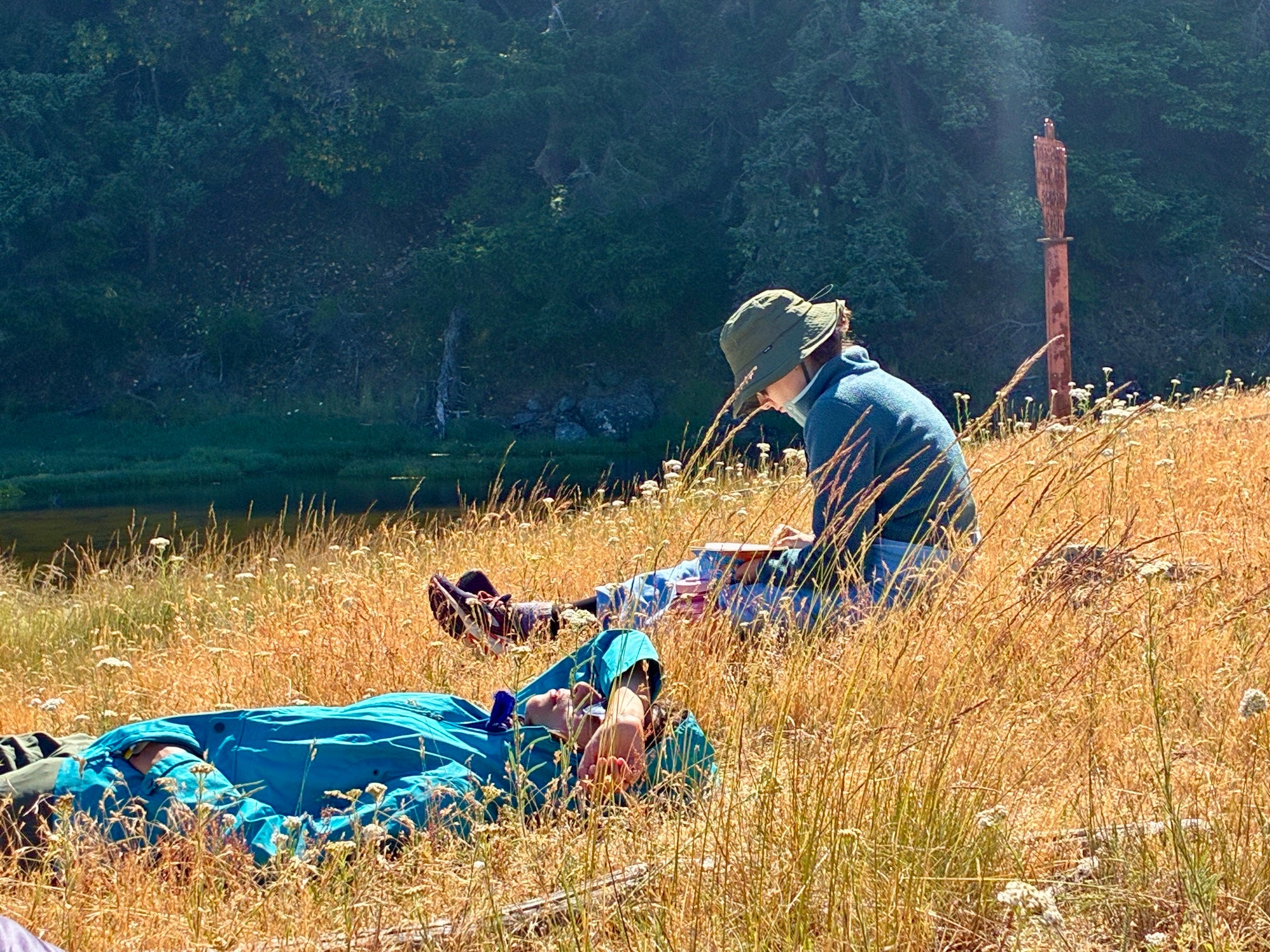
On the warm, rocky beach, we gather to share our day's observations and learn about that evening's writing assignment. A key component of the class - and of science and creative writing - is observing, sharing and finding connections among seemingly disparate things.
We remark on the striking difference between the choppy morning and our smooth return, the current pushing us home for the night. ("The tides! So wild! Their own transportation system! Rivers that just enter the sea and then reverse. What?!")
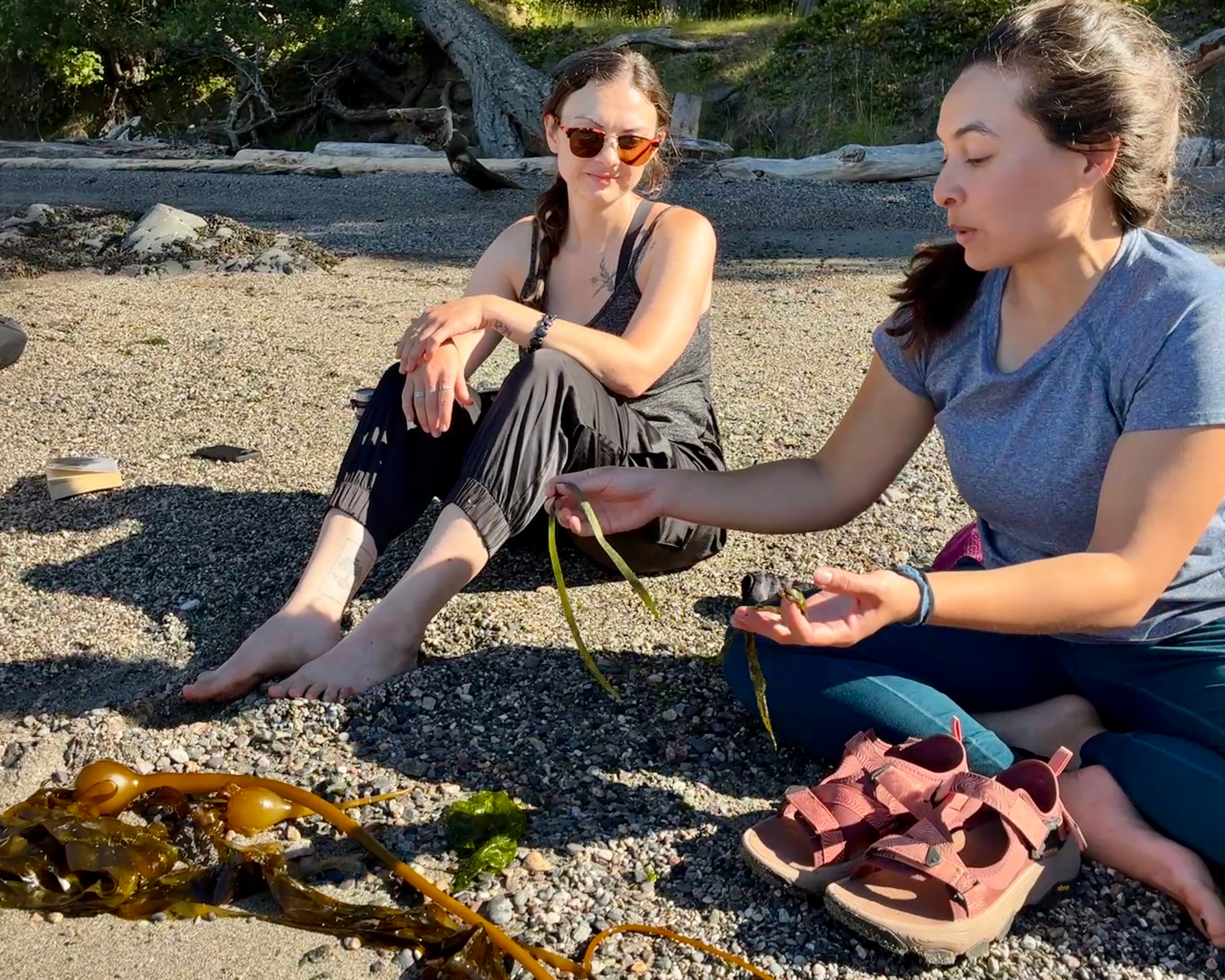
The sea offers up a steady stream of metaphors.
"The incredible power of the tides is what I've really absorbed," Ziser tells me later. "They're so powerful here - on water, on land - and they're obviously shaping so much. Yet, as powerful as the tides are, in some ways, the wind is more powerful. Different forces can appear more consequential than they are."
Who gets to belong?
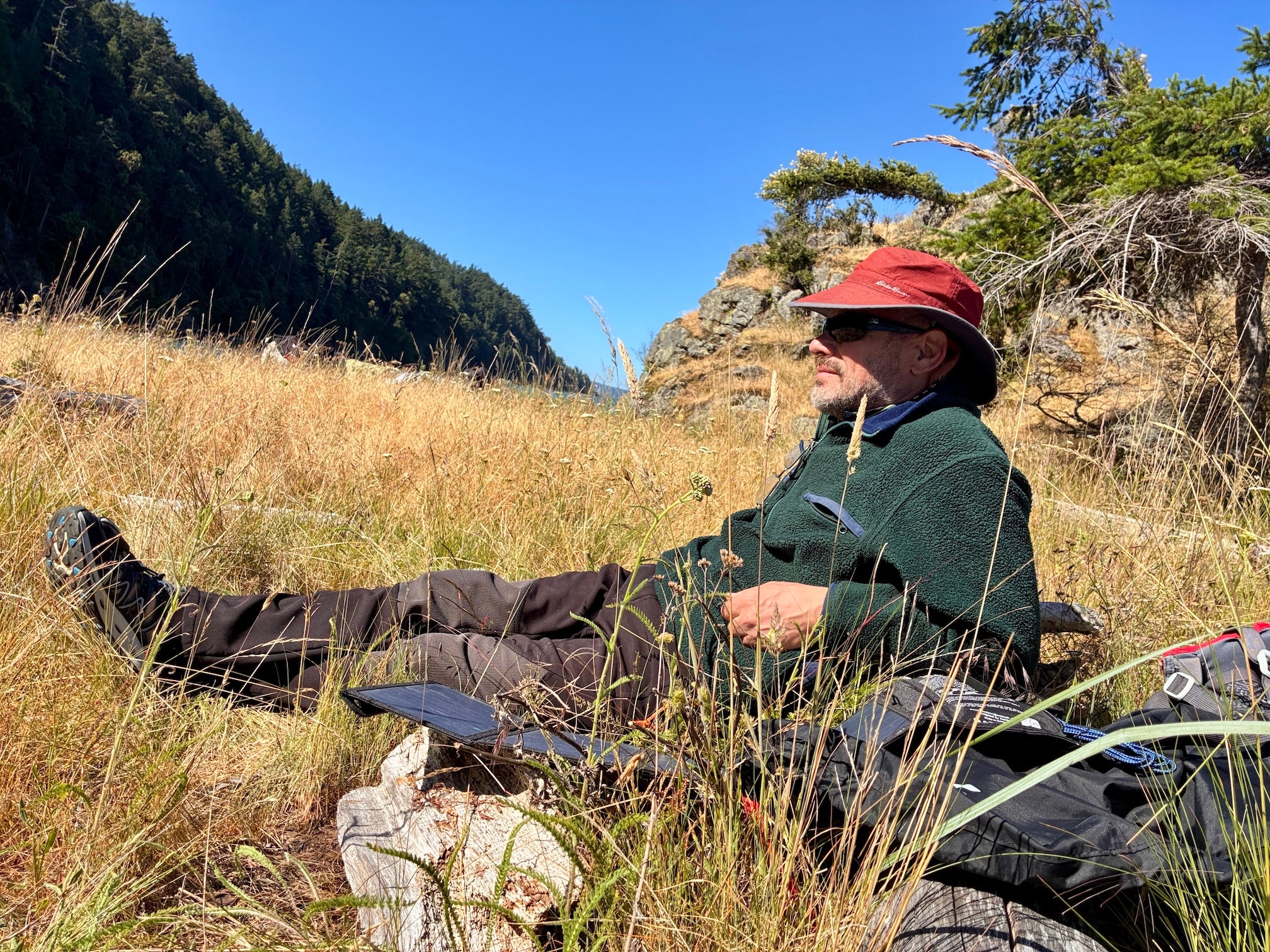
The next day, we arrive at Blind Island. It is small, dry, open - so different from lush Jones Island. Yet it offers surprising delights: a panoramic view of snowy Mount Baker, an open meadow where we sleep under the stars, and stunning tidepools.
Oysters as big as my hand and rippling with sharp white and gray edges cling to rocks. Fuzzy chitons, carnivorous snails, limpets and bright red sea cucumbers - gelatinous and gooey - reveal themselves slowly. Seward swims to a submerged rock to inspect a dinner-plate-sized purple sea star.
A stream of water suddenly bursts out of the sand, startling me and hydrology student Kirsten Ondris. "It's a creature!" she realizes. We bend over for a closer look, only to be spurted again by the clam. It feels personal. We laugh.
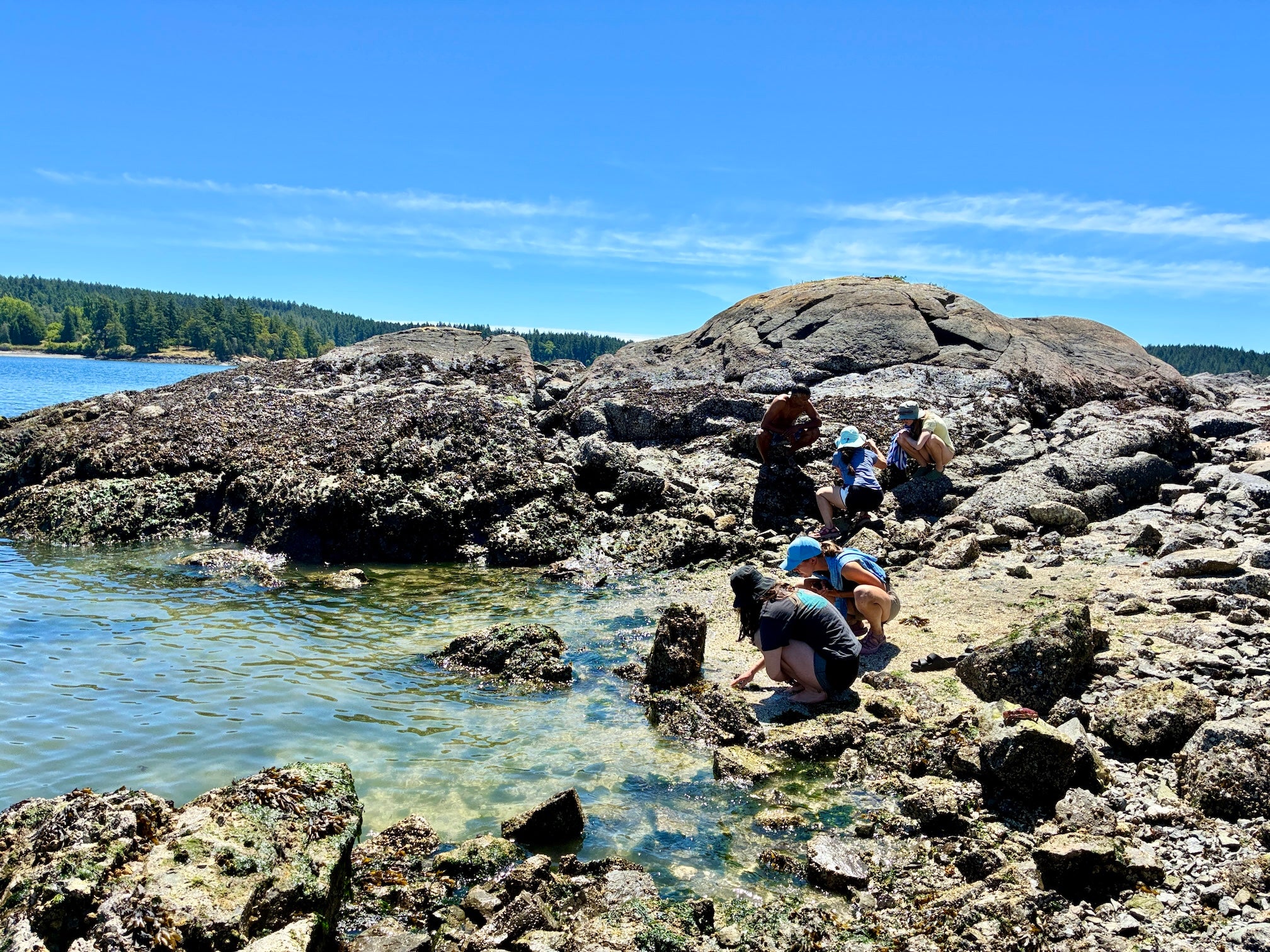
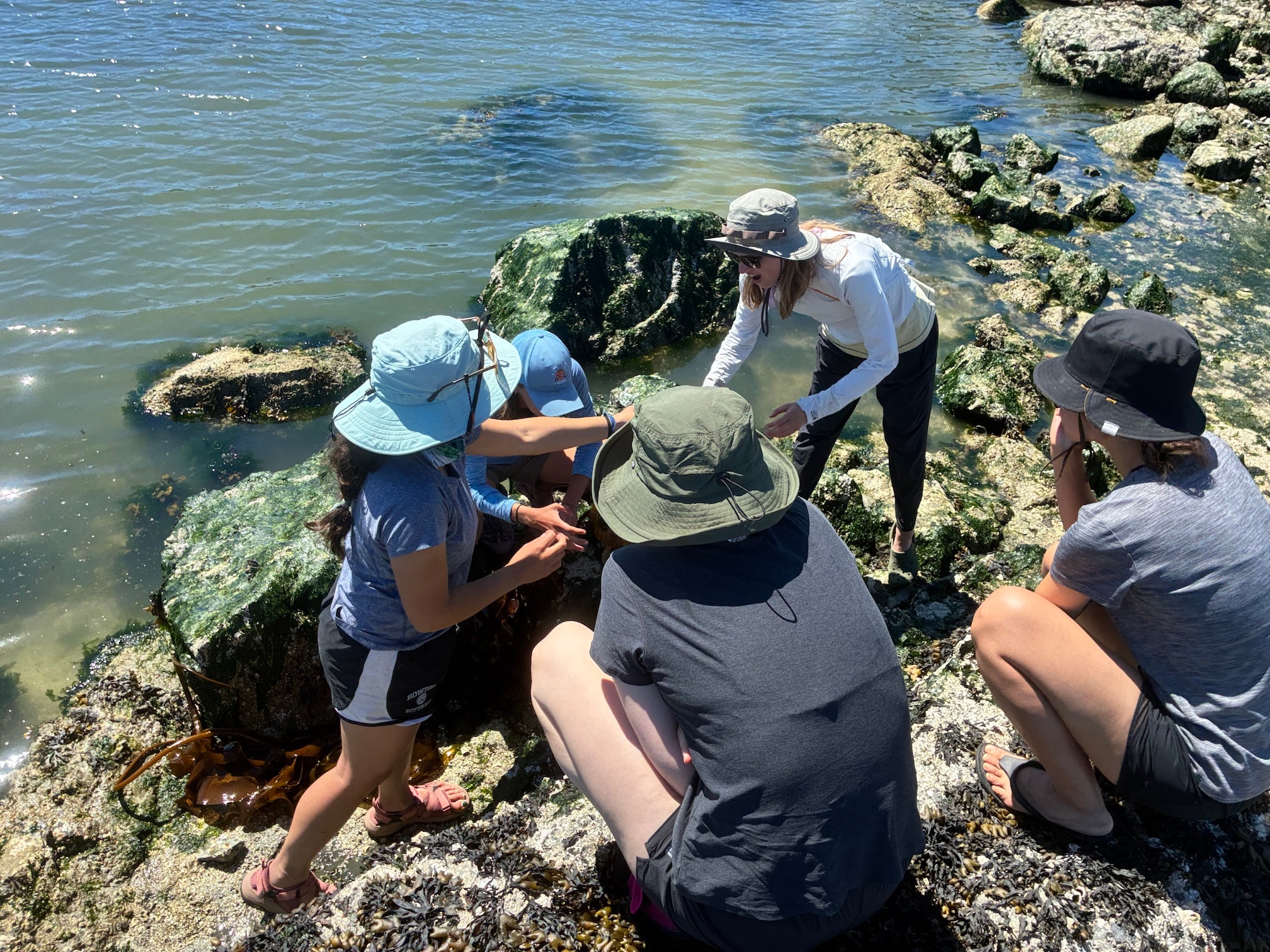
Conservation genetics doctoral student Alana Luzzio picks up a crab. She tells us it's a native species and that the blackened pattern on its shells indicates a disease. She talks about invasive European green crabs, which outcompete native species for food and habitat and threaten Washington's shellfish industry and tribal resources. Washington state has removed more than 1 million of them since 2022.
The group wonders about removing species, as well as moving them - a controversial concept called assisted migration intended to help threatened species survive climate change. These are among the biggest questions and challenges in conservation ecology and resource management today.
The discussion spurs big-picture questions like "Who gets to belong?" "Who gets to stay?" "Who gets to own an island?" and "Who decides?" These questions resonate far beyond these waters. Hundreds of thousands of people have been deported in 2026, and immigration raids are fresh on the students' minds. The students are quick to see the connections within the natural world.
On the scientist-only trip to the Grand Canyon I took 10 years ago, I don't recall anyone talking about colonialism, immigration or Indigenous people much. The focus was geology, ecology and hydrology: land, plants, water. With the addition of creative writers, this group has been more inclined to bring in the humanities - and the humans - to discussions.
It may be because this particular place inspires those things. It's not a national park or a remote river. Houses - many of them grand and empty - dot these islands. Traffic in the form of boats, ferries and kayaks shares the water with endangered orcas and diminishing salmon stocks. Most people we've seen here are white, though the San Juan Islands have a rich First Nations history and present.
Ten years was also three presidents and a pandemic ago. Artificial intelligence was something from science fiction. Times have changed and reshaped how we view the world.
"There's something about the character of a place that can bring about ethical and ecological questions that are often intersecting," Vaitla said. "Like what does it mean to be native? I wonder about how that links to both science - trying to approach the story of nature on nature's terms - and this act of writing, which is a way of revealing yourself as an observer, as an interpreter."
Who gets to belong?" "Who gets to stay?" "Who gets to own an island?" and "Who decides?" These questions resonate far beyond these waters.
The tensions between beauty and disturbance, between flow and fallout, weave in and out of our minds as we go to bed to arise to a new day of exploring.
That's when Mark Zuckerberg's yacht arrives.
The haves and have-yachts
We are gliding across the Salish Sea on our way to Stuart Island when our guides' phones crackle with chatter that the Meta CEO's yachts, plural, are nearby. The chatter is later confirmed by multiple news reports. On cue, a helicopter flies overhead toward a large white yacht the locals call "toy hauler." It is the support vessel for Zuckerberg's mega-yacht, and it reportedly carries additional boats, a spa, sauna, gym and helipad.
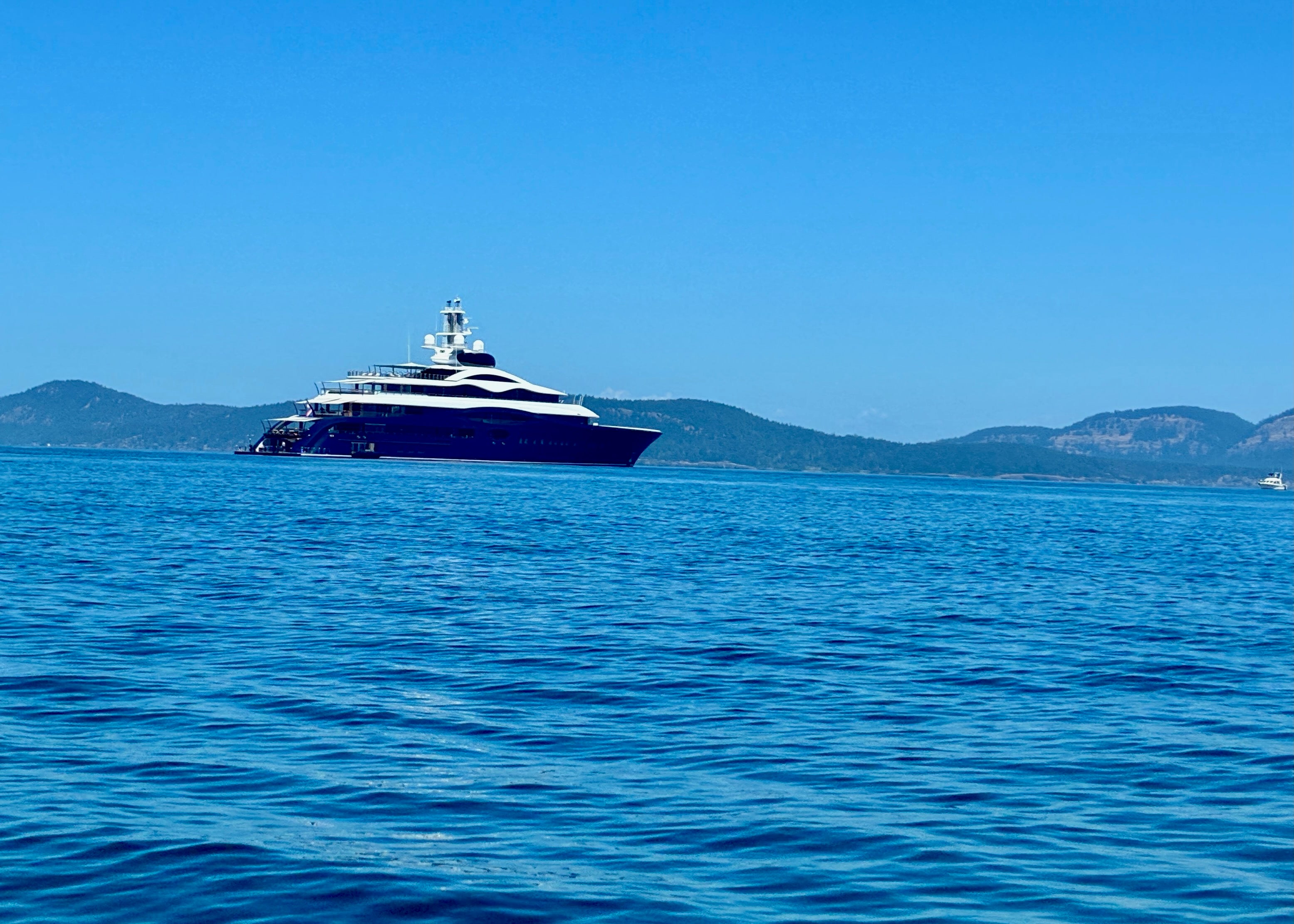
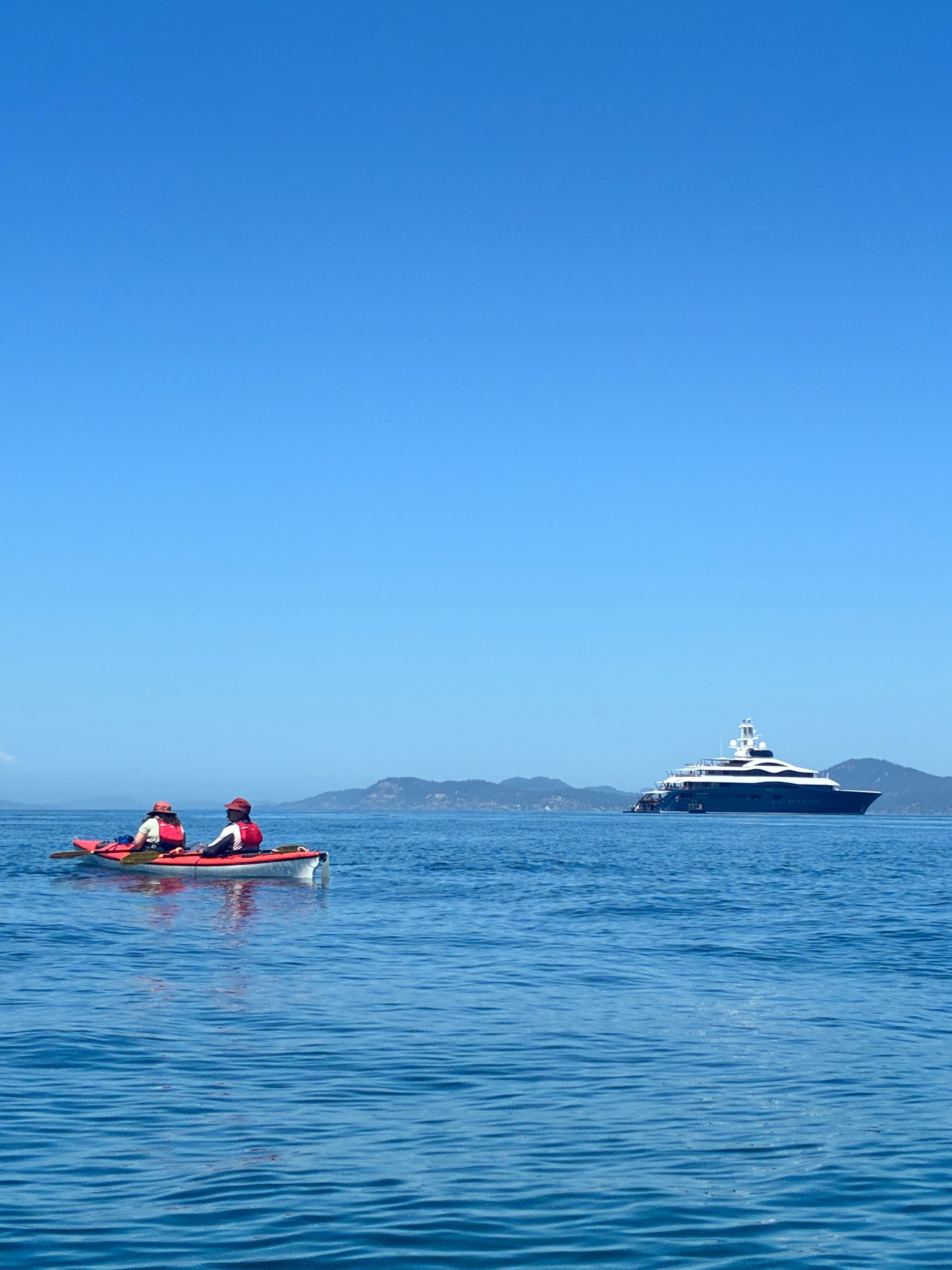
Later, we paddle past his $300 million superyacht, which floats within sight of our campsite. It is sleek, gleaming, imposing. Two people can be seen on the deck of the 387-foot vessel. Zuckerberg's presence is unconfirmed.
No matter. It's no metaphor. It is a blunt, fine point on what the group has been discussing.
During that evening's sharing of observations and epiphanies, themes of wealth and equity reemerge. The students speak of class values and material consumption, of public coastal access and reconciliation ecology. They are encouraged to voice ideas, no matter how outlandish, about how to solve the world's problems. This group skews skeptical, but they take care not to negate each other's thoughts.
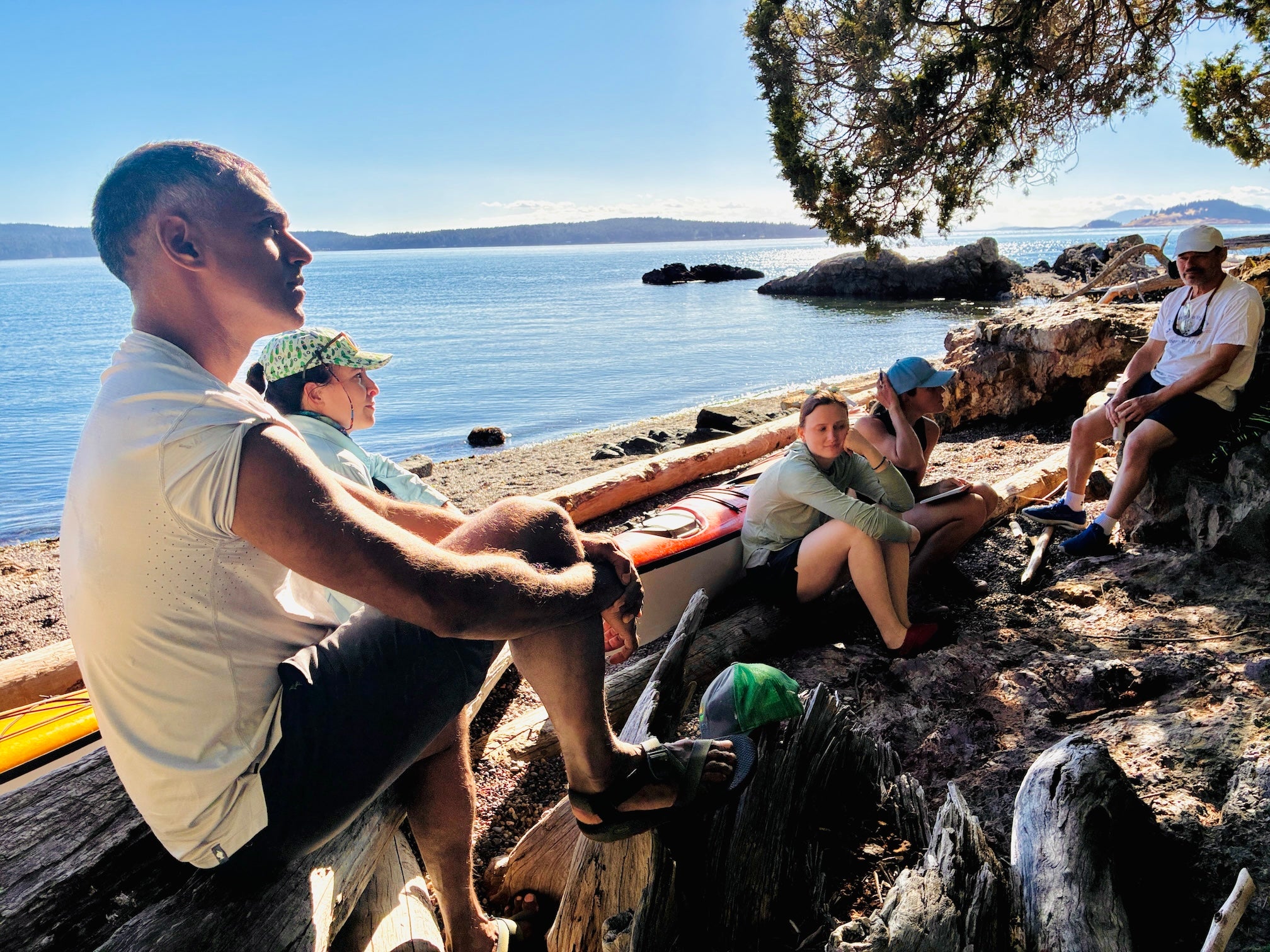
"We are in this community of culture where people are afraid of stepping on landmines," Ziser tells me later. "With this class, the quiet things people carry around are able to come out, and there are a lot of valuable things in there. It takes trust, that you can disagree without assuming the worst of other people."
With this class, the quiet things people carry around are able to come out, and there are a lot of valuable things in there." - Michael Ziser, UC Davis associate professor of English
Poetry and personal growth on the summer solstice
It is the final night of our journey. We are on Stuart Island on the longest day of the year, the summer solstice. We have hiked from our tents through mossy woods and rolling hills, past a schoolhouse and tiny museum full of sweet and sorrowful tales.
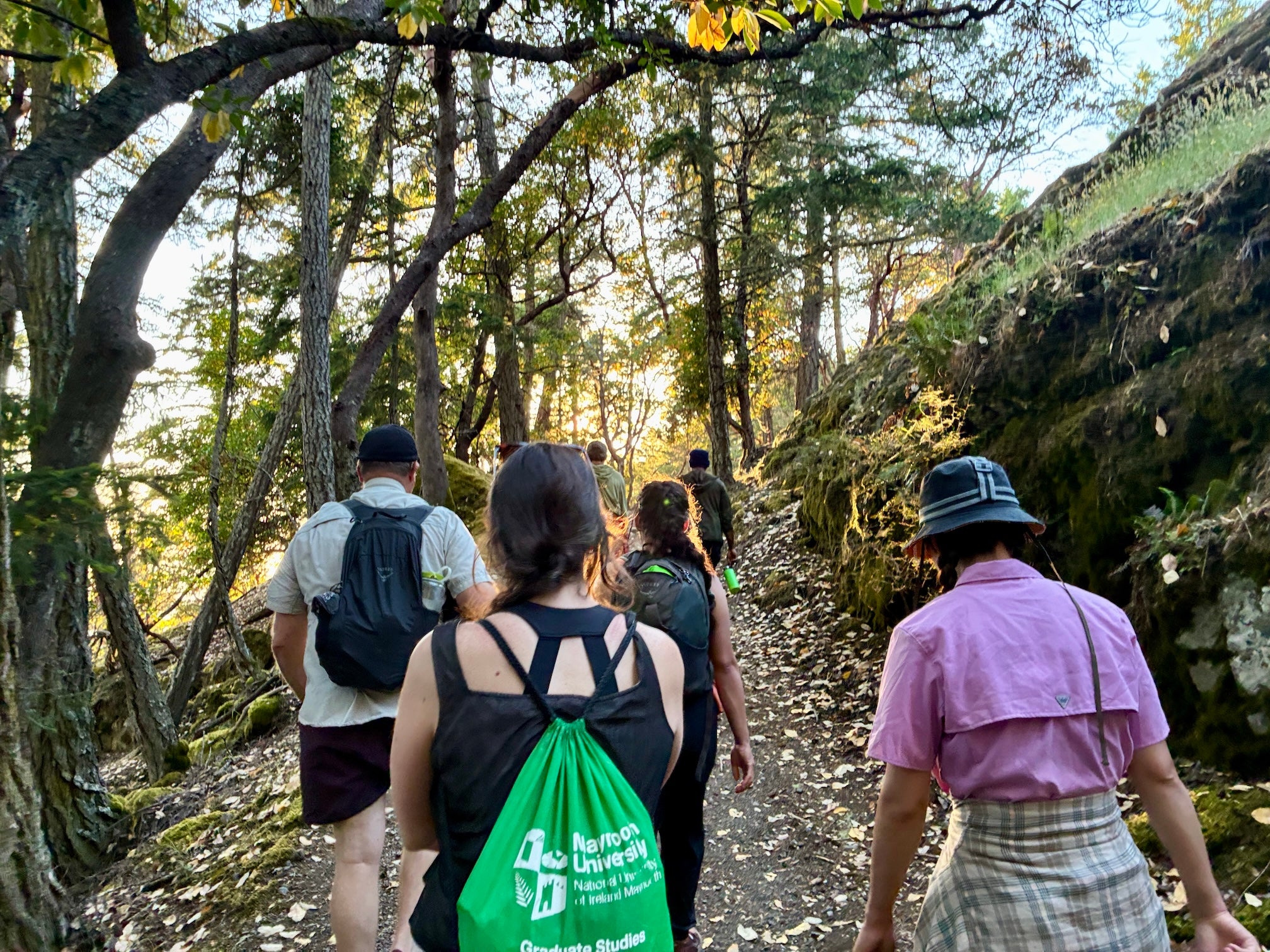
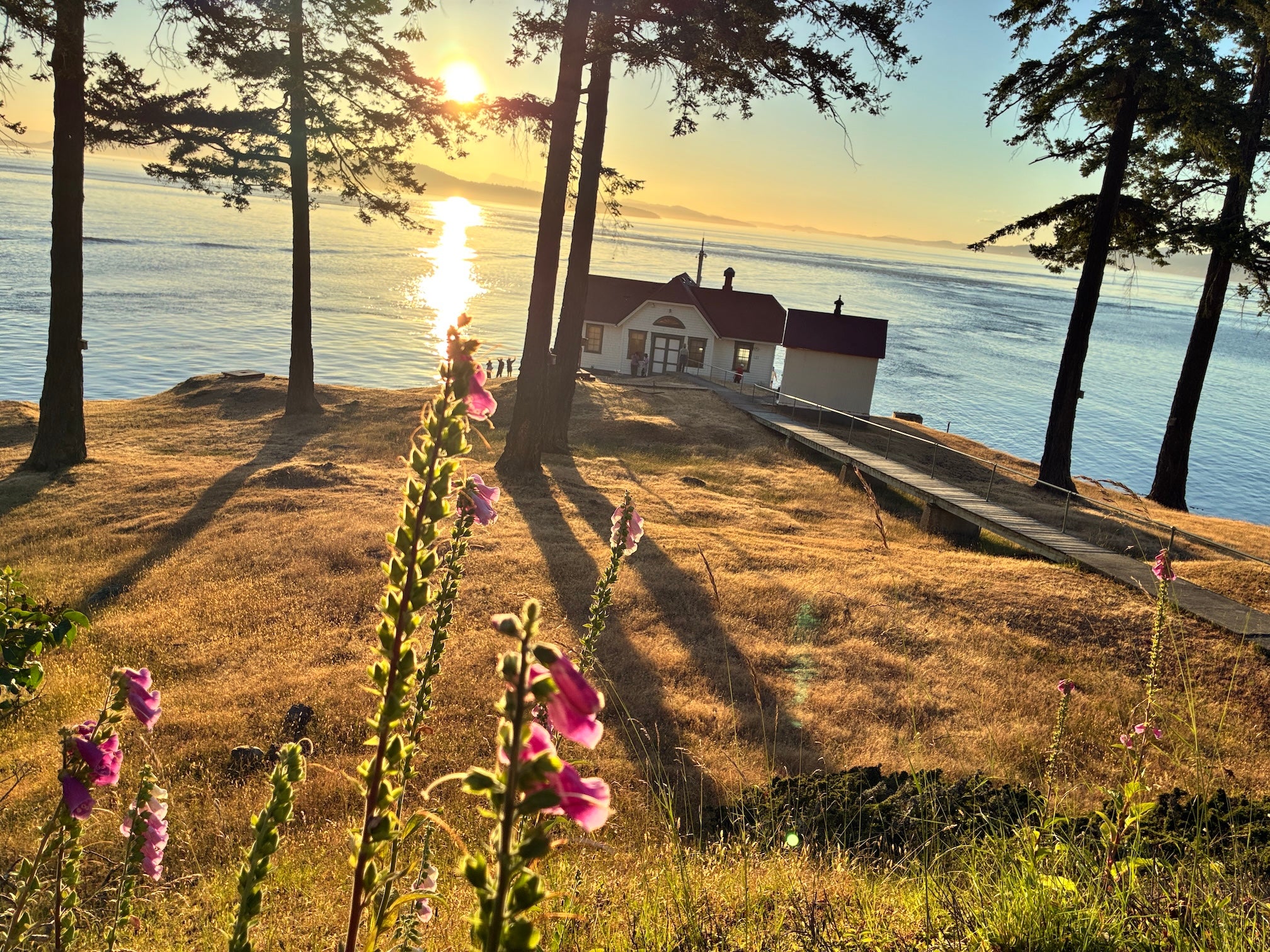
We walk to a lighthouse and look across the sea to Canada, where purple shadows move across mountains and a cargo ship passes below.
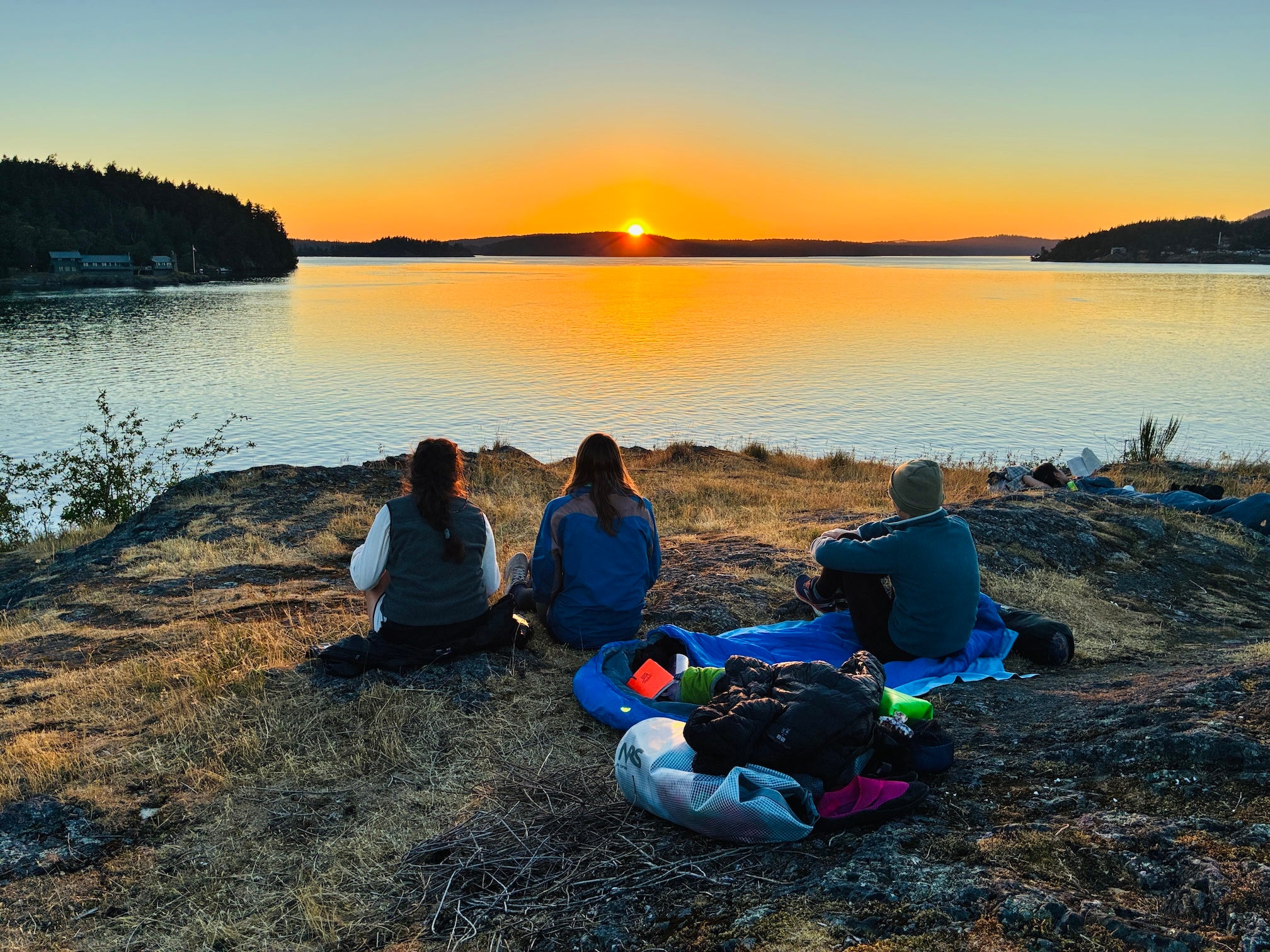
We bring our heaving lungs, our stinging blisters, our sore legs to the edge of the island and sit.
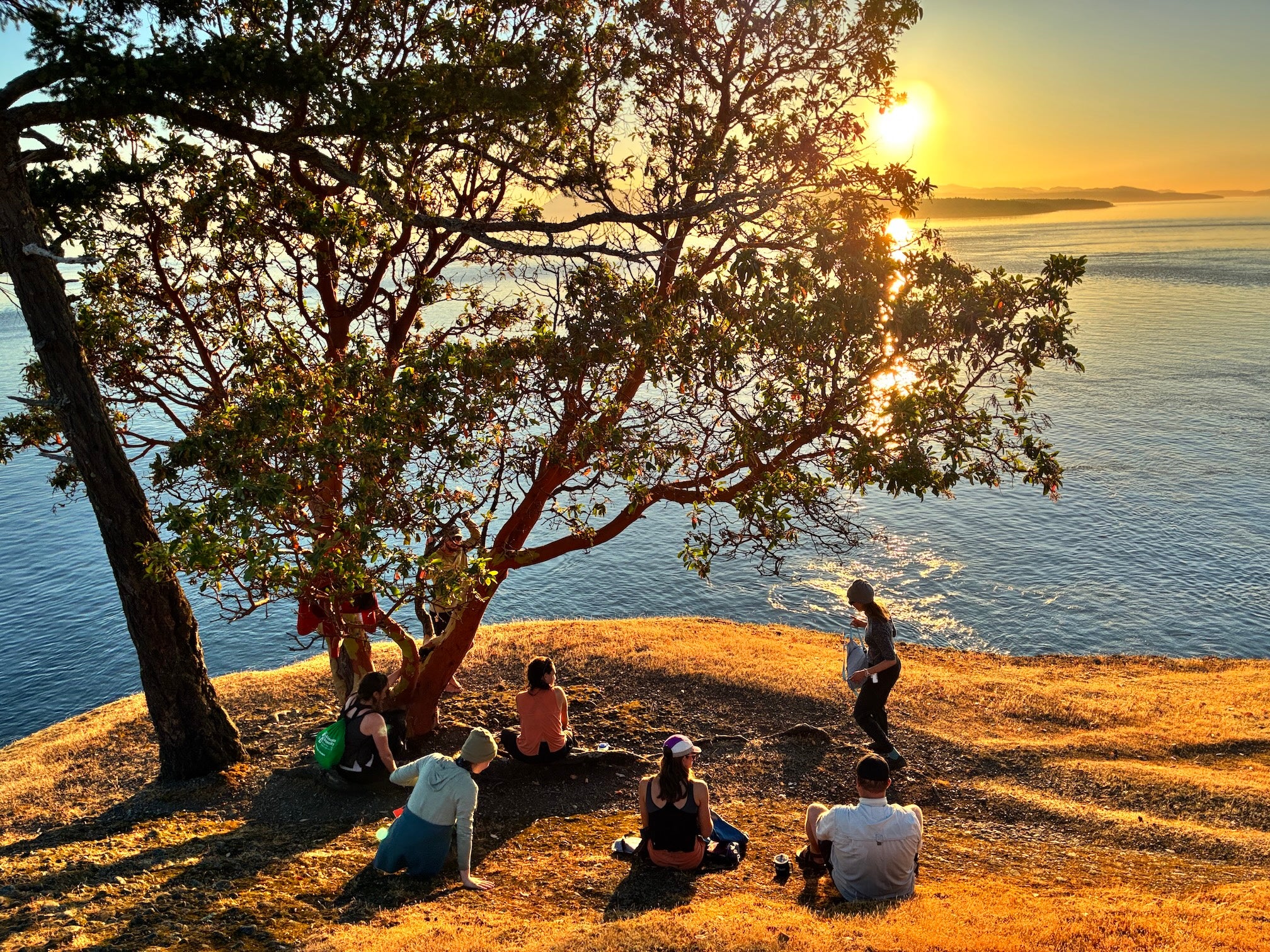
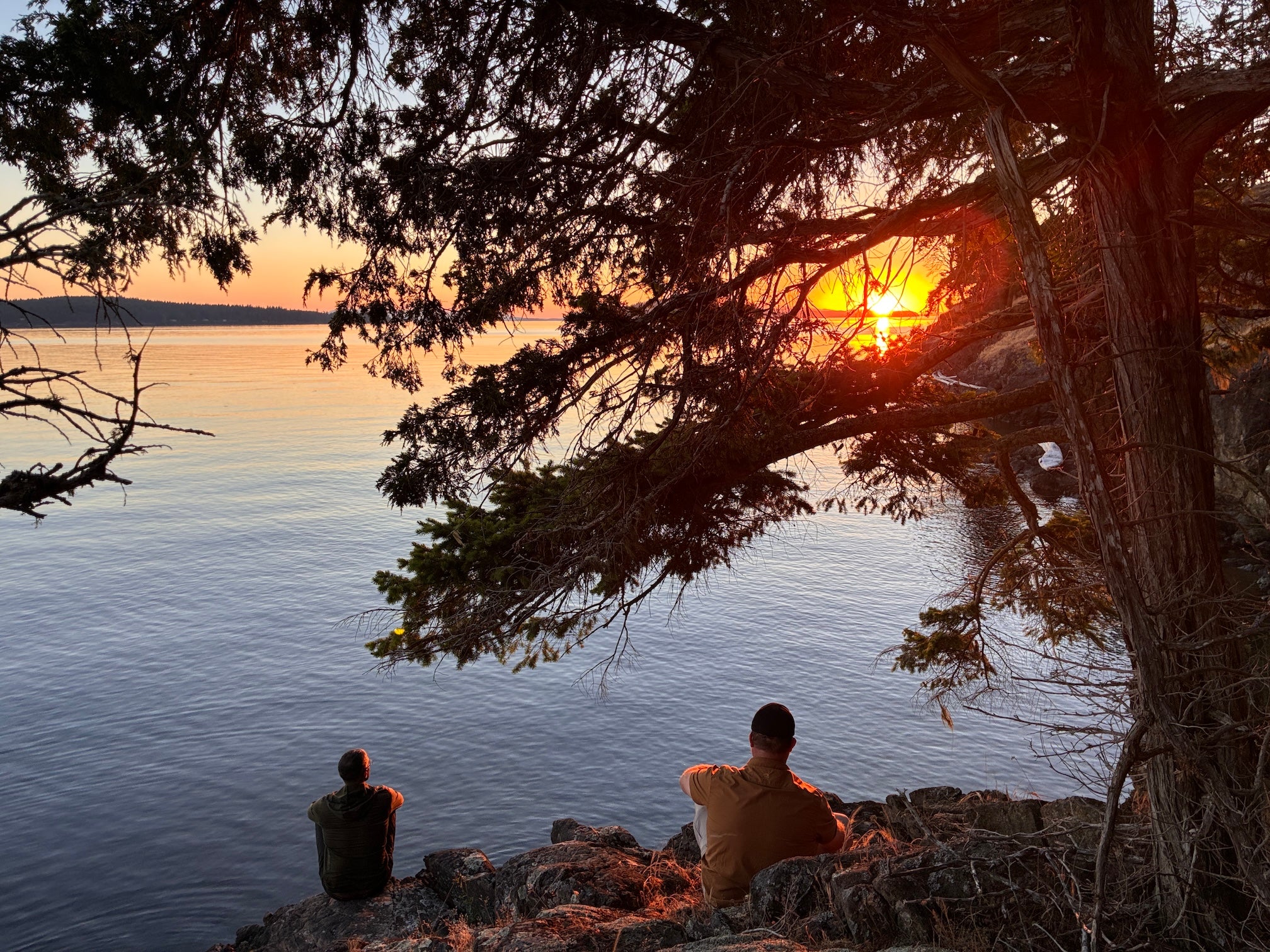
The sun throws peach and golden sparkles over the water as we rest under a madrone tree, its bark curling into cinnamon ribbons. Vaitla and creative writing grad student Paige Parsons are teaching us how to write a tanka, a traditional Japanese "little song" poem.
If you want a scientist to feel uncomfortable, ask them to write a poem and - gulp - share it out loud. But Parsons and Vaitla walk us through each step, methodically, gently. They make us feel like anyone can do this.
Terrifying? A little. But it is also an opportunity to set terror aside and think about moss, tides and sunlight, and to use neglected parts of our minds to find meaningful connections. The resulting poems are ridiculously impressive. The sun takes its last gasp and sinks into the Salish Sea - a poem of its own.
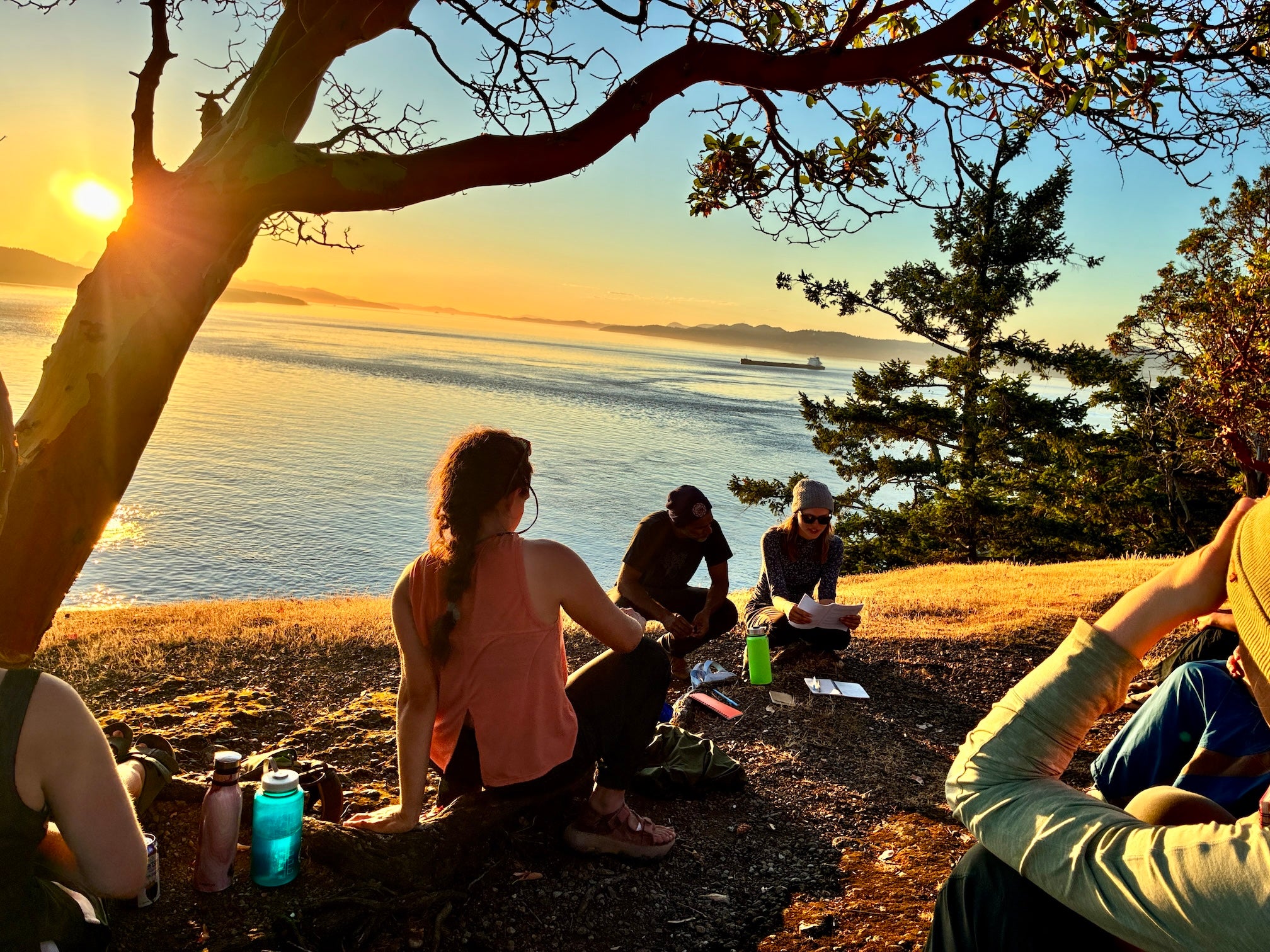
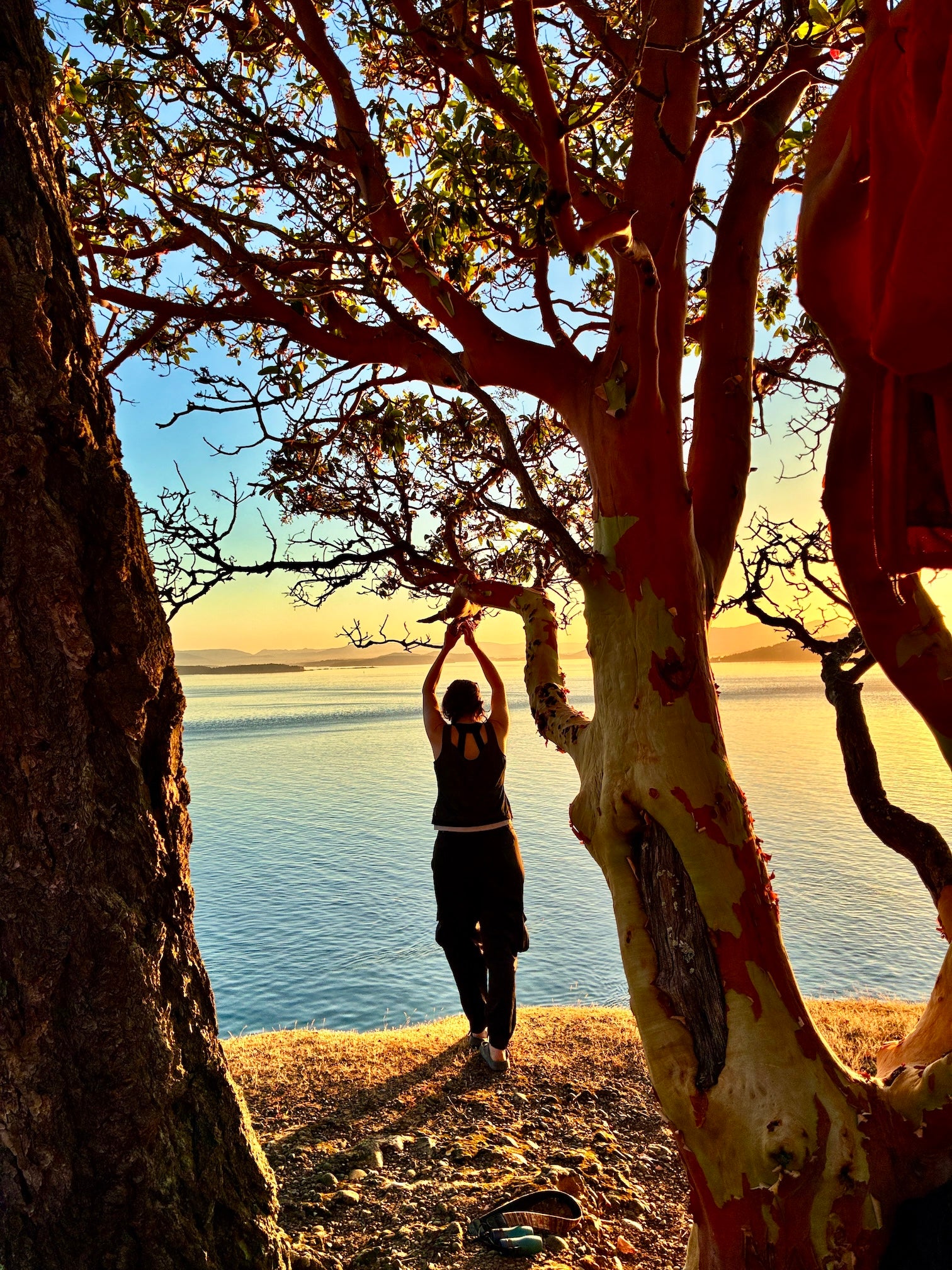
Voicing the group's consensus, Luzzio described the experience as "magical." Vaitla said it was "one of those life's-perfect-moment things."
"I've always thought about poetry as this extremely creative endeavor," Luzzio said. "I didn't really realize that it can have such a touch point and integrate the science of observation so intensely."
The class has changed how she views her own research, and she said she plans to incorporate reflection exercises into work with her undergraduate students.
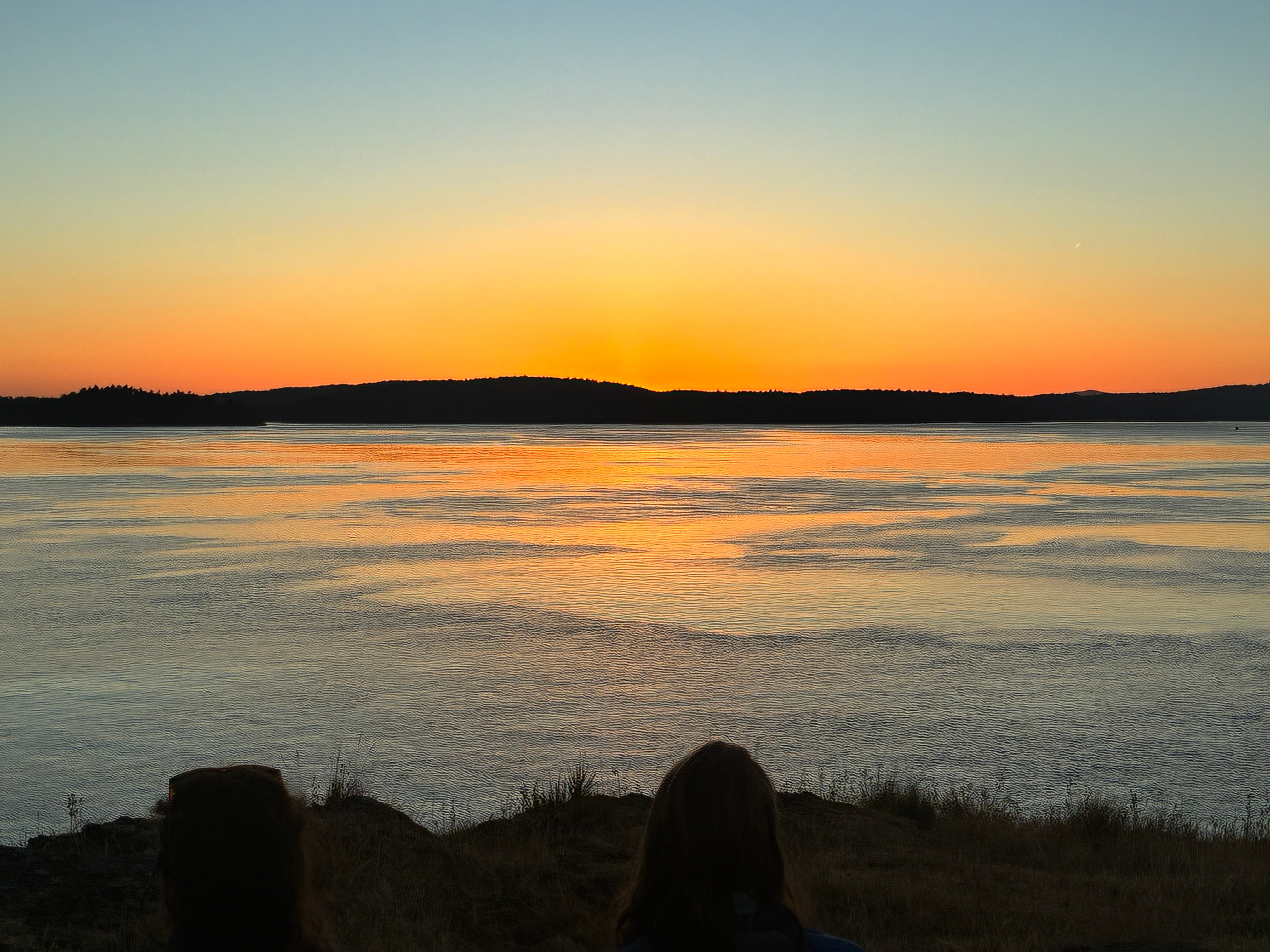
"What makes us instructors the happiest is hearing, 'This has changed my career, changed my life,'" Pinter said. "I've been hearing that. We don't have a patent on this. On the contrary, we want to spread this kind of thing."
Experiences like this remind us to enjoy, appreciate and honor the beauty of life while recognizing its frustrations and challenges. The water offers so much inspiration and, yes, more metaphors. As we meet people we don't understand, who don't understand us, don't we have to try to keep paddling and get in sync so we can reach where we need to go? Sometimes it helps to sing or tell a story. It's also OK to bail and head for the shore if it's unsafe. Switching plans can be good, so long as we keep moving, keep learning, keep trying.