
In 1876, Wilhelm von Bezold delivered the first lecture on electrical telegraphy at the Technische Hochschule München - now known as TUM. This laid the foundation for a discipline that continues to shape our daily lives to this day: electrical and computer engineering.
 Andreas Heddergott / TUM
 Since then, electrical and computer engineering at TUM has evolved from the fundamentals of electricity through energy supply and automation to digital, networked, and intelligent systems. Today, research spans the entire spectrum of the field-from wearables that monitor our health to networked radar systems and quantum technology.
 Roman Pawlowski
 Urban air under the magnifying glass
Jia Chen conducts research on topics related to climate change and urban air pollution. To this end, she develops sensors and mathematical models that enable the precise measurement and quantification of greenhouse gas emissions and removals, as well as air quality parameters. A key result of her work is the MUCCnet sensor network: With four measuring stations on the outskirts of the city and one in the city center, she determines how much greenhouse gas is generated within the urban area. Based on this, she creates high-resolution emission maps for Munich.
Tracking health with wearables
Wearables such as smartwatches and sensor rings are already an integral part of our daily lives. They track our heart rate, step count, and sleep patterns. While most sensors are limited to physical parameters, chemical and biological signals are of particular importance to Can Dincer's research. He is attempting to detect hormones, proteins, or pathogens such as viruses and bacteria - which are typically measured in blood - in other bodily fluids such as sweat or exhaled breath.
 Andreas Heddergott / TUM
 Medical technology for rapid diagnostics and treatment monitoring
Oliver Hayden develops new medical technologies for point-of-care diagnostics and for wearables that can be used during surgical procedures. The goal is to detect diseases more quickly and continuously monitor treatments. With his interdisciplinary team at TUM University Hospital and at CREATE in Singapore, he is developing innovative diagnostic methods for this purpose. These methods combine electronics, optics, magnetics, and microfluidics to measure disease-relevant biomarkers as directly and precisely as possible. A particular focus of his work is on rapidly translating research findings into clinical applications.
Connected Radar: Safety, Industry, and Critical Infrastructure
Benjamin Nuß conducts research on digital radar sensors and connected radar systems that intelligently combine data to accurately and reliably map the surrounding environment. Another focus of his work is future wireless and mobile communication systems. The technologies developed in this research can be applied in vehicles and industry as well as in safety and security applications.
 Magdalena Jooss
 Sensors for the Quantum World
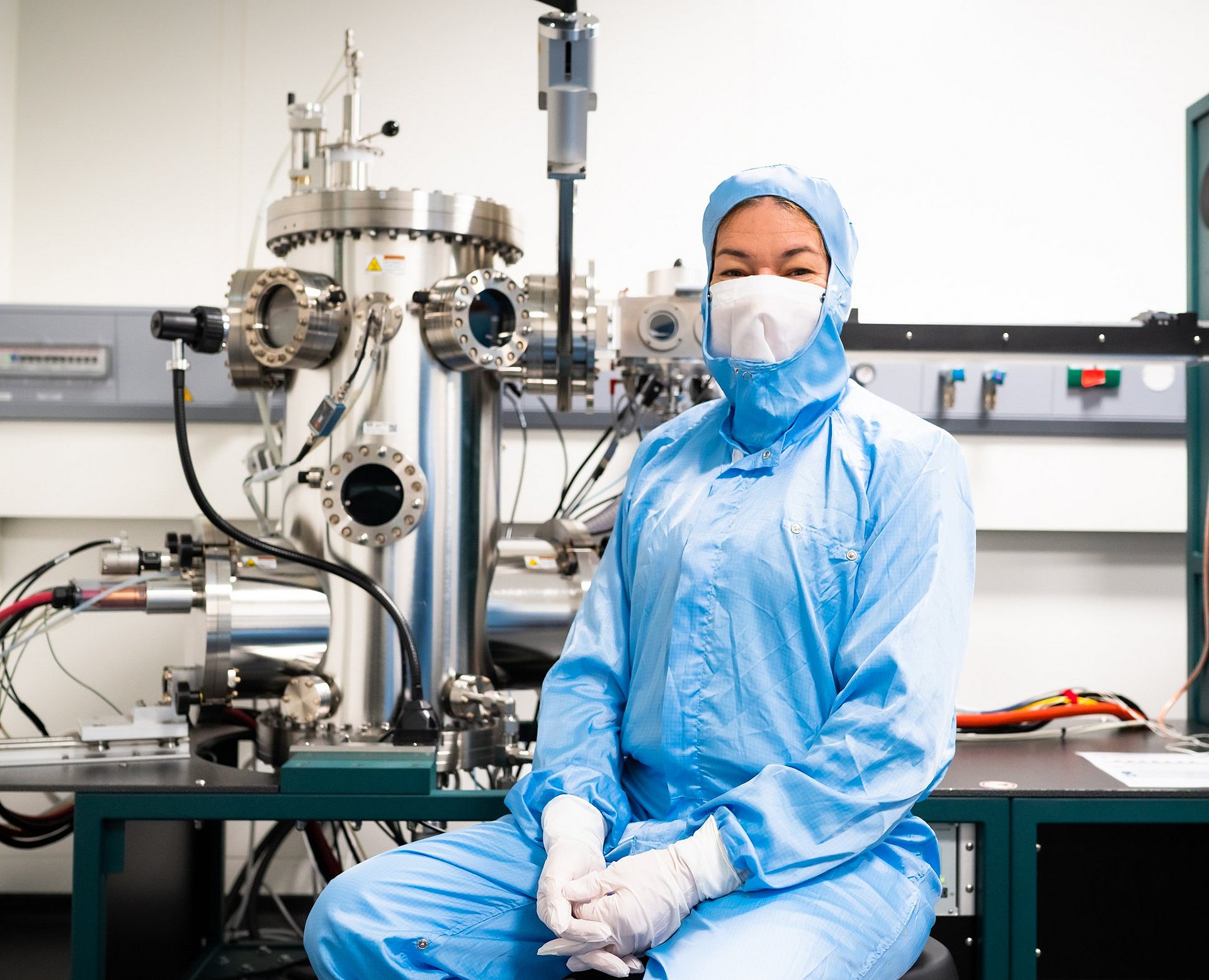
They enable extremely precise navigation without GPS, can assist in earthquake monitoring, or even detect defects in materials: Since quantum sensors can measure the tiniest changes, they can be used virtually anywhere. But how can such quantum sensors be developed? Prof. Eva Weig conducts research on nanostructures to make them usable for quantum sensing applications. To this end, she develops tiny strings made of ceramic or semiconductor materials whose vibrations can not only detect but also transmit quantum information.


