
As artificial intelligence (AI) drives a global surge in data centres in Canada and around the world, a less visible but increasingly urgent challenge is growing alongside it. Researchers are beginning to investigate ways to manage the risks posed by the lithium-ion batteries that keep those facilities running.
At the University of Waterloo, Dr. Vinny Gupta is working to understand how and why these batteries fail and what can be done to prevent dangerous fires in the critical infrastructure underpinning the digital economy.
Lithium-ion batteries have become essential to modern life, powering everything from phones to electric vehicles. But in data centres, their role is both less visible and far more concentrated. Massive banks of batteries provide backup power, stabilize the electricity supply and ensure uninterrupted operation during outages.
"Pretty much every single data centre will have a huge quantity of lithium-ion battery storage embedded within it," Gupta explains. That concentration creates a unique safety challenge.
While individual battery cells are common and generally reliable, packing thousands of them together in confined environments increases the potential consequences when something goes wrong.
At the centre of the issue is a phenomenon known as thermal runaway, a cascading chain reaction that can cause batteries to rapidly overheat, release flammable gases and, in some cases, ignite.
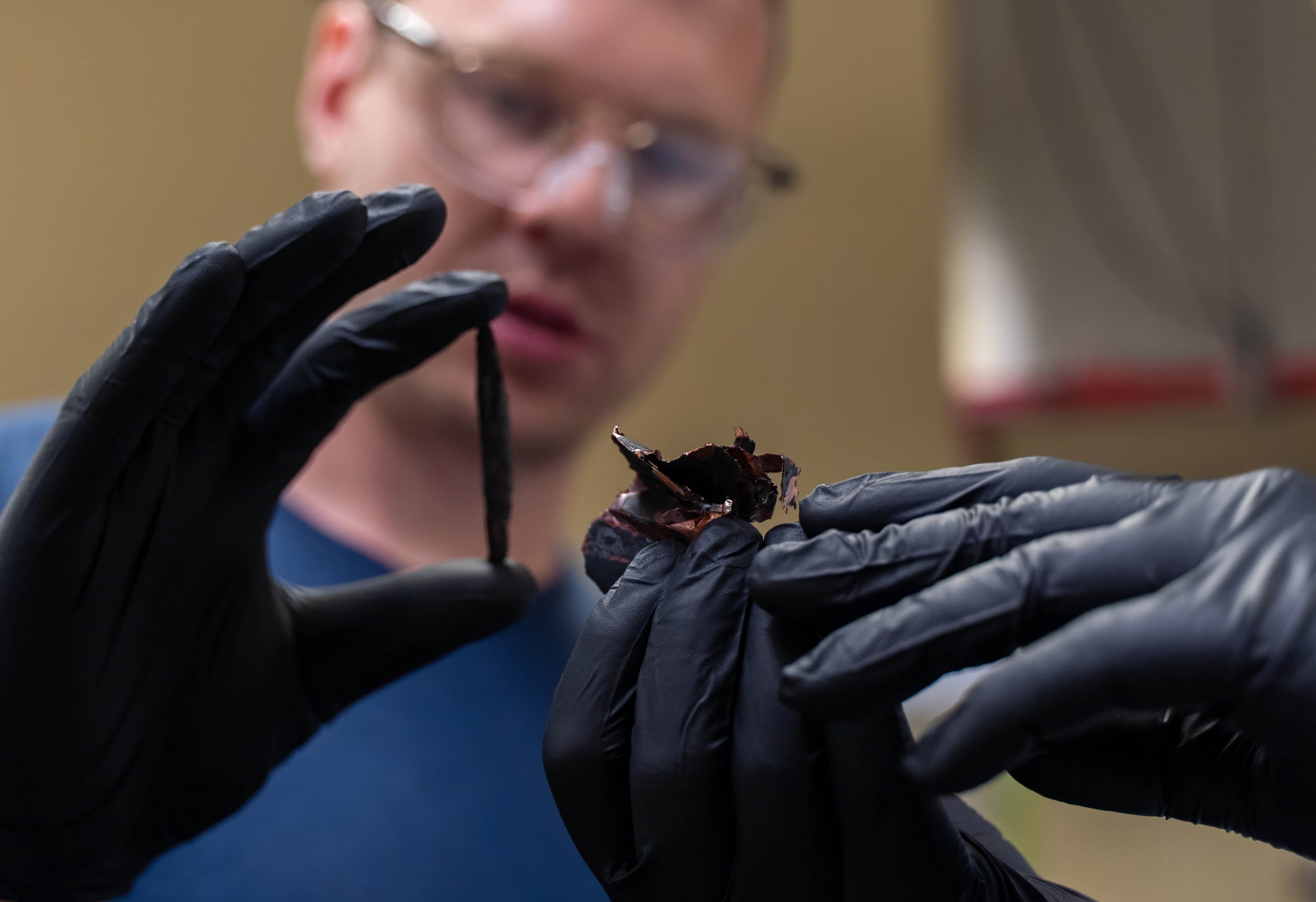
"What makes a lithium-ion battery cell quite dangerous is that it can release all of that energy in a very short period of time," Gupta says.
In large-scale systems like data centres, that risk multiplies. A single failing cell can transfer heat to neighbouring cells, triggering a domino effect and a cascading failure that engulfs an entire battery module or rack.
"We can get into an uncomfortable scenario where if one cell does indeed fail, that energy is essentially being used to heat up adjacent cells," Gupta says. "We call this thermal runaway propagation."
The result can be a fast-moving, high-intensity fire that is far more difficult to control than conventional building fires. These incidents are also complicated by the chemical nature of lithium-ion batteries, which can emit both flammable and toxic gases.
These hazards are not unique to data centres, but their scale makes them especially significant. As demand for AI computing accelerates, companies are racing to build more facilities, increasing the total volume of battery storage deployed worldwide.
Despite the risks, Gupta emphasizes that catastrophic failures remain relatively rare compared to the number of batteries in use globally. However, the consequences of those failures can be disproportionate.
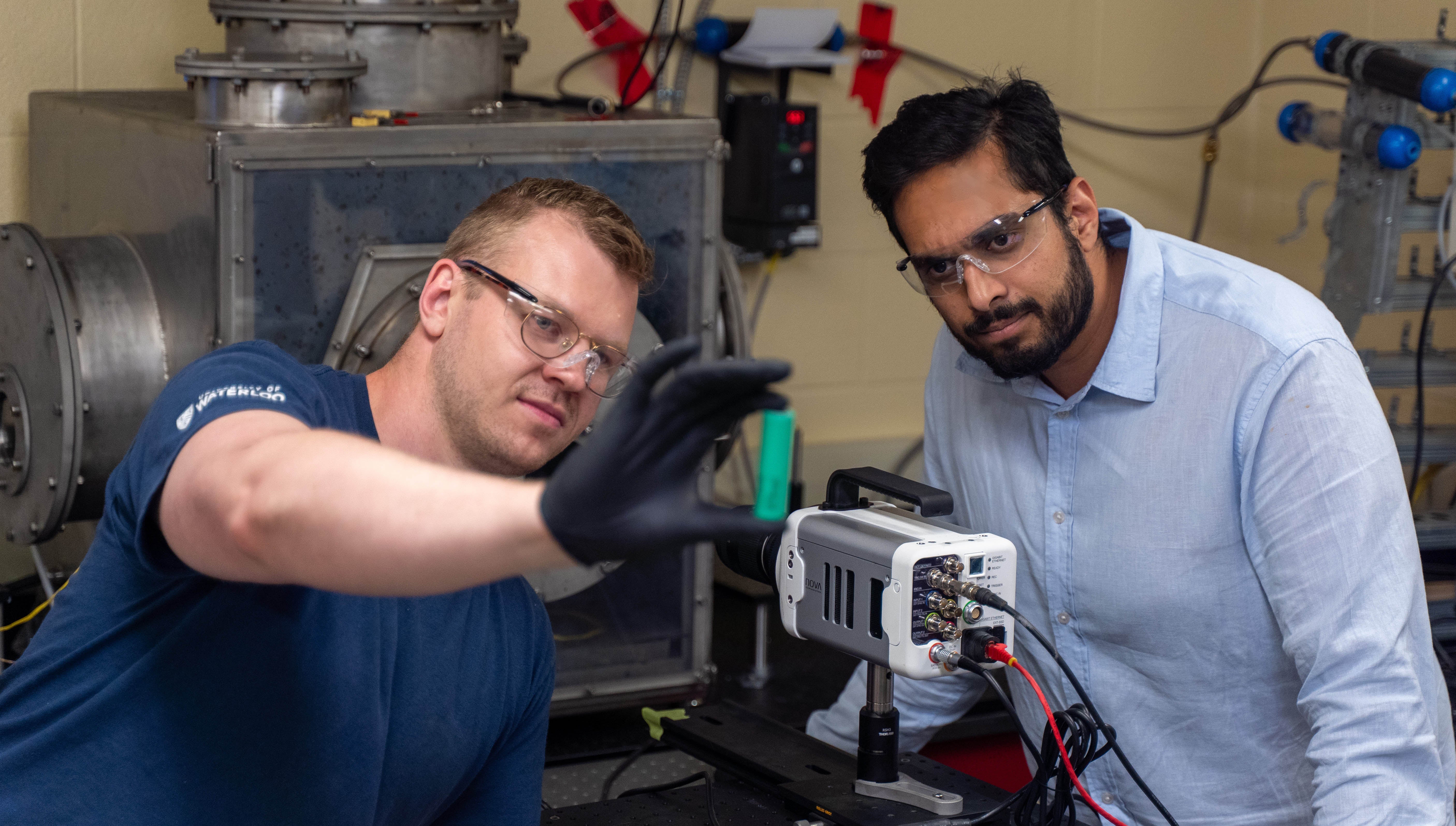
"The issue that we're really dealing with is that the consequence of that small fraction can be quite large," he says.
Gupta's research at Waterloo's Fire Research Facility focuses on recreating these failure scenarios in controlled conditions. By triggering thermal runaway in battery cells and capturing high-speed data, his team is working to reveal how fires start, spread and evolve in at speeds consistent with the failure.
The work is being done in conjunction with fellow Waterloo engineering researchers Dr. Kyle Daun and Dr. Michael Pope who investigate areas such as combustion and advanced batteries.
The data being collected by the researchers is crucial for improving safety across the entire battery ecosystem, from the design of individual cells to how large systems, are packaged and managed.
"If we can determine the precise conditions that lead to failure, manufacturers can build in safeguards that prevent those conditions from ever occurring," Gupta says.
For data centres, this could mean better thermal management systems, improved spacing between cells or materials, enhanced monitoring and faster detection of early warning signs, along with the development of effective suppression strategies.
It also highlights a broader issue facing engineers and regulators: technology is advancing faster than safety frameworks can keep up.
"The advent of new technologies creates a wake, which can include unintended consequences such as fires," Gupta says.
Still, there is reason for optimism. Industry standards, engineering controls and ongoing research are already reducing risks and collaboration between academia, industry and regulators is accelerating progress.
"The big takeaway is that most of the engineering systems that support battery technologies are actually pretty good," Gupta says. "It is essential for us to put ourselves into a position where we can be proactive and deliver the necessary know-how to manage fire risks before a given technology proliferates."
As data centres continue to expand, supporting AI and digital services, ensuring the safety of the batteries that power them will be critical.


