
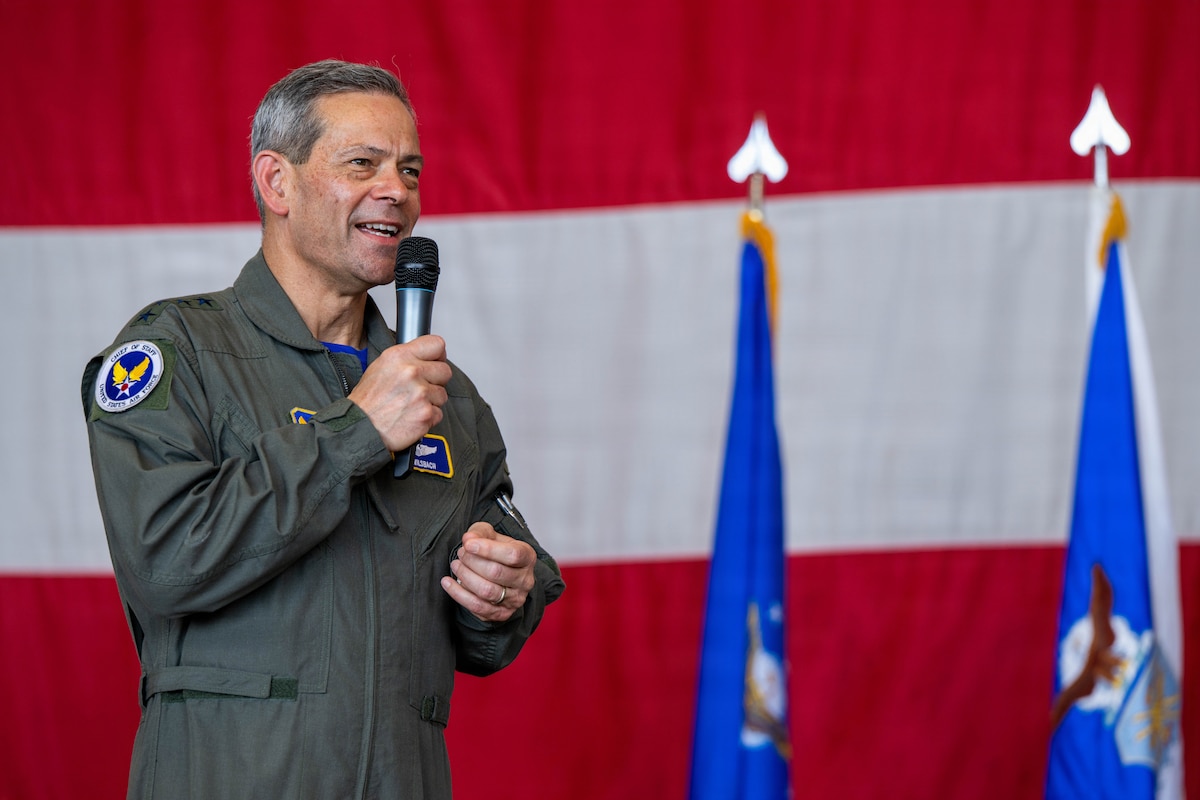
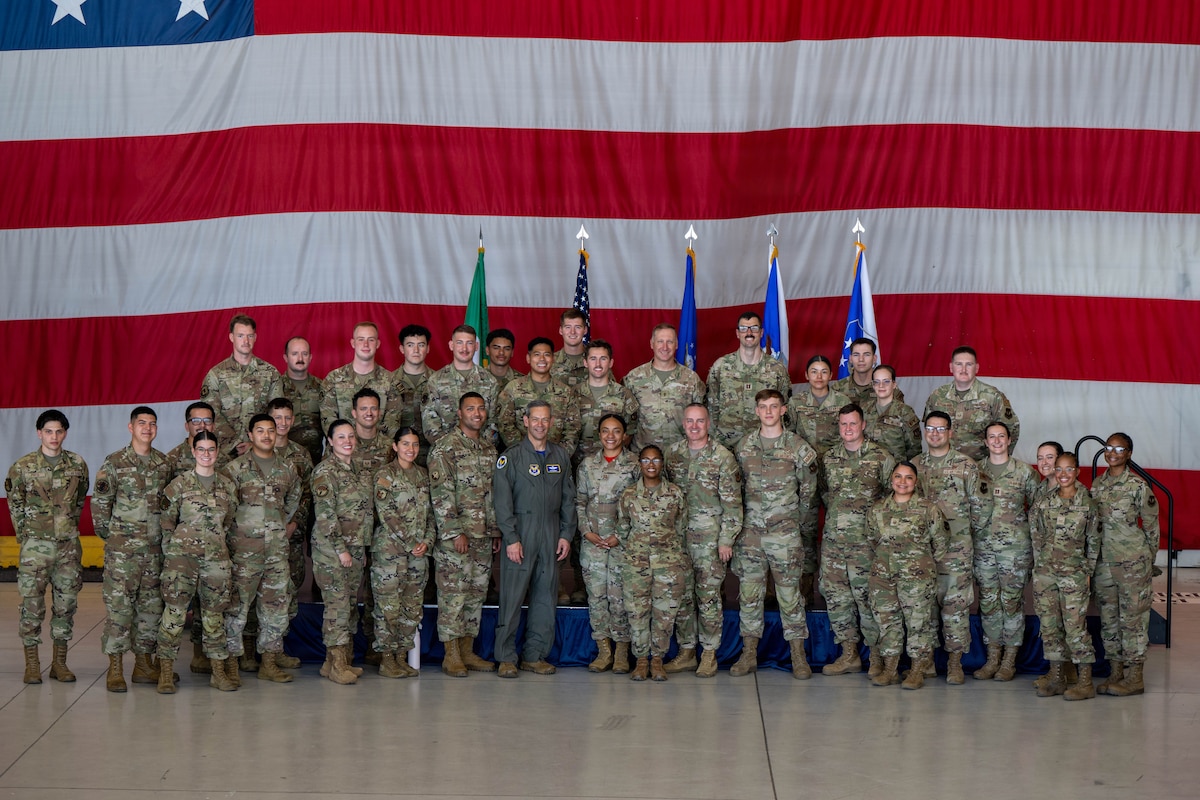
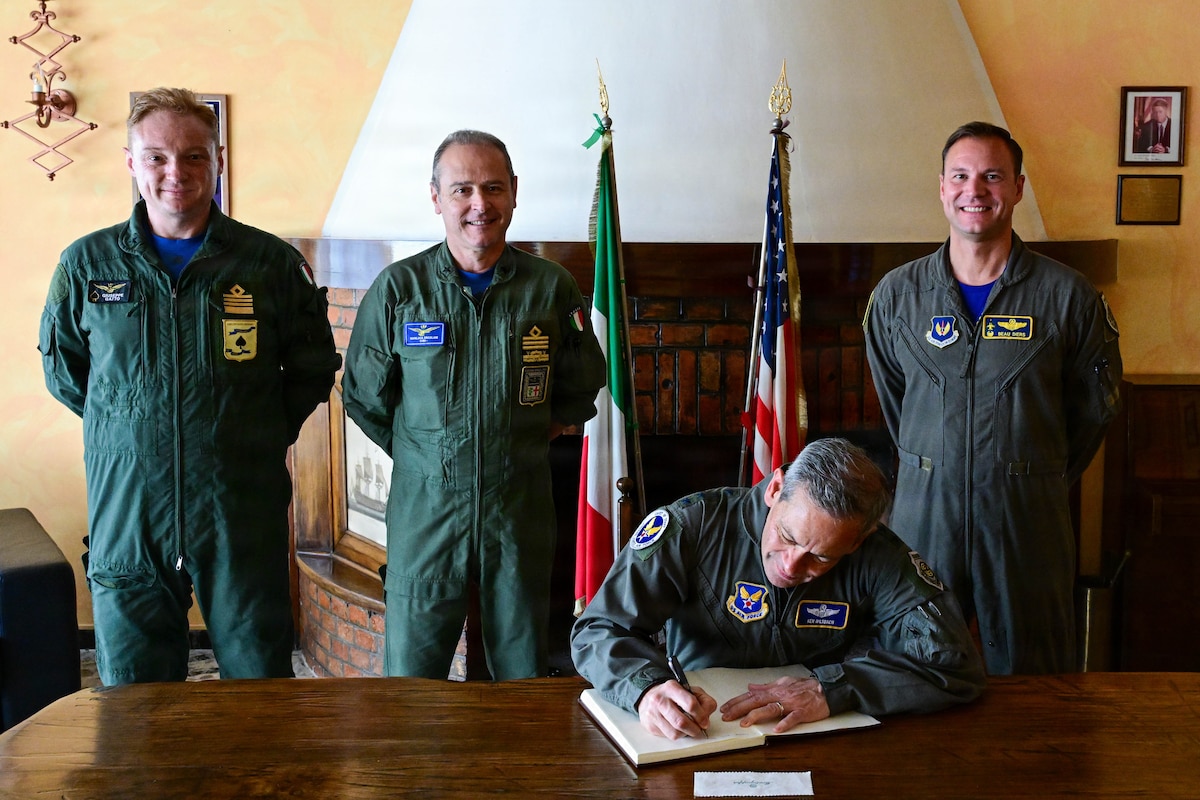
Air Force Chief of Staff Gen. Ken Wilsbach and Chief Master Sgt. of the Air Force David R. Wolfe visited Aviano Air Base, Italy, to engage with Airmen and better understand Aviano's mission, capabilities and quality-of-life challenges July 9-11.
Throughout the visit, Wilsbach and Wolfe met with Airmen across multiple organizations, held an all-call and participated in a capabilities showcase that demonstrated the diverse missions of the 31st Fighter Wing.
Mrs. Cindy Wilsbach, wife of the Air Force chief of staff, and Dr. Doniel Wolfe, wife of the chief master sergeant of the Air Force, also visited to meet with military families and support agencies across the installation, helping identify opportunities to advocate for the needs of the Aviano community. While the visit highlighted the expertise and accomplishments of Airmen, much of the engagement centered on understanding installation challenges and ongoing efforts to improve quality of life for Airmen and families.
"Today we discussed challenges that impact Airmen and their families. We talked about visa issues, housing, spousal employment and child care; all those impact readiness," Wilsbach said. "Part of our job is to take these problems back to D.C. where we will engage with other departments and the staff to knock down those barriers."
The Italian visa process is one challenge Airmen and families face. Dependents and civilian employees must receive an Italian mission visa before entering Italy. Often, visas do not arrive before Airmen must report for duty, causing family separation, financial hardship and workplace adjustment issues.
The 31st FW has focused on reducing the impact to service members by approving reporting extensions when possible, reinforcing visa requirement messaging through the Air Force Personnel Center and tracking local visa trends.
Wilsbach and Wolfe's visit also focused on dormitory conditions and quality-of-life concerns affecting junior enlisted Airmen. Airman dorm leaders (ADLs) briefed about dormitory challenges while providing a tour of the facilities. This allowed leaders to see firsthand the mold and ventilation concerns, ongoing dormitory renovation projects, aging heating, ventilation and air-conditioning systems, and resource challenges affecting maintenance efforts.
Wilsbach and Wolfe learned of the AF Campus app, designed and developed by 31st FW personnel using innovation funding to help streamline communication. The app allows Airmen to communicate and resolve issues directly with ADLs through their phones, receive work order updates and stay informed on dormitory announcements without barriers such as network access.
"Airmen can't go 12 hours on the flight line working and supporting the mission and then return to inadequate living conditions or broken appliances," said Staff Sgt. Devon Mendoza, 31st Civil Engineer Squadron ADL. "Those things put an additional strain on people who already give so much. One of our main priorities is ensuring our Airmen have quality living conditions so they can focus on accomplishing the mission."
In support of that priority, the 31st FW is also resurfacing the track at Aviano to provide Wyvern Nation with a more reliable place for fitness and recreation. During the all-call, Wilsbach and Wolfe addressed the ongoing emphasis on physical fitness and the elevated standards of the Air Force fitness test as nonnegotiable requirements.
"Physical fitness is directly tied to readiness," Wilsbach said. "It's essential to every Airman's ability to execute the mission under challenging conditions or combat operations."
This is one of the reasons physical standards have increased recently.
"Those who spend time to make sure that their mental, physical, social and spiritual readiness are squared away are going to [be better off]," said Wolfe.
By engaging directly with Airmen through facility visits, discussions and an installation-wide all-call, Wilsbach and Wolfe gained insight into the realities of serving overseas and the connection between quality of life, readiness and the 31st FW's ability to generate combat airpower in support of NATO and regional security objectives.
"Taking care of Airmen and families enables our priorities of readiness and modernization," Wolfe said. "Readiness begins with the individual. When leaders create an environment where Airmen can grow, develop and thrive, quality of life becomes a combat capability, not a convenience."


