
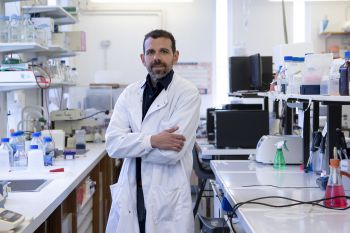
Researchers at the University of Sussex, in collaboration with scientists from different institutes worldwide, have identified a blood test capable of early diagnosis of the most aggressive form of brain tumour, with the potential to save lives.
Lead author Professor Georgios Giamas and his team, have identified distinctive biomarkers (molecules that act as signs of normal processes, diseases, or responses to treatment) within patient blood samples, which could signal the presence of Glioblastoma, one of the most aggressive forms of brain tumour.
The study unveiled in the highly respected journal Cell Reports Medicine, investigated whether a simple blood test - analysing the cargo of tiny particles called small extracellular vesicles (sEVs) that are released by cells into the bloodstream - could accurately detect and classify these tumours.
More than 11,000 people are diagnosed with a primary brain tumour in the UK each year. Glioblastoma is the most common high grade primary brain tumour in adults, which means it can grow and spread exceptionally quickly. Currently, diagnosing glioma often requires risky brain surgery.
Professor Giamas said: "Currently, Glioblastoma detection relies on the display of symptoms, magnetic resonance imaging and invasive tissue biopsies – all of which can delay the identification of the tumour.
"Early diagnosis for any type of cancer is crucial, but it is particularly so for Glioblastoma, which is often diagnosed late."
The team carried out their first study in 2022 with a small patient group to develop an accurate, non-invasive, and timesaving diagnostic method.
In the follow-up study, they collected blood plasma from a larger group including glioma patients and healthy volunteers. The researchers identified specific biomarkers inside the sEVs that were isolated from blood plasma and analysed them using a combination of advanced techniques.
This allowed researchers to get a "chemical fingerprint" of the biomarkers incorporated within the sEVs, including proteins and tiny genetic molecules called microRNAs. Using machine learning algorithms, the team were then able to combine the complex data and find the most reliable patterns for diagnosing glioma.
The data analysis revealed samples from glioma patients were consistently different from those of healthy people allowing the research team to create a highly accurate test. In a small group of patients followed over time, changes in the biomarkers suggest the test could also monitor how a patient is responding to therapy.
The method also showed promising results in differentiating between major glioma subtypes and distinguishing gliomas from other types of brain tumours, which is crucial for choosing the right treatment.
Professor Giamas said: "This is fantastic news because we've shown that via a simple, cost-effective blood test we can identify a robust biomarker signature that can detect even the most aggressive brain tumours with remarkable accuracy.
"This discovery could save lives by replacing risky brain surgery with a rapid, minimally invasive test that delivers answers in days rather than weeks, allowing treatment to begin at the earliest possible moment.
"The next critical step is creating consistent procedures across hospitals and launching larger studies to bring this blood test from the laboratory into routine clinical practice, where it can truly transform patient outcomes."
Dr Stephen Robinson, a Clinical Oncologist and recent postgraduate from the University of Sussex, was first author on the paper. Describing the significance of the findings, he said: "Due to their location, brain tumours are extremely difficult to diagnose and monitor, which may be one of the reasons for their historically poor survival. This research is an important step in developing an effective "liquid biopsy" blood test that can provide important information about a patient's brain tumour, without the need for an invasive brain biopsy'.
Funded by Action Against Cancer , Professor Giamas conducted further research into the clinical value of their findings, by analysing blood samples of a larger cohort of Glioblastoma patients obtained from Genomics England (UK), the Neurogenome study biobank (Denmark) as well as the Dunedin Brain Tumour and the HeartOtago databases (New Zealand).
Ms Charley Cranmer, Director of Fundraising and Communications for Action Against Cancer said: "Everyone at Action Against Cancer is delighted to have funded this pioneering research that will transform the diagnosis and treatment for patients with aggressive brain cancer. We are proud to have played a part in this life-saving breakthrough."


