
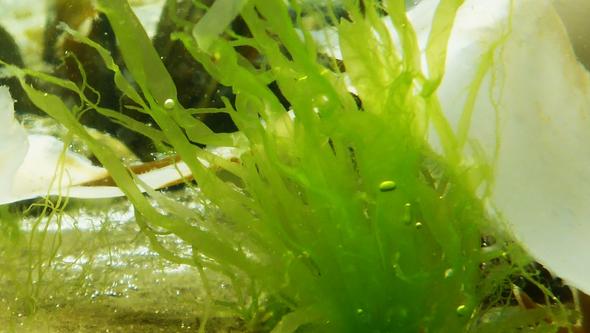
Gutweed could become a future crop in the Baltic Sea. This is shown in a new study from the University of Gothenburg, where researchers have, for the first time, successfully cultivated the seaweed through its entire life cycle in brackish water.
"This is an important step towards sustainable aquaculture in the Baltic Sea," says Sophie Steinhagen, researcher at the Department of Marine Sciences at the University of Gothenburg.
Interest in macroalgae cultivation is growing rapidly because seaweeds can be used for food, animal feed and biomaterials. However, many species currently cultivated require saltier waters than those found in the Baltic Sea. Gutweed (Ulva intestinalis) is different. It grows rapidly, tolerates large environmental variations and thrives in brackish water.
"Gutweed is one of the few seaweed species with real potential for cultivation under the unique conditions found in the Baltic Sea," says Sophie Steinhagen.
Can be combined with offshore wind power
Seaweed farming could play an important role in future sustainable food systems. Macroalgae absorb nutrients directly from the water and could help reduce eutrophication in the Baltic Sea, while producing biomass without the need for agricultural land or freshwater.
However, several practical challenges remain, including harvesting, offshore logistics and economic viability.
"This study shows that seaweed farming in the Baltic Sea is possible, but also what still needs to be developed before it can work on a larger scale," says Sophie Steinhagen.
The researchers also investigated the possibility of cultivating gutweed alongside offshore wind farms. Sophie Steinhagen sees major opportunities for growing seaweed between wind turbines.
"This could allow the same marine area to be used for both renewable energy production and sustainable food production," she says.
A future crop from the sea
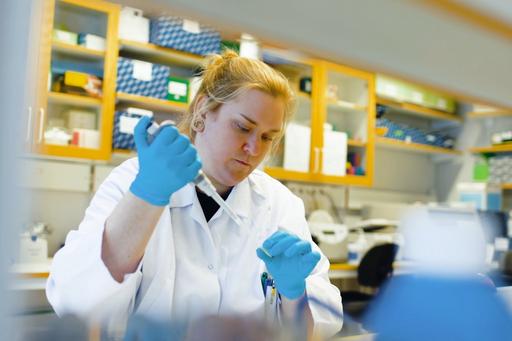
The researchers tested 40 different strains of gutweed collected from different parts of the Baltic Sea. They followed the entire process, from reproduction and seedling development in the laboratory to fully grown algae cultivated at offshore sites including Kriegers Flak in the southern Baltic Sea.
The results also revealed several challenges. Only around ten percent of the tested strains could reproduce reliably under cultivation conditions. However, the successful strains grew rapidly and efficiently produced new seedlings for further cultivation.
"This demonstrates how important it is to select the right strains and build biobanks if we want to develop large-scale seaweed farming in the Baltic Sea," says Sophie Steinhagen.
The study was funded by the European Union through the ULTFARMS and OLAMUR projects.
Read the research article in Journal of Applied Phycology: Exploring uncharted waters of future crop systems: Pioneering Ulva intestinalis seedling development for a sustainable full-life-cycle offshore aquaculture in the wider Baltic Sea area
Text: Karl-Johan Nylén


