Pediatric oncology researcher Barbara Savoldo, MD, PhD, works to improve treatment options for young patients battling blood cancers, neuroblastoma and brain cancers. When first-line treatments such as chemotherapy fail, the path forward may depend on specialized immunotherapy.
For patients in need of that next option, oncologists turn to the dedicated team at the UNC Lineberger Advanced Cellular Therapeutics (ACT) Facility, where researchers and technicians use specialized technology to process and manufacture personalized cancer-fighting therapies.
The Chapel Hill-based facility specializes in CAR T-cell therapy, a type of immunotherapy that re-engineers a patient's own white blood cells, called T-cells, to better recognize and attack cancer cells. The therapy, which is given through an infusion, remains in the body to continue destroying cancer cells and may even help guard against relapse.

Barbara Savoldo, MD, PhD
"We like to say that this product is manufactured with hope," said Savoldo, director of the ACT Facility. "There's a lot of hope that what we deliver to the patient will help them continue their life and give them back the small things that we sometimes take for granted."
The ACT Facility is one of only 10 places in the United States-and the only one in North Carolina-capable of developing these superpowered immune cells. Patients from around the world, across the nation, and throughout the state rely on its services.
Putting the CAR in CAR T-Cell Therapy
The CAR T-cell process begins with informed consent from the patient. After talking through the treatment protocol, a simple blood draw is taken. White blood cells, including T-cells, are then separated from the patient's blood using a specialized machine.
Scientists collect the remaining T-cells and incubate them with a virus. The virus acts like a cargo van that enters the T-cells and insert chimeric antigen receptors (CARs), proteins that help them recognize cancer with greater precision, inside.
After multiplying in an incubator, the cells are carefully monitored and tested for contaminants and exposure to infectious diseases. Such contaminants could pose significant risks if transferred to the patient. Once the cells receive the "all clear," the scientists move to the most crucial step.
Finally, the cells are tested to see whether they can carry out the job they were designed to do. Scientists place a small sample with tumor cells to determine whether the engineered T-cells can attack and reduce cancer cells. If the T-cells pass the test, the therapy is cleared for shipment back to the patient.
It Takes a Structured Village
As an FDA-designated clean facility, the ACT Facility must meet exceptionally high standards to minimize the risk of contamination from bacteria and other pathogens. Each of its 14 laboratories features specialized equipment, with carefully controlled humidity, air filtration, air pressure and temperature.
Colin Mudd, assistant director of Quality Assurance and Quality Control, ensures that the production equipment runs smoothly and monitors staffing and resources to meet product demand. It is a responsibility he does not take lightly.
"This is delicate and unique work," said Mudd. "We take pride in the quality, because these cells might be the patient's last opportunity. It means we really need to stay on task to help them as best we can."
Building Better CAR T-Cells
Gianpietro Dotti, MD, an expert in cell biology and immunology, has helped shape the ACT Facility and advance its science since its establishment in 2015. Today, he continues to guide the future of CAR T-cell development through innovative research.
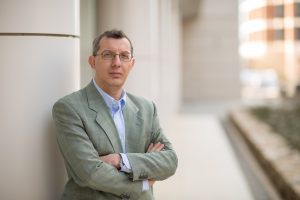
Gianpietro Dotti, MD
"There are so many things you can do to improve the anti-tumor effect of CAR T-cells," said Dotti, director of the UNC Lineberger Cellular Immunotherapy Program. "We have always believed that giving T-cells the capacity to maintain themselves was a good strategy."
Dotti and his team aim to increase long-lasting CAR T-cells, known as T memory stem cells, during manufacturing. These cells can remain in the body for decades and reproduce on their own. Using kinase inhibitors, Dotti and several other laboratories at UNC -Lineberger Comprehensive Cancer Center hope to create more of them to provide patients with stronger, longer-lasting cancer therapy.
The Future of CAR T-Cells at UNC
The hard work and dedication to cancer research at UNC is getting noticed.

Jonathan S. Serody
MD
In early August, UNC Lineberger Comprehensive Cancer Center received an anonymous $20 million donation to support clinical trials for near-term cancer targets, expand the ACT Facility, and recruit and retain faculty thought leaders.
Jonathan Serody, MD, a hematologist and director of the Cellular Therapy Program at UNC Hospitals, says much of this research would not be possible without support from UNC Health, the state of North Carolina, and individual donors.
"It is because of this support that patients from North Carolina can access cutting-edge therapy in their own backyard in 2026," said Serody. "Through this research, we can work to improve outcomes for patients in the state, across the country and around the world."
About UNC Lineberger
The Lineberger Comprehensive Cancer Center at the University of North Carolina at Chapel Hill is North Carolina's only public National Cancer Institute-designated Comprehensive Cancer Center and one of only 58 comprehensive cancer centers in the nation designated by the National Cancer Institute. As the research engine driving cancer clinical services at UNC Health, UNC Lineberger brings together leading physicians, scientists and health professionals to advance discoveries in cancer prevention, detection and treatment. Through groundbreaking research, innovative clinical trials, patient-centered care and bidirectional community engagement, UNC Lineberger is working to reduce the burden of cancer and improve the lives of patients across North Carolina and around the world.