
How The Jackson Laboratory, UConn Health, and the state of Connecticut worked together to create the nation's first state-mandated endometriosis biorepository.
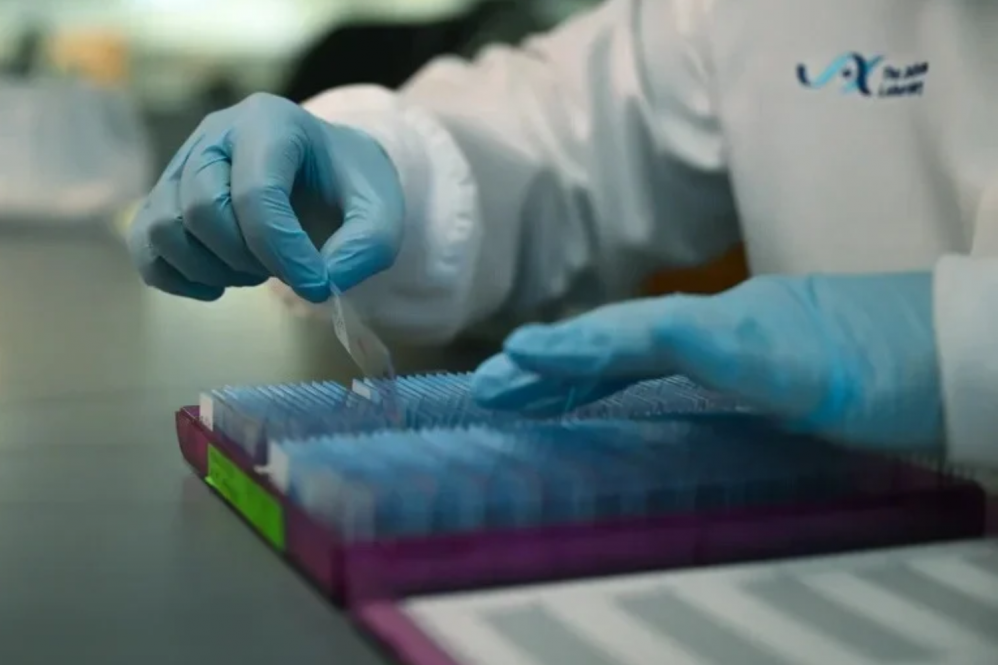
A researcher at JAX holds a slide containing a biospecimen from the Connecticut endometriosis biorepository. Credit: Dave Wurtzel, The Jackson Laboratory.
Endometriosis is a chronic, systemic disease affecting an estimated 1 in 10 female-born individuals around the world. It is chronically understudied, underdiagnosed, and underfunded. But in the state of Connecticut, the state government, The Jackson Laboratory (JAX), and UConn Health came together to change that.
The Connecticut Endometriosis Working Group, which had its first meeting in 2021, brought together patients, advocates, healthcare providers, researchers, and legislators under the leadership of State Representative Jillian Gilchrest. After two years of work, in 2023, Connecticut passed House Bill 6672, "An Act Concerning Endometriosis," and became the first state in the nation to mandate dedicated statewide data and biospecimen infrastructure for endometriosis.
The legislation directed UConn Health, working with JAX, to establish a program supporting research into earlier detection and better ways to manage the disease.
From partnership to statewide infrastructure
That program became EndoRISE (Endometriosis Research, Innovation, Support, and Education) and brought research infrastructure together with public awareness and clinical education in a coordinated statewide effort.
The team behind this effort has a new publication in Frontiers in Reproductive Health describing the EndoRISE model and how its core components could be adapted by other states and health systems.
"The EndoRISE program was a labor of love that started with a small group of patients, advocates, legislators, doctors, and scientists, who wanted to make a difference in the lives of millions of women who suffer from endometriosis," said Danielle Luciano, associate professor of obstetrics and gynecology at UConn Health and co-director of EndoRISE. "This paper presents a blueprint for other states to follow so there can be programs like this all over the country."
"After passing the bills, we kept hearing from researchers, advocates, and patients in other states who wanted to know how we built this program and what steps we followed, so we wrote it all down… It took patients, clinicians, scientist and legislators working side by side, and we hope sharing that process helps accelerate endometriosis research well beyond Connecticut," says Elise Courtois, Ph.D., JAX assistant professor and co-director, EndoRISE

Building a resource for research
At the center of EndoRISE's success is a statewide biorepository that combines biological samples with detailed clinical information. UConn Health brings medical, surgical and clinical expertise, while JAX contributes expertise in basic research, genomics technologies and biobanking, and advanced molecular technologies that honor the generosity of enrolled patients who donate their tissues to advance research.
Standardized and validated protocols through the WERF-EpHect tools across participating institutions mean researchers can work with high quality, technology forward, consistently collected, carefully characterized samples.
Since its inception, more than 10,000 biospecimens including tissues biopsies (endometriosis lesions and endometrium biopsies), biological fluids (Blood, plasma, serum, peritoneal fluid, urine) and cells (peripheral mononucleated cells (PBMC) and peritoneal fluid cells) have been collected across two hospital institutions in Connecticut.
"For researchers like me, EndoRISE is an extraordinary opportunity: standardized, deeply phenotyped surgical biospecimens validated for single-cell and spatial technologies, RNA and proteomics advanced assays," Courtois said. "In a field where funding has been historically scarce, it lets investigators start asking biological questions instead of spending years assembling a tissue dataset. And because the state supports it through policy, the benefit is long-term."
Samples are now being distributed to academic laboratories and biotechnology companies nationally and internationally, opening the resource to researchers investigating endometriosis biology, biomarkers and new approaches to diagnosis and treatment.
Getting results
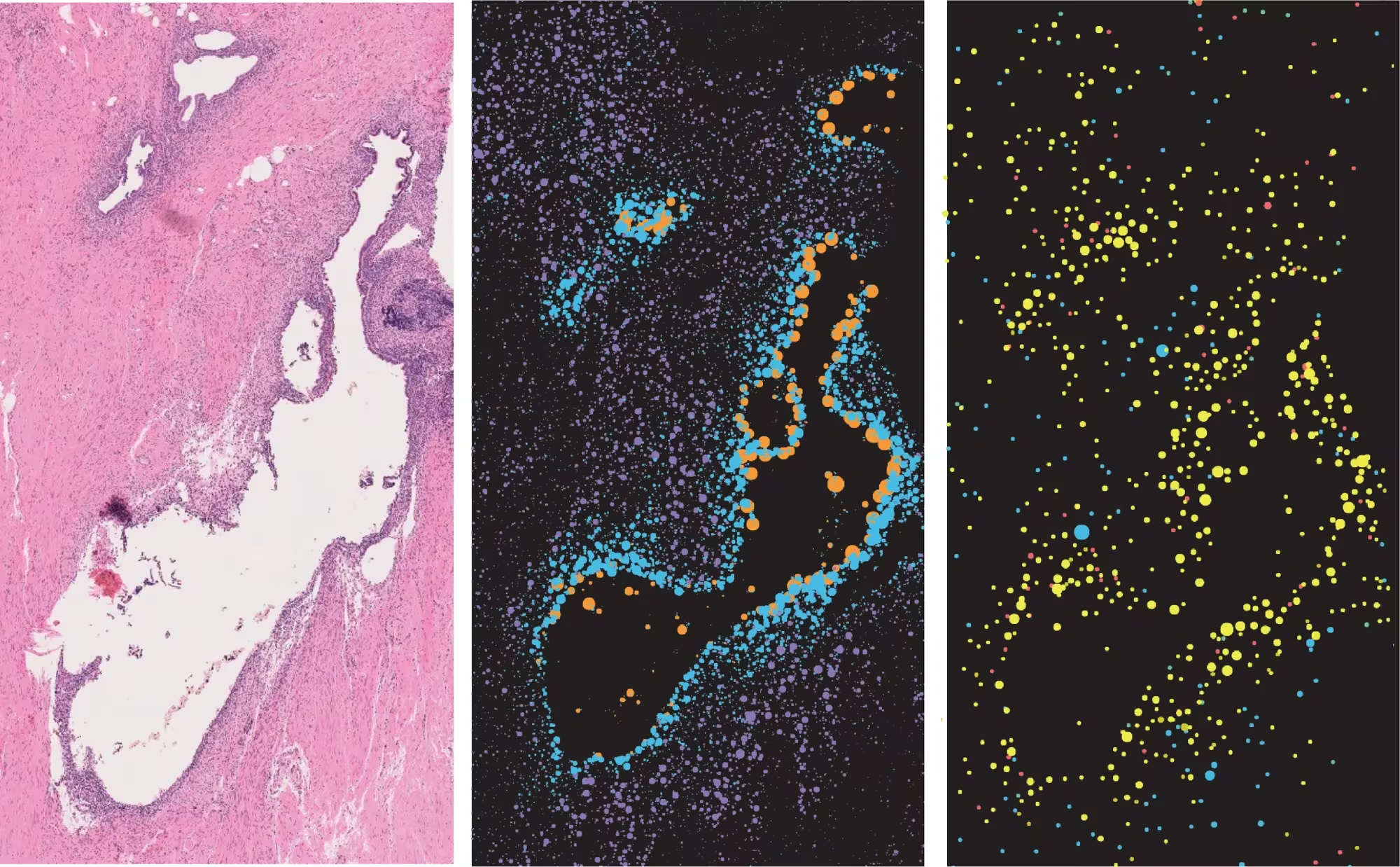
At JAX, those samples are already enabling new discoveries. In a new study published in Nature Communications, JAX researchers used biospecimen from the EndoRISE biorepository to create a detailed spatial map of endometriosis lesions, revealing how nerve, immune, and other cells interact within the tissue microenvironment.
By mapping where different cells are located and how they communicate, researchers identified interactions between neurons and immune cells that may help amplify pain and inflammation in endometriosis. The study, which was published on October 9, marks the first time the team has used tissue samples from EndoRISE and demonstrates how carefully collected, clinically characterized samples can be put to work to help those suffering from endometriosis.
Beyond the biorepository, EndoRISE is also helping broaden how researchers approach endometriosis. In September 2026, the program sponsored an NIH workshop exploring connections among chronic overlapping pain conditions and other multisystem disorders, helping position endometriosis research within a broader scientific conversation about systemic disease, inflammation, and shared biological mechanisms.
A model built to travel
EndoRISE's core approach of bringing policymakers, clinicians, researchers, and patients together around shared standards for collecting and using samples and data to advance endometriosis research provides a template for other states and organizations seeking to strengthen endometriosis research. While the model would need to be adapted to different health systems, regulatory environments, and communities, many of its fundamental pieces can be replicated.
Instead of building isolated programs from scratch, future efforts could build on what EndoRISE has learned and potentially connect through common approaches to data and biospecimens, creating a broader network for endometriosis research.
"Connecticut had the foresight to envision the biorepository not simply as a state-based research initiative, but as an investment in infrastructure designed to foster collaboration and truly catalyze discovery," said Lisa Roy, director of government & community relations at The Jackson Laboratory for Genomic Medicine in Farmington, Conn.
"We are incredibly proud of our legislature for pioneering this effort and grateful to the patients, advocates, researchers and clinicians whose collective expertise and commitment have made it possible," Roy said. "Together, we are building a foundation to advance endometriosis research and improve outcomes for those living with the disease."
For states hoping to follow Connecticut's example, the opportunity may be bigger than replicating the EndoRISE model. By adopting common standards for samples and data, future programs could connect with each other rather than operate independently-expanding the number and diversity of samples available to researchers while reducing the need to build new systems from scratch. Over time, that could lay the groundwork for a coordinated, multi-state network for endometriosis research and a stronger case for federal investment.
"Endometriosis is a complex disease without a cure," said Luciano. "Building programs like this to share tissue, data, knowledge, and experience will definitely lead to more answers for our patients."


