
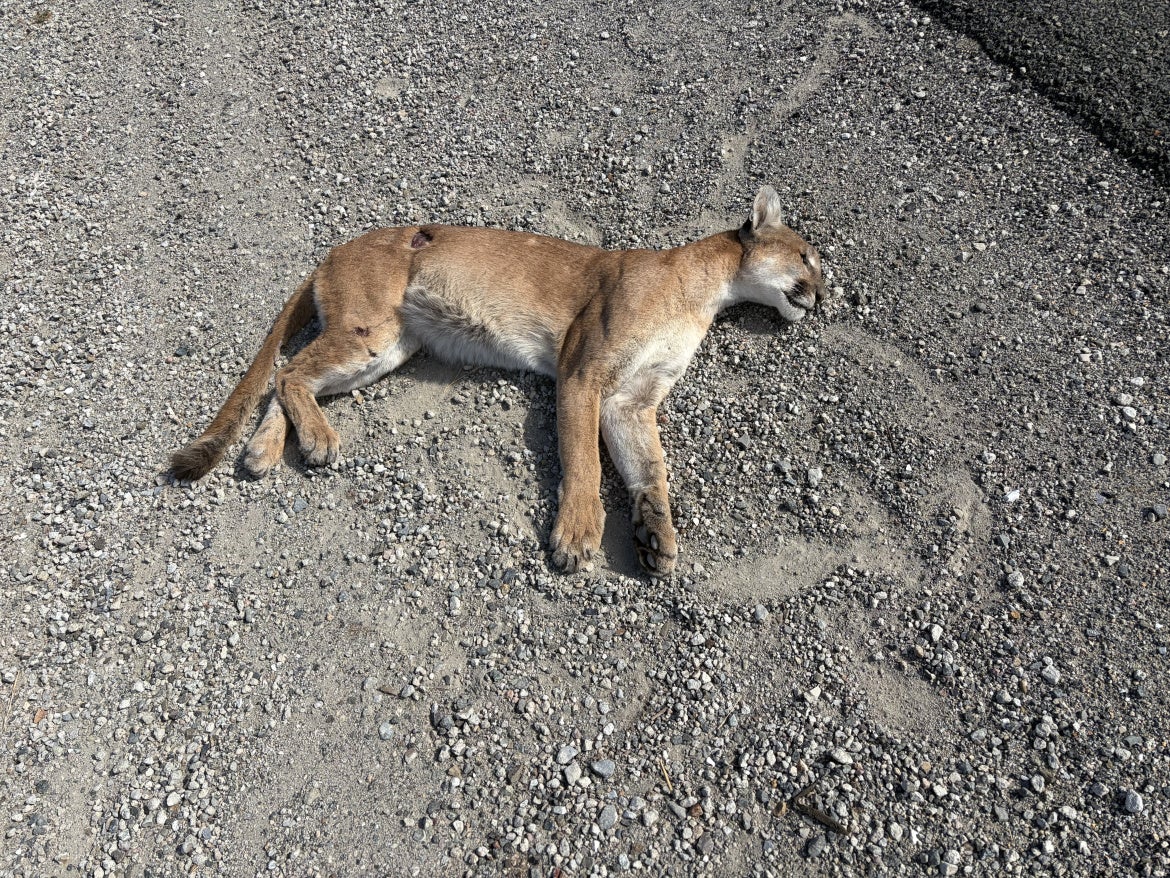
Vehicle collisions are killing about 18% of California's mountain lion population each year and roughly 9.5% of the state's mule deer. That is according to the annual 2026 California Roadkill Hotspots Report released today by the University of California, Davis' Road Ecology Center.
The report called fencing - not wildlife crossings - the only known way to lower rates of roadkill, aside from reducing traffic volumes, speed or roads themselves.
"It makes sense to plan and build new wildlife crossings where wildlife are still migrating, such as Interstate 8 near the border with Mexico and across the several highways blocking elk and deer migration in northeastern California," said Fraser Shilling, director of the UC Davis Road Ecology Center, which is part of the Institute of Transportation Studies. "But just building a crossing doesn't mean wildlife will use it - they'll try to cross wherever they are. Fencing is the answer to reducing roadkill, not crossings alone."
The report draws from data stored in the California Roadkill Observation System, which includes 235,000 records for 77 amphibian, 388 bird, 112 reptile and 193 mammal species. It records observations submitted by state agencies, wildlife biologists and other experts.
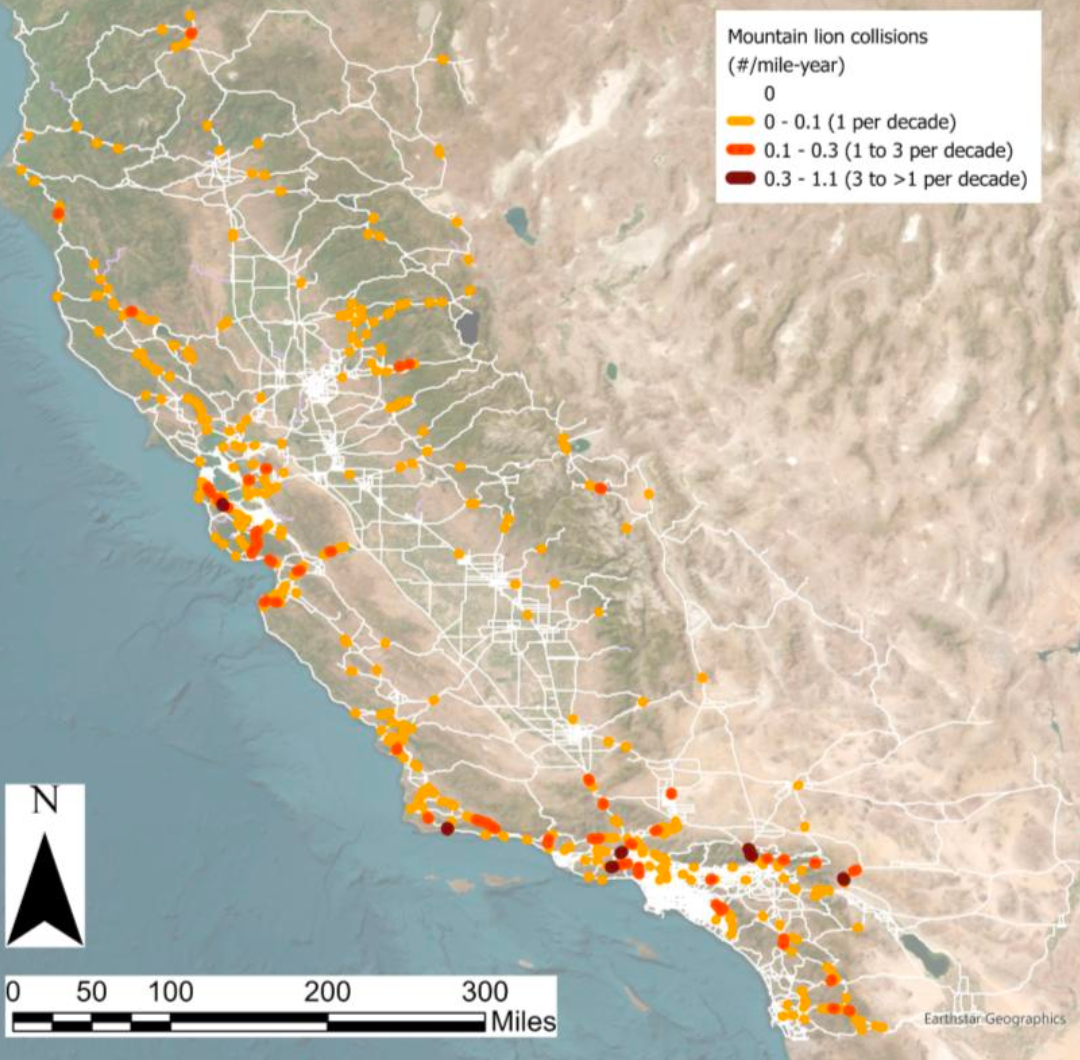
Where vehicles are hitting mountain lions
The report found that at least 780 mountain lions - or 18% of the state's population, as estimated by the California Department of Fish and Wildlife in 2025 - are dying by vehicle strike each year. The highest rates of collisions are along portions of interstates 280 and 15, state routes 62 and 118, and U.S. Highway 101.
Shilling noted that while many mountain lions are being killed in the northern part of the state, the population impact is greater for lions in southern and central coastal California, because their populations are smaller there. The state recently listed mountain lion populations in those areas as threatened under the California Endangered Species Act.
Cars kill more deer than hunting
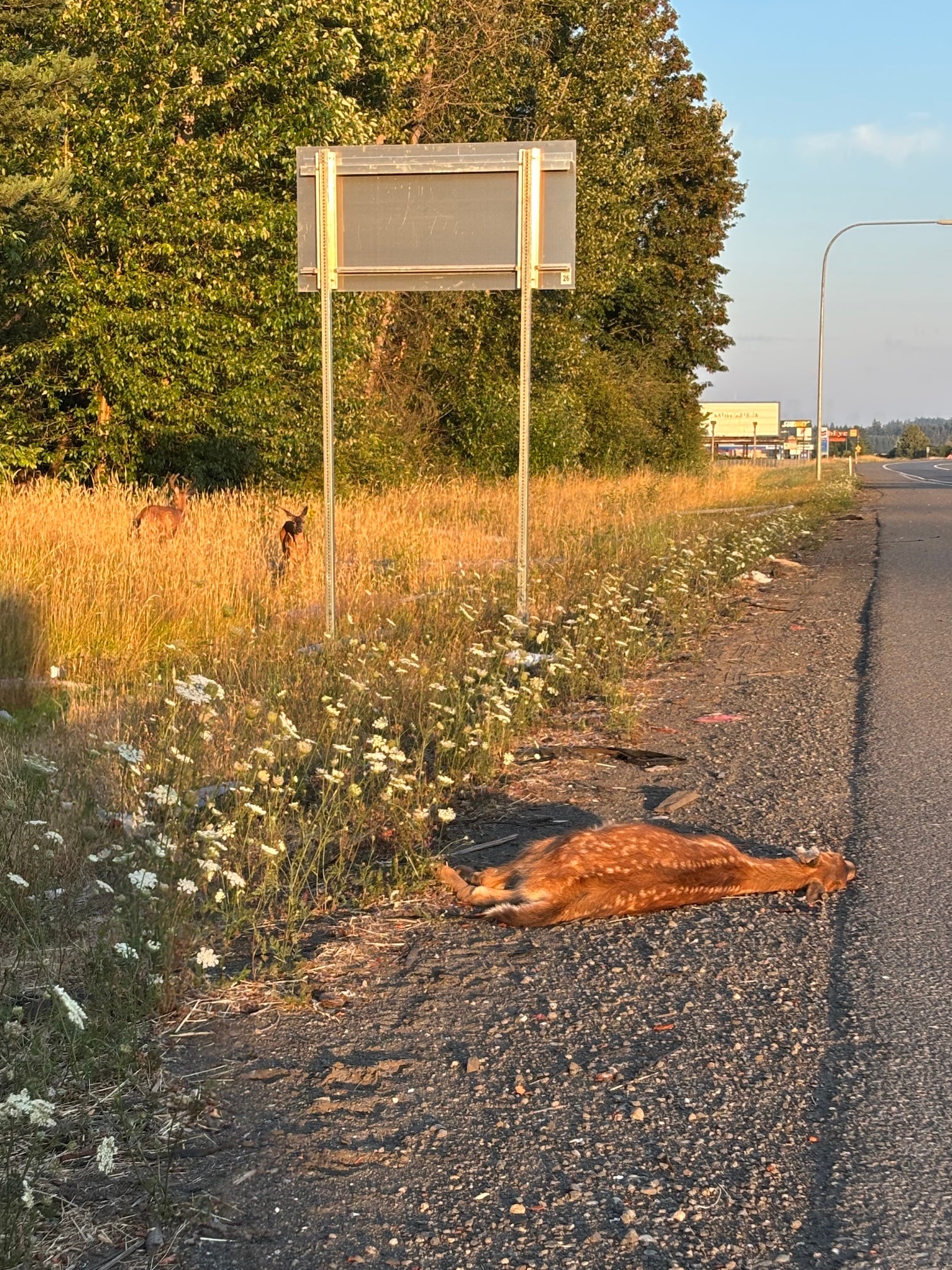
The report also indicates that vehicles on major paved roads and highways kill about 44,000 mule deer each year. That is nearly 10% of the population, according to California Department of Fish and Wildlife estimates. It is also two to four times higher than hunting rates for the animal. U.S. Highway 50 in western El Dorado County is the hotspot for collisions with deer.
Shilling said the mountain lion and deer fatalities are likely higher, as "that's just half of the roads in the state for which we have information."
California has invested in the world's largest wildlife crossing, the Wallis-Annenberg Crossing in Southern California, and in smaller crossings, such as the recently completed overcrossing on S.R. 97 in Siskiyou County. These investments help improve wildlife connectivity but do not reduce roadkill rates because fencing associated with wildlife crossings is limited.
"Short of removing roads or reducing traffic volumes and speeds, California must also invest in extensive fencing along highways, or continue to see declines in our iconic wildlife, like puma and deer," Shilling said.
The most important places to fence, he said, are roadkill hotspots and areas next to existing creek and minor road under-crossings where wildlife are already passing through. This includes the Liberty Canyon Road under-crossing, adjacent to the Wallis-Annenberg crossing.


