
UConn Health study looks at extending health span.
For Judy Donnelly, participating in a UConn Health research study meant driving from Windham to Farmington, drinking four packets of a supplement each day and undergoing a comprehensive series of tests designed to measure everything from her strength and body composition to her cognitive function.
She also happened to have a hip replacement in the middle of the 20-week study.
By the time she finished, Donnelly was leg pressing 203 pounds. She also recalls having more energy and feeling less tired during the study, including as she recovered from surgery.
Whether the supplement she received had anything to do with those experiences is something neither Donnelly nor the researchers know. The study is blinded, meaning participants don't know whether they are receiving a ketone ester supplement or a placebo.
And that is precisely why the research is being done.
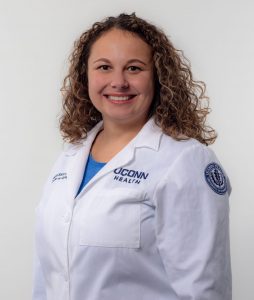
Led at UConn Health by Jenna Bartley, Ph.D., the NIH-funded multi-site clinical trial is investigating whether ketone ester supplementation can improve what researchers call "health span" in older adults who are beginning to show early signs of frailty.
Ketones are substances the body naturally produces when it begins using fat rather than glucose as a primary energy source, such as during fasting or significant carbohydrate restriction.
But researchers have become increasingly interested in ketones for reasons that go beyond their role as an alternative fuel source.
Bartley says emerging research suggests ketones also act as powerful signaling molecules in the body and potentially influence several biological processes associated with aging, including muscle metabolism, metabolic regulation and immune responses.
That raises an intriguing question: Could researchers potentially capture some of those effects through supplementation without requiring older adults to follow a restrictive ketogenic diet?
That's what the trial is designed to help determine.
The researchers' primary outcome is a composite "vigor-frailty" score that brings together measures of physical and cognitive function. The team is looking at muscle strength as well as how quickly participants process information and perform other cognitive tasks.
"We're trying to get a good idea of cognition, physical function and overall health and well-being," Bartley says.
The study will also examine secondary measures including muscle, immune and physical function.
Importantly, Bartley cautions that researchers don't yet know whether ketone supplementation will produce those benefits in this population. Earlier studies have helped establish the safety and feasibility of ketone ester supplementation in older adults, but clinical data on its ability to improve health span remains limited.
Rather than focusing on treating a single disease, the study takes a broader approach: Could targeting some of the underlying biology of aging help people remain physically and cognitively healthier for more of their lives?
"Really looking at geroscience interventions that are targeting aging biology rather than a single disease is what we need to start looking at in order to ensure the health span of older adults in the future," Bartley says.
The study is enrolling adults age 65 and older who are considered "pre-frail" people who may be beginning to slow down but have not yet developed more significant frailty.
Participants in the study are randomly assigned to receive either a ketone ester supplement or placebo for 20 weeks. They take the packets twice a day and visit the UConn Health research team four times during the study. Unlike some clinical trials, participants aren't asked to change their diet, begin exercising or otherwise alter their normal routines.
"We actually want them doing exactly what they normally do," Bartley says.
Throughout the study, the team conducts bloodwork, physical function and strength testing, cognitive assessments, body composition measurements and surveys. Participants also wear a provided Fitbit to track their normal activity.
Clinical research assistant Deborah Noujaim stays closely connected with participants, including checking in with them every other week to monitor how they're doing and discuss any symptoms or concerns.
The dosage is gradually increased during the first four weeks, but researchers can adjust it for participants who experience any gastrointestinal side effects, such as an upset stomach.
That flexibility, Bartley says, allows researchers to personalize the protocol while still gathering the information they need.
That's why participants like Donnelly and Peter Marzano are so important.
Marzano was 76 when he participated in his first clinical trial.
A retired author who has written a series of historical fiction books, Marzano believes he may have first seen information about the UConn Health study online. He was curious and he decided: Why not?
His role was straightforward. He took the packets as instructed each morning and evening, kept track of what he took and periodically traveled to UConn Health for testing.
"It was no big deal to do that," Marzano says. "I think it worked out really well. I think it was well managed."
During the study, Marzano recalls feeling mentally sharp when he sat down to write and had good energy. He also says testing indicated that his muscle mass increased slightly and that his strength remained consistent.
But Marzano understands one of the most important principles of participating in a blinded clinical trial: He doesn't know whether he received the ketone ester or the placebo, so neither he nor the research team can say the study intervention caused any changes he experienced.
For him, that uncertainty didn't diminish the value of participating.
Marzano remains active in retirement, traveling with his wife, working on his books, attending signings and giving presentations about the historical research behind his writing. After his experience at UConn Health, he says he would "very much" consider participating in another study.
Donnelly also understood the importance of research before volunteering. Her husband had pursued his doctorate, and she remembered how difficult it could be to find people willing to participate in research.
Her own experience gave her a new opportunity to contribute.
Even an unexpected hip replacement didn't stop her participation. Noujaim recalls Donnelly remaining committed to the study throughout her recovery and being motivated to continue. Donnelly remembers having more energy and being less tired during the study and was pleased by her strength at its conclusion.
Like Marzano, however, she won't know until the study is completed whether she received ketone ester or placebo.
For Bartley, the larger question behind the study extends well beyond ketones.
The population is aging, and many older adults live with multiple chronic conditions. Treating each disease individually remains essential, but geroscience asks researchers to also consider whether intervening in the biological processes underlying aging could affect several aspects of health at once.
That shifts the conversation from simply increasing lifespan, the number of years someone lives, to increasing health span, the number of years someone can remain healthy, active and independent.
"A lot of biological aging is modifiable," Bartley says. "While we know that some declines are inevitable, it's clear that a lot of aspects are actually modifiable and early intervention can have the biggest effect."
That becomes increasingly important as the number of older Americans continues to grow. Helping people maintain their strength, cognition, mobility and independence could improve individual quality of life while also addressing the growing health care needs of an aging population.
It is why Bartley believes research shouldn't focus only on what happens after older adults become sick or frail.
The opportunity may be to reach them sooner.
And clinical trial volunteers such as Donnelly and Marzano make answering those questions possible.
For Marzano, the experience was an opportunity to contribute to research while learning a little more about himself along the way.
For Donnelly, it meant sticking with the research even through an unexpected joint replacement and discovering just how much weight she could push with her legs.
For Bartley, Noujaim and the research team, every participant brings them closer to answering a much bigger question:
Not simply how can we live longer - but how can we live healthier for longer?


