
The Accessibility Innovation Network of Catalonia: Media, Education and Culture (AccessCat) once again will receive support from the Catalan Government for the 2026–2028 period. The network, coordinated by the UAB to promote the transfer of knowledge in accessibility to information and communication, begins this new phase by expanding its membership to over 300 researchers.
AccessCat, funded by the Agency for Management of University and Research Grants (AGAUR), was created within the framework of the call for grants for R&D&I networks to conduct valorisation programmes and the transfer of research results (XARDI), in which it secured funding for the 2023–2025 period. Its founding was a historic milestone: among the ten selected projects, it became the first R&D&I network directly focused on transfer and impact in the social sciences and humanities (SSH).
After three years of intense activity, the network has succeeded in securing renewed support from the Catalan government until 2028, doing so by expanding its membership to include a total of 22 research groups from 11 institutions, bringing together more than 300 researchers.
Another of the new network's innovations is its structure. To strengthen ties with other ecosystem players, it will introduce the concept of business entities. These entities are clusters and consortia where accessibility can have a direct impact (media, education, administration, social responsibility, mental health, and the third sector). The collaboration of these participating entities with the AccessCat Network guarantees the impact and access of research groups to more than 1,200 social entities in Catalonia, over 550 companies, and the public administration. In total, there will be six different entities: the Audiovisual Cluster of Catalonia, the Open Administration Consortium of Catalonia, the Edutech Cluster, La Confederació (the Employers' Association of the Social Third Sector of Catalonia), Respon.cat, and WeMindCluster.
UAB involvement in AccessCat
As a coordinating entity, the UAB is present in this network through four different research groups:
TransMedia Catalonia: focusing on audiovisual and media accessibility in various genres, platforms and supports. Their priority areas are immersive media, understandable language, sustainability linked to accessibility, video games, and artificial intelligence in accessibility services.
AFIN: research group and service-providing laboratory exploring human reproduction, sexuality and gender, family, childhood and parenting, origins, secrecy and memory, health and care, grief and loss.
Neolcyt (Group of Lexicography, Diachrony and ELE): working in the field of plain language with the aim of making scientific and specialised vocabulary accessible, understandable, and comprehensible. They also develop resources to help institutions and organisations incorporate accessibility into digital administration and communication with users.
STS-b (Barcelona Science and Technology Studies Group): investigating the interaction between science, technology, and society, with a special focus on technologies developed in collaboration with vulnerable groups, such as people with intellectual disabilities, mental health disorders, youth, and older adults.
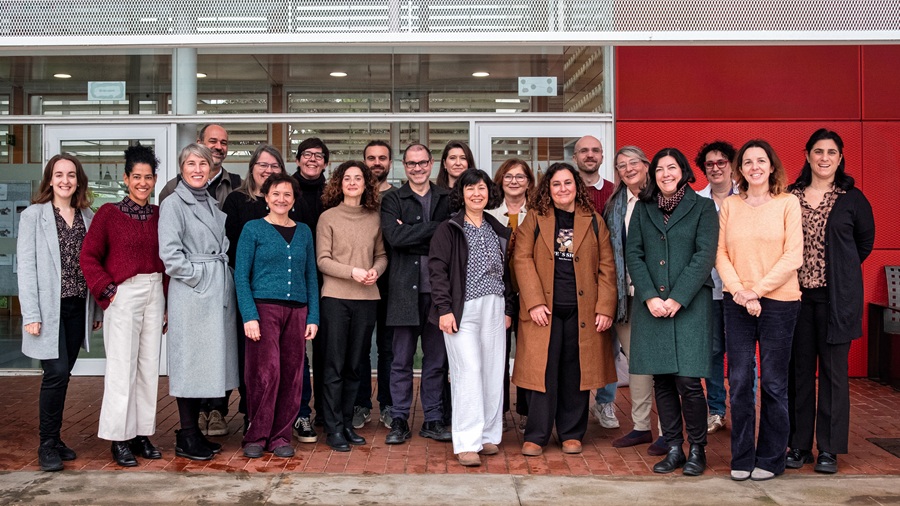
The first meeting of this new phase of AccessCat was recently held at the UAB, with about twenty representatives from research groups and universities in Catalonia (UAB, UB, UPF, UPC, URV, UOC, UVic-UCC, UIC, UdL, ICAC and i2Cat).


