CFA has continued to exceed planned burning and fuel treatment targets over the last two years, further helping to protect Victorians and their properties, agricultural assets, and businesses.
Since June 2025, CFA has completed 170 burning operations across 2,876 hectares.
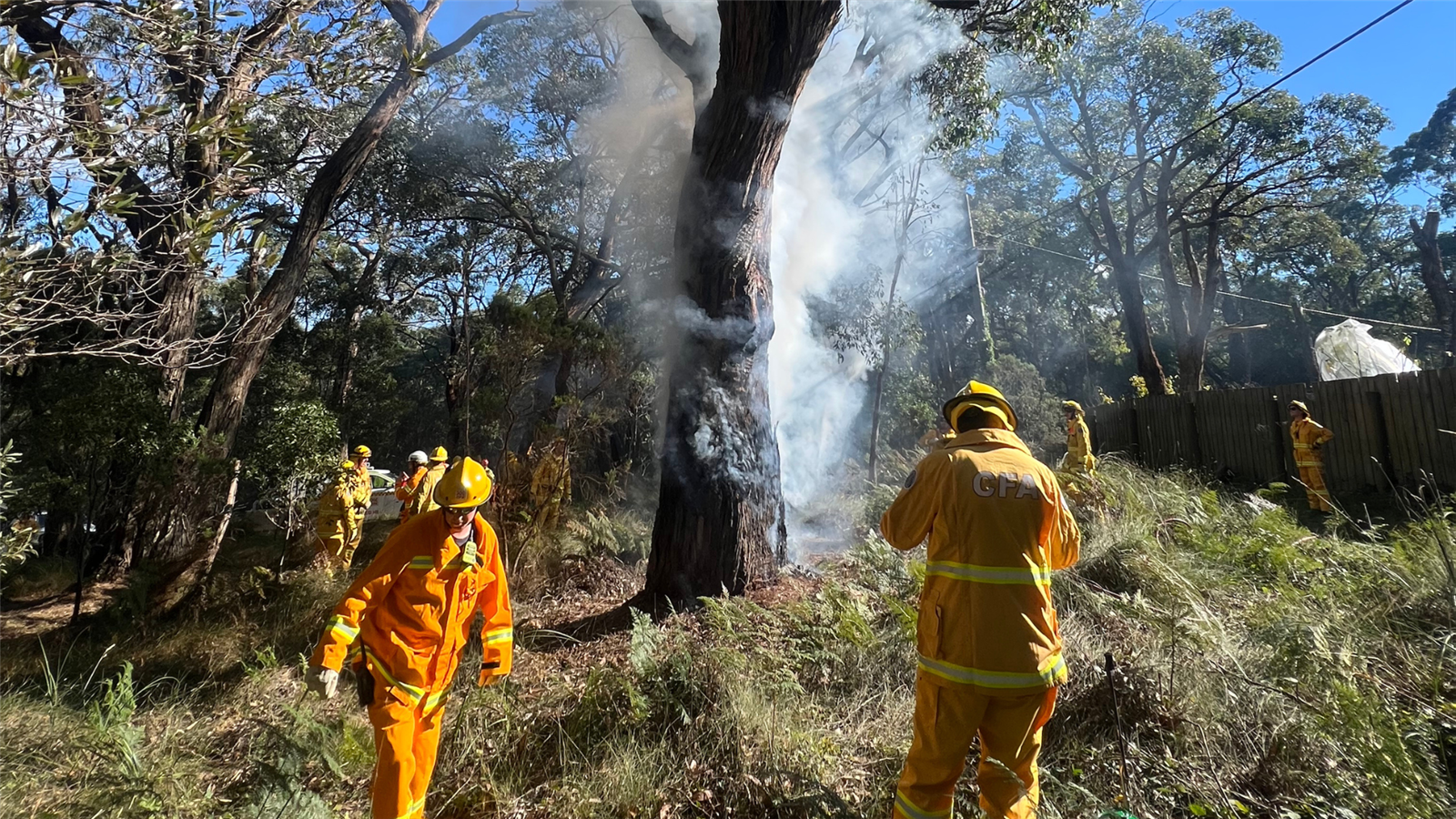
A recent example of this is when CFA members from Main Ridge, Red Hill, Flinders, Mt Martha, Rye and Balnarring Fire Brigades took part in candling operations along Pindara Road in Arthurs Seat (14 May).
The aim of the day was to work alongside the Mornington Peninsula Shire to reduce the fire hazard around Arthurs Seat and neighbouring residents and businesses.
CFA Planned Burn Operations Officer Graeme Briggs and CFA Commander Nick Bryant said working with residents and brigades to manage fuel loads and reduce bark hazards will help minimise severity of potential ember attack in the event of a fire.
"It has been a working example of interoperability and collaboration between CFA and local Government," Nick said.
"We are very active in this space for community safety and fire prevention."
CFA District 8 Vegetation Management Officer Heath Bunting said candling operations are a necessary hazard reduction technique used to remove excessive stringy bark fuel loads.
"Through these practices, the tree itself burns the stringy bark off and collapses onto the ground - removing the fuel load from the tree," Heath said.
"Reducing fuel decreases the impact of bushfires by lowering its intensity and devastating effects. Lower intensity also makes it easier for firefighters to control a bushfire."
Planned burning is delivered by CFA and Forest Fire Management Victoria (FFMVic) to reduce the impact of bushfires as part of the Joint Management Fuel Program through the identification of areas requiring fuel reduction through risk assessment and local knowledge and consultation.
CFA conducts planned burning along roadsides managed by both the Department of Transport and Planning for major arterial roads, and roadsides managed by Local Municipalities.
CFA Deputy Chief Officer Alen Slijepcevic AFSM said there are many examples of where CFA burns have slowed or halted the spread of fires, increasing the ability of firefighters to control them.
"Our strategic burns have allowed CFA firefighters to contain pockets of a fire at the roadside instead of having the fire jump a road and continue to spread to adjoining properties," Alen said.
"We saw this throughout the bushfires in 2024-25 in the Cavendish area."
CFA also delivers planned burns on behalf of and at the request of landowners by local brigades supported by the CFA's Planned Burn Taskforce, made up of more than 900 volunteers statewide.
Landowners have started to manage their fuel loads around their properties ahead of the next fire season and since 9 March 2026, there have been more than 29,600 private burn-offs registered.
"CFA also delivers a range of alternative non-burning fuel reduction activities where appropriate, such as grass slashing, and mulching," Alen said.
"It is important to note that planned burning is an important component to reduce the risk of bushfires in Victoria and provides benefits for fire suppression, however it is not a panacea and it needs to work in unison with other fire prevention measures and response system."