
Clover has long been a symbol of good luck and now researchers are investigating whether growing more of it in our pastures could bring good fortune to dairy farmers and the environment.
A new five-year research program is commencing next month to investigate whether increasing clover in ryegrass-based pastures can help dairy cows produce more milk and improve farm profitability, while reducing reliance on synthetic nitrogen fertiliser and lowering methane intensity.
The $9.87 million Closing the Clover Gap program is a partnership between the Tasmanian Institute of Agriculture (TIA) and Dairy Australia , with funding support from the Gardiner Foundation .
The research will help support the ongoing productivity and profitability of Tasmania's dairy industry, which produces around 11 per cent of Australia's milk and is the state's highest-value agricultural sector with a farmgate value of $678 million in 2023-24.
Dr James Hills, Livestock Production Centre Leader at TIA, said the research builds on findings from the recently completed Dairy HIGH2 farmlet trial .
"The Dairy HIGH2 farmlet trial showed that dairy farms can halve synthetic nitrogen fertiliser while maintaining high levels of pasture growth and milk production. Clover was critical to achieving these results," Dr Hills said.
"We're now taking the research to the next level by directly comparing high-performing clover-rich pastures with traditional perennial ryegrass pastures under two farming systems.
"We want to find out how the production benefits can be achieved consistently and provide farmers with practical strategies to implement on their own farms."
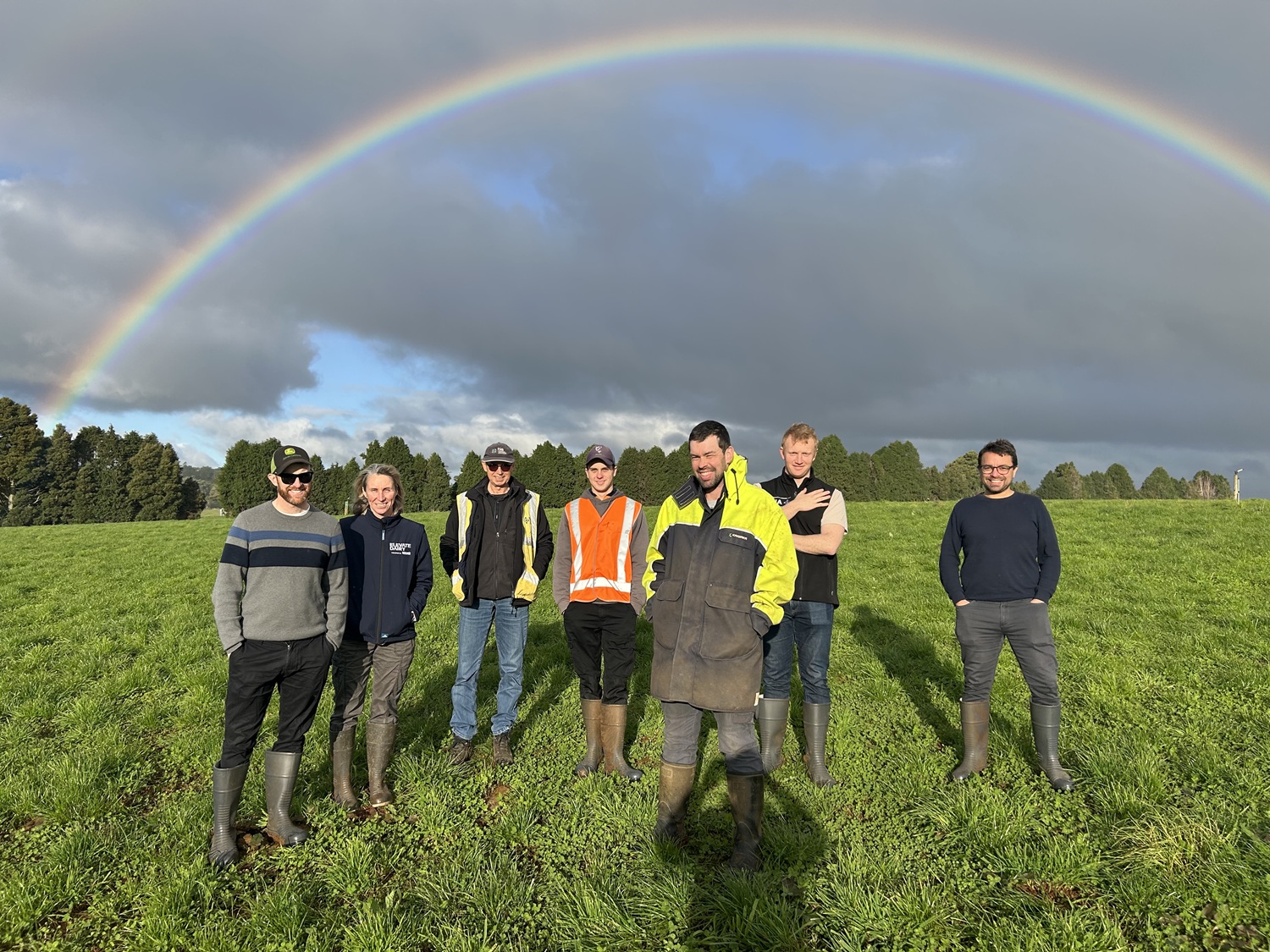
Dairy Australia National Lead – Feedbase, Ruairi McDonnell, said the research had attracted a lot of attention from farmers.
"If you're grazing a ryegrass monoculture, you're quite reliant on high nitrogen fertiliser rates and therefore very exposed to nitrogen fertiliser prices, which is quite topical at the moment," Mr McDonnell said.
"Farmers are interested in potential alternative approaches if a cap is ever placed on synthetic fertiliser use due to concerns about its environmental impact, something that has happened in other parts of the world where intensive grazing production systems are used."
Dr Hills said increasing clover could help farmers produce more milk without needing to increase herd size.
"Pasture eaten directly by cows is the strongest driver of dairy farm profitability, but in ryegrass-dominated systems the amount of pasture cows can eat from each hectare has reached a plateau," Dr Hills said.
"Increasing the amount of clover in pastures could help overcome this limit while reducing the amount of synthetic nitrogen fertiliser needed to grow it.
"There is strong interest from farmers in moving towards clover-rich pastures, but there are still questions about how to best establish and maintain them and how consistently they will perform."
The research will take place at TIA's Dairy Research Facility at Elliott in North-West Tasmania, using the farmlet paddocks (mini farms) established as part of the Dairy HIGH2 program.
The program will expand to include a network of focus sites hosted on commercial dairy farms in Tasmania and Victoria. The commercial farms will allow researchers to test clover-rich pasture systems under real-world farming conditions and work with farmers to identify practical management approaches that can be adopted more broadly.
The research is one of the initiatives that emerged from the National Dairy Forages R&D Strategy, which is a long-term roadmap to guide research and development investments in feedbase in the coming decades. The development of this strategy was supported by Dairy Moving Forward.


