
Many women lack sufficient knowledge about menopause, which has long been an under‑prioritized topic. A leaflet and a new knowledge hub from the research initiative Women in Healthy Transition (KiSO) at the University of Copenhagen aim to help women gain an overview and understand this phase of life.
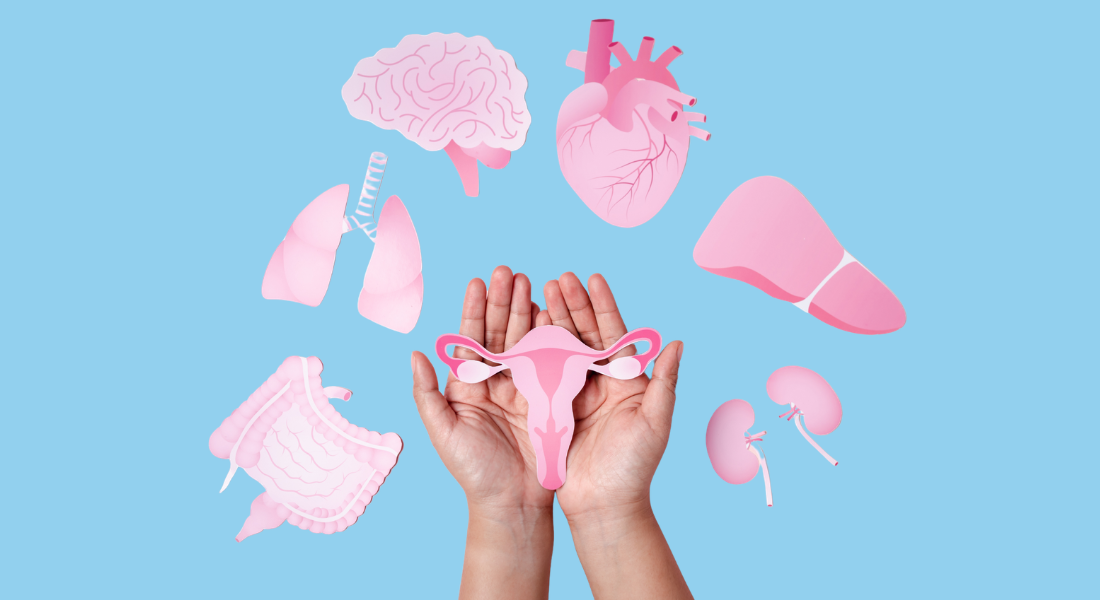
Can dizziness be related to menopause? Or heart palpitations, incontinence, and anxiety?
The common perception of menopausal symptoms focuses primarily on hot flushes and the end of menstruation.
But the range of symptoms can be far more complex and wide‑ranging - only few women know this when they stand on the threshold of menopause.
That is why the research initiative Women in Healthy Transition (KiSO) at the University of Copenhagen has now launched an extensive knowledge hub featuring evidence‑based information about menopause. At the same time, a leaflet providing a quick overview of menopausal symptoms and possible actions is being released.
"Our first goal is to support all Danish women who experience confusion, frustration, and lack the opportunity to make informed decisions when they encounter menopause. We know there is a lot of misinformation about menopause, and our ambition has been to create one place where evidence‑based knowledge is collected and made accessible," says Associate Professor Lasse Gliemann, head of the research project Women in Healthy Transition (KiSO).
Confusion surrounding menopause
Alongside Women in Healthy Transition's in‑depth, long‑term research projects with both physiological and sociological perspectives, it has been crucial for Lasse Gliemann and the research group to quickly reach Danish women with general knowledge about menopause.
"We are trying to catch up on decades of underprioritization of the topic. I believe that increased knowledge among women themselves - but also eventually among health professionals and workplaces - will play an important role in improving how society handles menopause," he says.
In the knowledge hub Women in Healthy Transition (kiso.ku.dk), users will find, in addition to an extensive overview of symptoms, evidence‑based knowledge about how lifestyle changes such as diet, exercise, and alcohol can influence menopausal symptoms.
The portal also includes freely accessible training programs for muscles, joints, and the pelvic floor, tailored to the challenges women may experience when the hormone estrogen declines and fluctuates.
"We know there is a lot of confusion about menopause among everyday women, and it can be difficult to navigate what works when you experience a broad range of symptoms. And it is important to emphasize that options for action will be experienced very individually. At Women in Healthy Transition, we believe it is important to take a holistic view of menopause - not only focusing on, for example, hormone therapy - because we know that lifestyle and physical activity also have a major impact on how women move through these years," says Lasse Gliemann.
The quick overview
It is not only on the digital portal that women can gather information.
A quick overview of the stages of menopause, hormonal fluctuations, and symptoms has been compiled in the leaflet "Follow your changing body". It is the first of its kind on the topic. The leaflet is published by Women in Healthy Transition and created with input from a wide range of experts as well as the The Danish Committee for Health Education, the Danish Health Authority, gynecologists, and general practitioners.
The leaflet is intended for pharmacies and waiting rooms at general practitioners' offices.
"All women reach menopause sooner or later, and with varying levels of symptoms. But not everyone has the opportunity or interest to dive deeply into this complicated phase. That's why we created a more accessible overview in the form of a leaflet containing what we consider the most important information women should know during this life stage," says Lasse Gliemann.
The leaflet can be downloaded at kiso.ku.dk or purchased in print at sundhedsoplysning.dk.
About Women in Healthy Transition (KiSO)
The research initiative Women in Healthy Transition (KiSO) brings together a broad network of researchers across Denmark and is anchored at the Department of Nutrition, Exercise and Sports and the Department of Public Health at the University of Copenhagen.
Women in Healthy Transition is also a research network across professional groups and research institutions.
Women in Healthy Transition is behind the largest national survey of Danish women's menopause, the first results of which were published in autumn 2025. The survey is conducted every three years and provides insight into developments in a Danish context.
Women in Healthy Transition also includes a long‑term research project (the KiSO Cohort), which follows 200 women closely for up to 25 years throughout their menopause - physiologically, socially, and personally. This unique study design will eventually make it possible to understand interdisciplinary relationships and the complexity of menopause.
Women in Healthy Transition has also launched a number of qualitative studies exploring the challenges and opportunities women experience in working life and private life in relation to menopause, how significant symptoms affect women's self‑perception and agency, and how encounters with general practitioners influence women's management of their menopause.


