
The City of Hobart will today unveil the fourth and final stage of Crowther Reinterpreted, marking the completion of more than five years of community engagement, public art, historical research and formal decision-making.
The project responds to longstanding calls from Tasmania's Aboriginal community to acknowledge the history of William Lanne and the treatment of Aboriginal remains during the colonial era.
Widely regarded as the first example of an Australian council removing a colonial statue through a formal democratic process, Crowther Reinterpreted seeks to broaden public understanding of history through multiple perspectives and truth-telling, while demonstrating how complex and contested issues can be addressed through lawful decision-making.
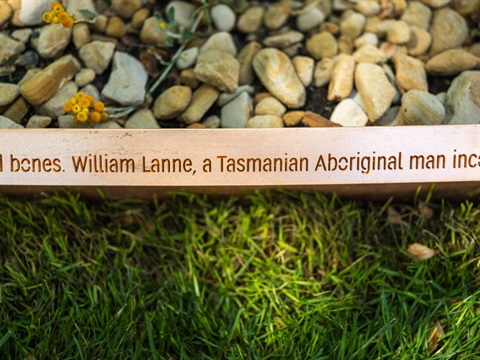
The final stage brings together contributions from three commissioned writers, Nunami Sculthorpe-Green, Alison Alexander and Andrew Harper, alongside a permanent architectural installation designed by Taylor & Hinds Architects.
Through interpretive text and online content, the work presents multiple perspectives on the lives of William Lanne and William Crowther, the colonial era, and the process that led to the monument's removal.
The project began in 2019 as part of the City of Hobart's Aboriginal Commitment and Action Plan and has included Aboriginal community engagement, public consultation, temporary artworks, Council decisions, heritage assessments, planning approvals and a Tasmanian Civil and Administrative Tribunal appeal process.
In 2022, Hobart City Council resolved to remove the bronze Crowther figure while retaining the sandstone plinth. While the statue was illegally cut down in May 2024, the City had already completed the formal approval process. The following day, TASCAT dismissed an appeal against the removal, confirming Council's decision.
The completed installation creates a permanent space for learning, reflection and a broader understanding of Hobart's history.
Quotes to be attributed to Hobart Lord Mayor Anna Reynolds:
"This project is the result of more than five years of community conversations and consultation, and formal approvals from state agencies and research.


