
For 10 years, Cyclotron Road, housed at Lawrence Berkeley National Lab (Berkeley Lab), has been supporting scientists, researchers, and innovators in scaling emerging technologies and bringing them to market through the U.S. Department of Energy's Lab-Embedded Entrepreneurship Program (LEEP) fellowship. The fellowship provides entrepreneurs with access to the lab's state-of-the-art R&D resources, business training, and a community of scientists, industry experts, and alumni. While in the two-year program, fellows conduct market validation, develop prototypes, form partnerships, and secure seed funding that's essential in going from lab to launch.
The longest-running LEEP site, Cyclotron Road has supported 92 startups, which have gone on to create over 2,800 jobs and bring in $4.3 billion in follow-on funding. The model it created has now been scaled to four other national labs across the country. The companies span the nation and impact everything from jet fuel to surgical imaging. But the stats only tell a small sliver of the story.
The companies enabled by Cyclotron Road have helped advance innovation, driving America's competitive edge as a technological leader, fueling economic growth, and bettering the lives of Americans. Many of the companies have become the most talked-about startups in energy, biomanufacturing, and heavy industry. They are building large-scale facilities and entering into partnerships with household names.
"Startups are such a powerful vehicle," said Ilan Gur, one of the creators of Cyclotron Road. "Entrepreneurship is how research crosses the chasm between concept and consumer. For scientists who never thought about building a career in academia or a national lab system, but want to go build things, the lab can be a catalyst in a new way."
Here are several ways Cyclotron Road has made an impact:
Entrepreneurial mentorship
Jack Norbeck, Cyclotron Road cohort 2018, had, in his words, "virtually zero exposure to or experience in entrepreneurship." The mentorship from Cyclotron Road helped him and his business partner, Tim Latimer, create Fervo Energy, a geothermal power company using oil and gas technology to create new sources of reliable energy.
In 2023, the company partnered with Google to launch a commercial geothermal pilot project that powers Google's data centers in Nevada. And in 2024, Fervo signed a 15-year power purchase agreement with Southern California Edison to power 350,000 homes. To date, it's raised over $700 million in venture capital funding.
"I had two years of being embedded in one of the world's leading research institutions with an incredibly talented group of people," Norbeck said.
Access to unparalleled scientific facilities and resources
For Gur, giving budding scientific startups access to the equipment they need was foundational to the program.
"You need the resources to do these things," he said. "And one of the big problems was it's so hard to get started in deep tech and science because you need facilities and equipment and a lot of expertise."
Berkeley Lab allows startups to have state-of-the-art equipment at their fingertips. The National Energy Research Scientific Computing Center (NERSC), Molecular Foundry, Advanced Biofuels and Bioproducts Process Development Unit (APBDU), and engineering machine shops are available at the lab, and have allowed fellows to drive advancements in energy, computing, materials development, therapeutics, and more. NERSC and the Molecular Foundry are DOE Office of Science user facilities.
According to Norbeck, access to Berkeley Lab resources like advanced computational modeling, high-performance computing, and the advanced geomechanical and fluid flow laboratory "accelerated the development of our technology in a way that wouldn't have been possible elsewhere."
Fervo Energy's technology is also dependent on the behavior of proppant, a material that helps keep fractures open to fluid flow. But there wasn't much known about proppant behavior at the high-temperature conditions present in Fervo's geothermal systems. Through Cyclotron Road, Norbeck was able to work with scientists at Berkeley Lab on an experiment to get a better understanding of this critical feature.
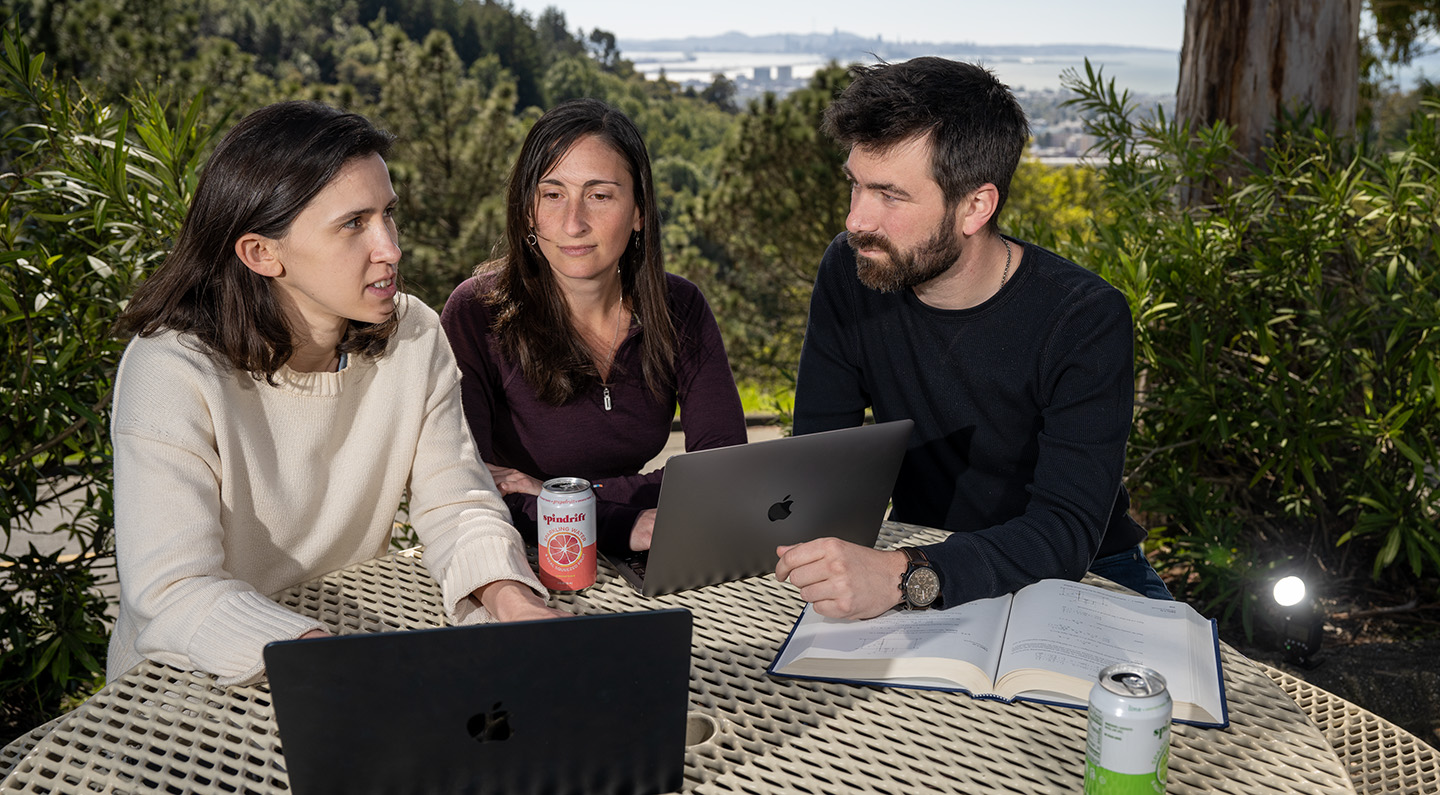
Graduating fellow Will Liberti and his team at Morphosis used the NERSC supercomputer to evaluate the wearable neural interface technology they are developing. Their technology combines AI, device engineering, and computational modeling to create tools that could assist people with movement disabilities or teach robots to manipulate objects with human-like dexterity.
"NERSC's computing resources have made it possible to use advanced machine learning workflows that would otherwise be out of reach for a team like ours," Liberti said.
But for him, access to computing power mattered less than the world-class technical experts at NERSC who helped his team tackle challenges in scaling and working effectively with large, complex datasets.
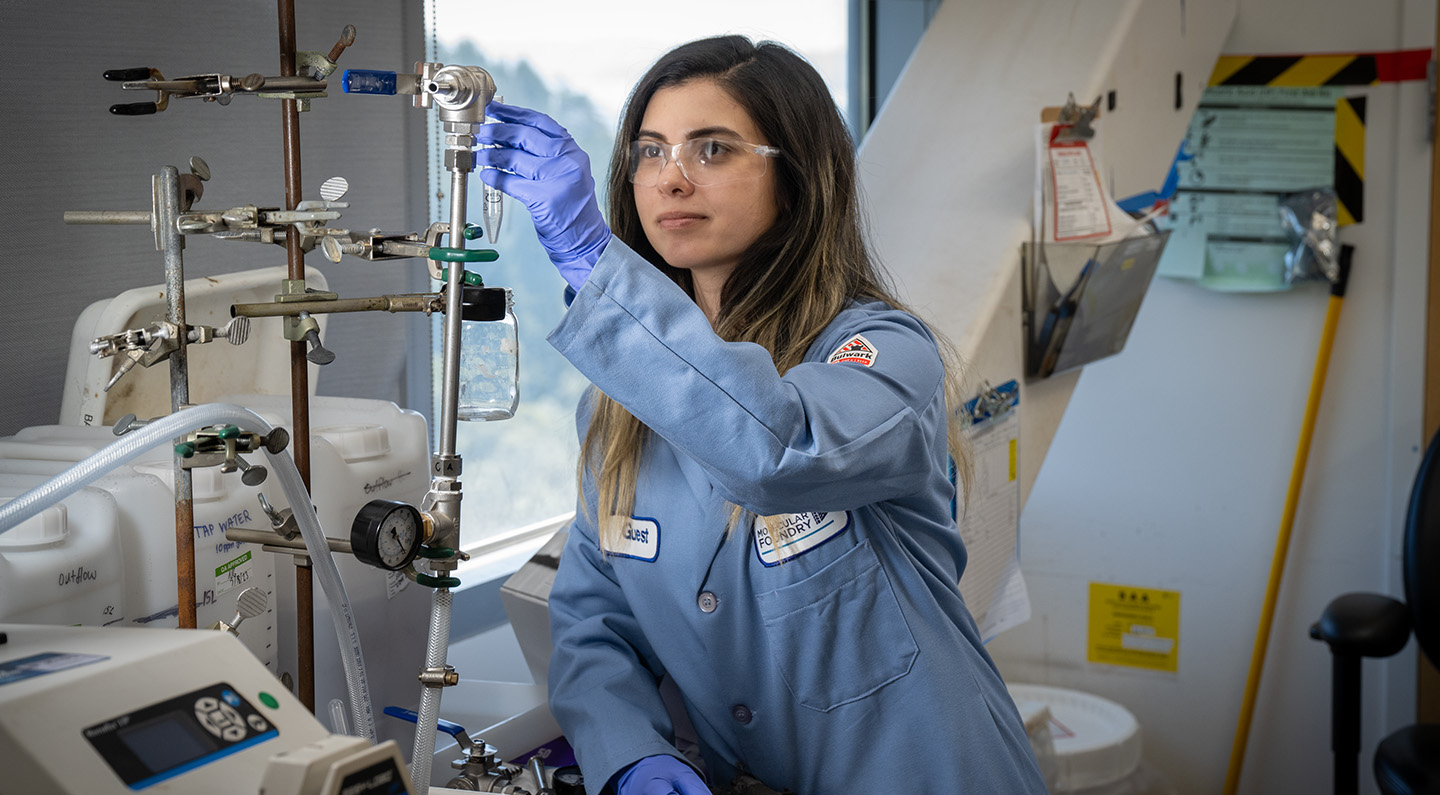
Daniel Sun from the 2022 cohort and the CEO of Sunchem agreed that access to lab resources was key to development of his business. His company is developing and deploying precision separation technologies in the critical metal space across its value chain. Using new material technologies from the Molecular Foundry, Sun was able to create a nanofilter that can separate heavy metals from wastewater and was able to hone its performance to a higher level.
"Being in a place, one of the best laboratories in the world, and having access to these instruments are really important for the success and development of technologies," he said. "Cyclotron Road gave us the resources to assess the performance in a dynamic continuous operation similar to the conditions in industry. This de-risked the technology sufficiently to make it investable and attractive to industry."
A place to scale an idea into a real business
"You come into Cyclotron Road as a scientist," Sun said. "You come out with a business, an organization, or a real company."
When Sun entered the Cyclotron Road program, he had just completed his PhD but had no experience managing a business. Now his company employs seven people and is on its way to hiring more. Cyclotron Road gave his niche research a home where he could commercialize it - a place to take a risky project and de-risk it for investors. Beyond just the seven employees at Sunchem, Cyclotron Road has helped companies create over 2,800 jobs.
Antora Energy from the 2018 cohort continues the tradition. It will launch a full-scale thermal battery manufacturing facility in San Jose with a $4 million grant from the California Energy Commission. It was named one of Fast Company's World Changing Ideas in 2023.
Etosha Cave joined Cyclotron Road's inaugural 2015 cohort with a plan to build a prototype for electrochemical conversion of CO2. She is now the CSO of Twelve, a company creating next-generation chemicals and fuels from the air.
Using electrical energy, Cave's technology takes carbon from the carbon dioxide molecules in the air and transforms them into products. The company has created sunglass lenses for Pangaia, car parts for Mercedes Benz, and laundry detergent ingredients for Procter & Gamble.
"We want to make a world from air," she said. "If we can see carbon dioxide as a feedstock instead of waste that gets thrown into the atmosphere, we can make carbon materials anywhere on the planet where there are CO2 and water."
These types of companies require a lot of research and development. Normally, they might take decades to become profitable and need a lot of startup capital. Many investors are not that patient. These technologies are the type of big swings Cyclotron Road is enabling.
"If it weren't for Cyclotron Road, Twelve would not exist," Cave said. "We needed that early support to make sure that our ideas would work and that we could build a prototype."
According to Cave, Berkeley Lab was the perfect place because it had academic scientists focused on the research and the mentorship from industrial expertise to help with the design, manufacturing, user engagement, and fundraising aspects of the business.
"There's no better place to work on deep technology and begin commercializing it than Cyclotron Road," Cave said. "It plays a key part in supporting the technology that will bring us into the next century."
The DOE's Advanced Materials and Manufacturing Technologies Office (AMMTO) and the Industrial Technologies Office (ITO) in the Office of Critical Minerals & Energy Innovation (CMEI) are the founding and anchor sponsors of the program. Other partners who have supported the program include DOE's Building Technologies Office (BTO), Geothermal Technologies Office (GTO), Bioenergy Technologies Office (BETO), Office of Electricity (OE), Federal Energy Management Program (FEMP), Defense Advanced Research Projects Agency (DARPA), as well as the University of California Office of the President (UCOP) with the State of California, and the California Energy Commission (CEC) and Activate.


