
Military service is probably not the first analogy that comes to mind when thinking about nursing. But when Columbia Nursing DNP student Andrew Brinton, MS '26, explains how his education, training, and skills as a U.S. Marine translated to his new career as a registered nurse, the correlation makes sense. "Everything depends on precision," says Brinton, who is working toward becoming an acute care nurse practitioner (NP). When working with weaponry, for example, "there is a lot of math involved, being thorough and triple-checking. It's the same when you give insulin or blood. You do a double nurse check. You work together and rely on each other. You have to be precise, calm, and knowledgeable. The better educated you are, the less likely you are to make mistakes."
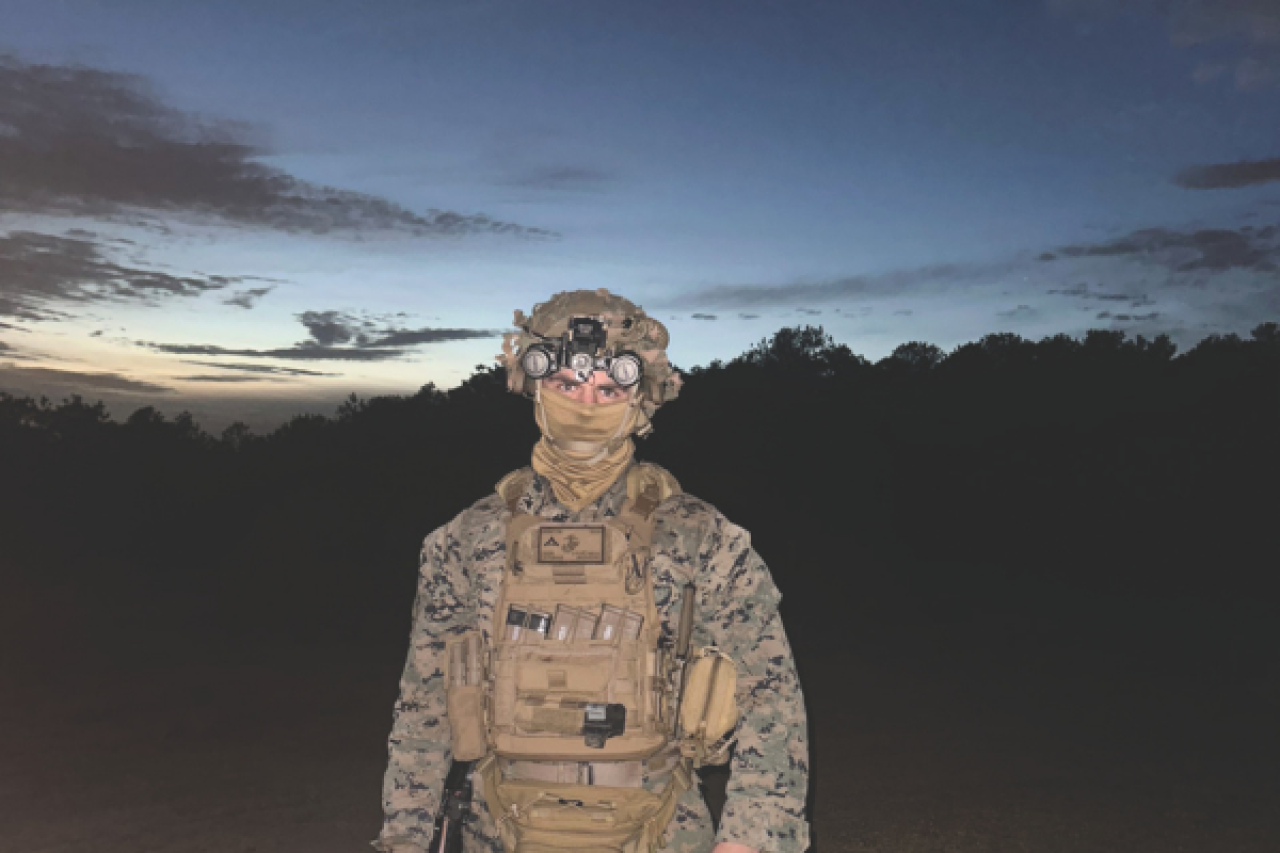
Andrew Brinton, MS '26 and a DNP student, is pictured here in 2024 at a Marine mountain warfare training center.
Every year, several military veterans and active service members graduate from Columbia Nursing's Master's Direct Entry (MDE) program. For Brinton, transitioning from the military to nursing school came naturally, he says, because the qualities that make a good Marine are the same qualities that make a good nurse. "You have to be smart, skilled, kind, compassionate, and know how to listen to your [fellow] Marines. All of that makes a good nurse."
Additionally, the military and nursing both require leadership, informed decision-making, and a desire to serve humanity, says Heidi Hahn-Schroeder, DNP, an assistant professor of nursing and director of the MDE program. "Military veterans model professionalism, maturity, and resilience, all of which are positive attributes for nursing. They are accustomed to working in high-stakes environments where communication and trust are essential. It's a very logical fit."
For Brinton, transitioning from the military to nursing school came naturally, he says, because the qualities that make a good Marine are the same qualities that make a good nurse.
Historically rich connection
As America celebrates its 250th birthday this year, Columbia Nursing is celebrating its deeply rooted connection with military medicine.
The seed of that connection was planted during the Crimean War, from 1853 to 1856, when Florence Nightingale helped to convert a military hospital from a chaotic death house into a temple of healing. The connection continued during the Spanish-American War, in 1898, when Columbia Nursing's founder, Anna Maxwell, recruited 200 graduate nurses to enlist in the military; a few years later, she convinced Congress to create the U.S. Army Nurse Corps.
At the dawn of World War I, in 1914, at least a dozen Columbia alums were serving in combat zones before U.S. forces were mobilized. By the time America entered the war in 1917, U.S. medical centers were collaborating with the Army Medical Department and the Red Cross to establish quickly deployable base-hospital units, each with enough supplies and personnel to equip a 1,000-bed hospital. Maxwell and Chief Surgeon George Brewer, MD, organized the first such unit at New York City's Presbyterian Hospital. Altogether, some 200 Columbia Nursing alums served overseas during World War I, and more than 20 of them earned medals.
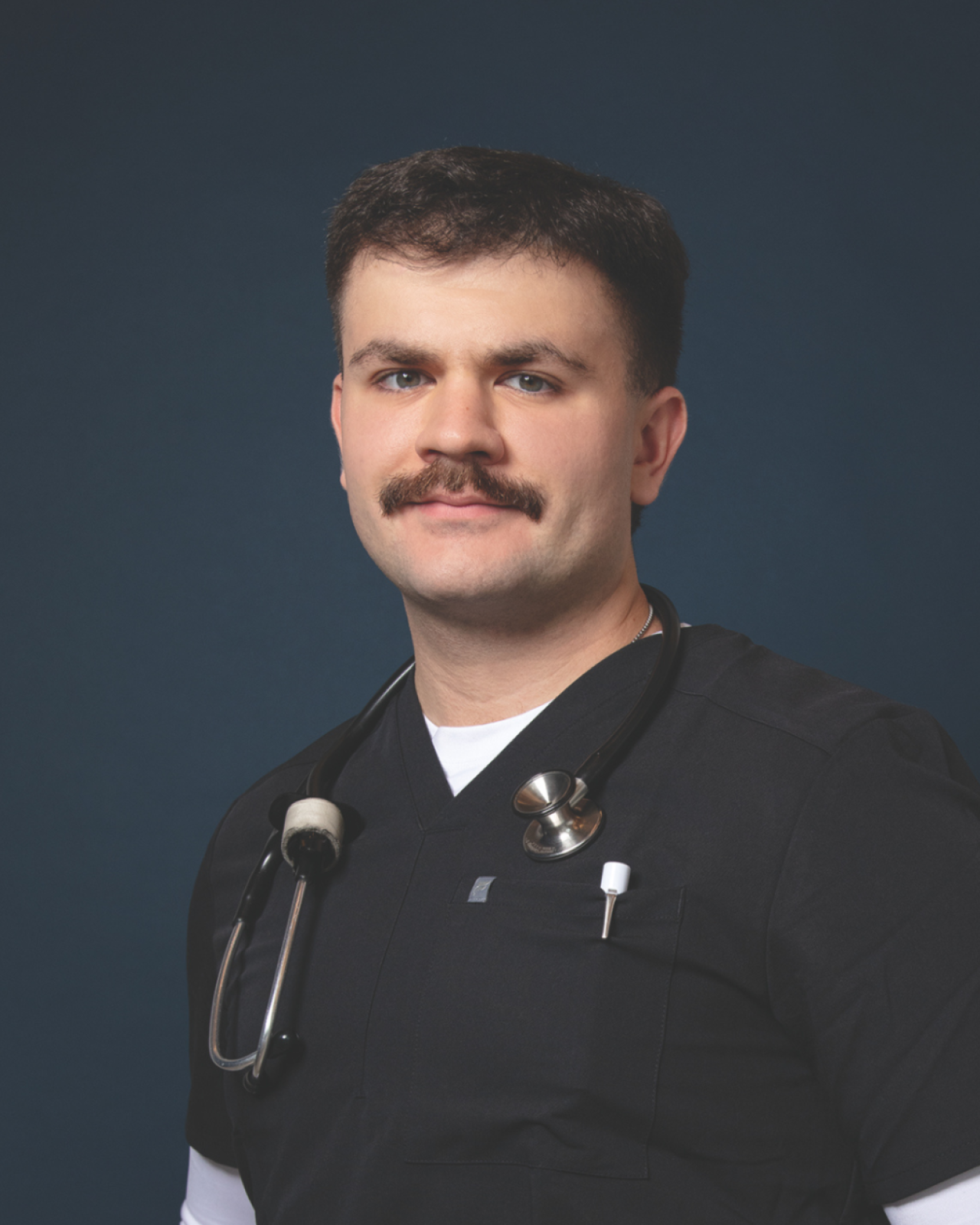
Andrew Brinton, MS '26, DNP student
Later, during World War II, the school educated record numbers of nurses to compensate for wartime shortages in the field. In addition, faculty and students raised money for war relief, ran blood drives, and organized civil defense patrols.
Although no more deployments from Columbia have occurred since 1945, the school maintains close ties to America's armed services. Some graduates choose military service, where their nursing education, skills, and values remain in high demand. Others dedicate themselves to caring for veterans.
Meanwhile, Columbia also maintains a long tradition of welcoming military service members and veterans as students. Recognizing their experience and maturity as valuable assets, the school offers specific benefits, such as application fee waivers, for current and former service members. In addition, the school has ongoing collaborations with all the military healthcare branches, including hosting leadership delegations from the U.S. Navy Nurse Corps. "We love to have veterans in our program because they elevate the classroom discussion through real-world experience," Hahn-Schroeder says.
A sense of direction
Brinton always had an inkling that he wanted to enter a service-oriented profession but didn't truly tap into the possibility until the COVID pandemic, when his freshman studies at Hofstra University on Long Island went remote. Looking for something to do with friends, he began volunteering as an emergency medical technician. "As I did more emergency medical services work, I learned that I really liked taking care of people," he says. "Nursing is the most direct hands-on patient care you can give."
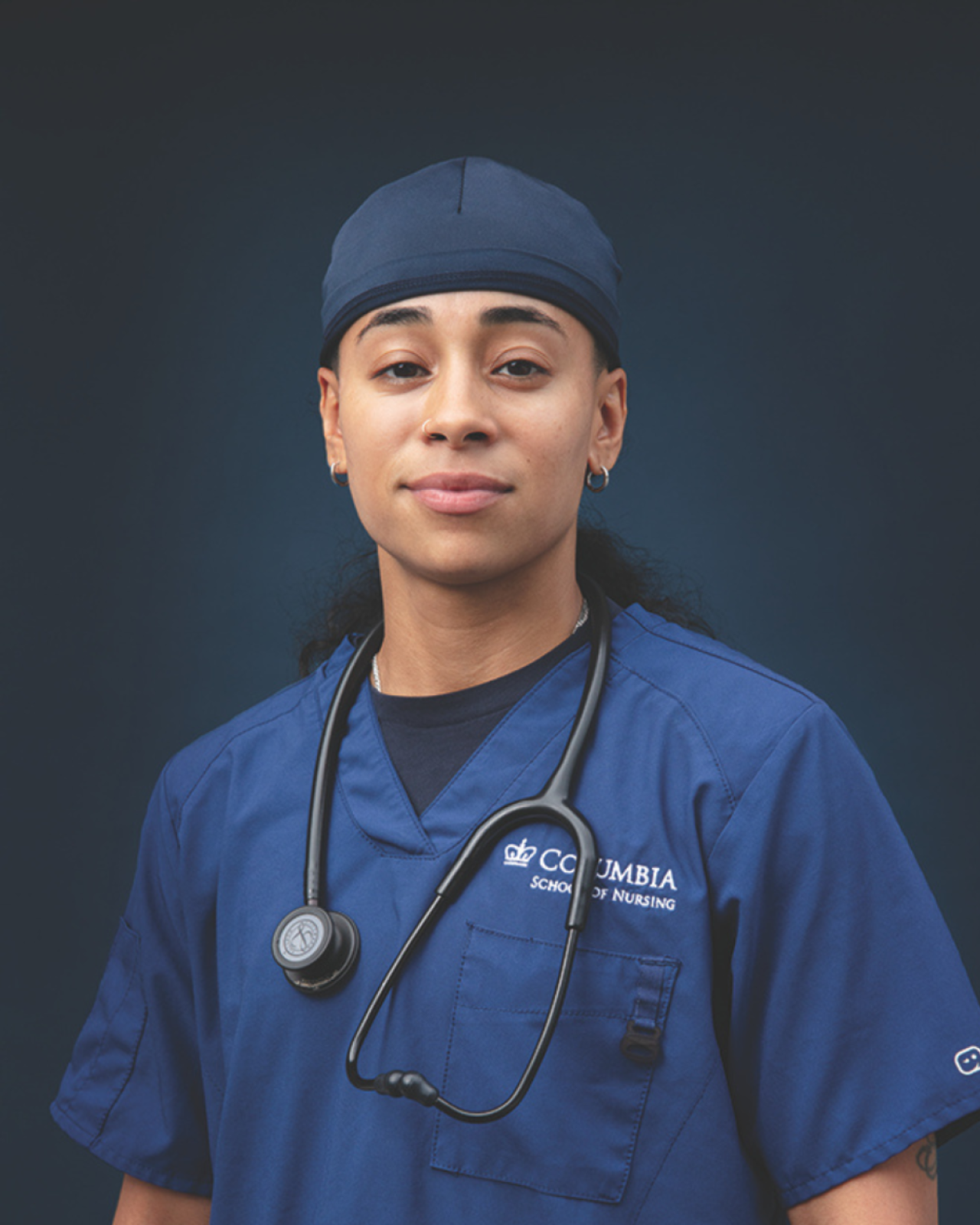
Kristyl Rodriguez, MS '26, DNP student
Yet he felt lost academically and unsure of his professional path. He enlisted in the Marines during his sophomore year, in 2022, to take advantage of the structure the armed services offered. "No matter where you come from, that structure can definitely benefit you. It made me slow down and focus on what I wanted to do with myself," Brinton says.
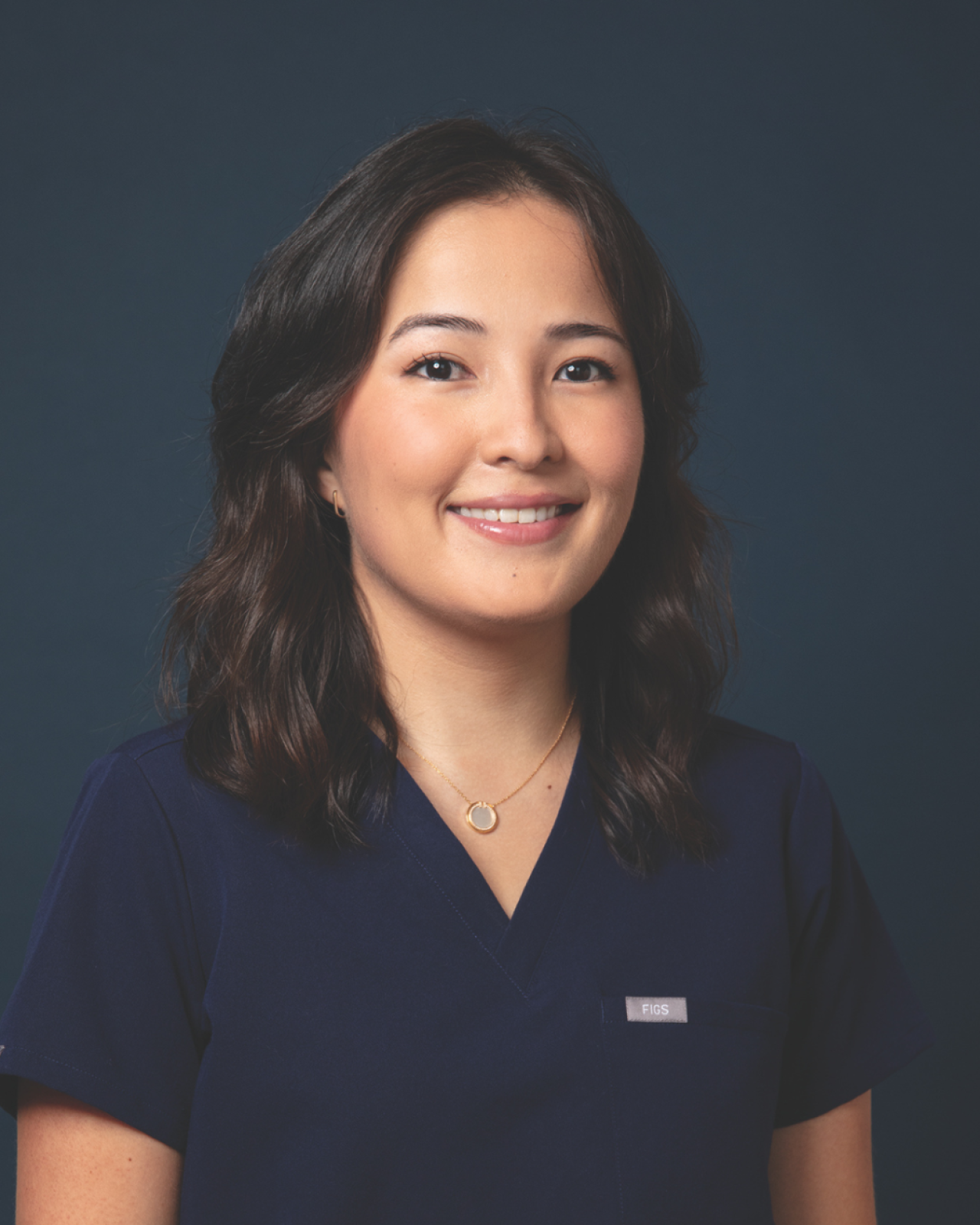
DNP student Kristyl Rodriguez, MS '26, was also seeking structure. "I had no direction in life, no approvals for colleges, no options," she says. Then she completed the Marine Corps's physical fitness test. "I fell in love with the structure. It allowed me the opportunity to change my life and define who I wanted to be. It was a huge restart."
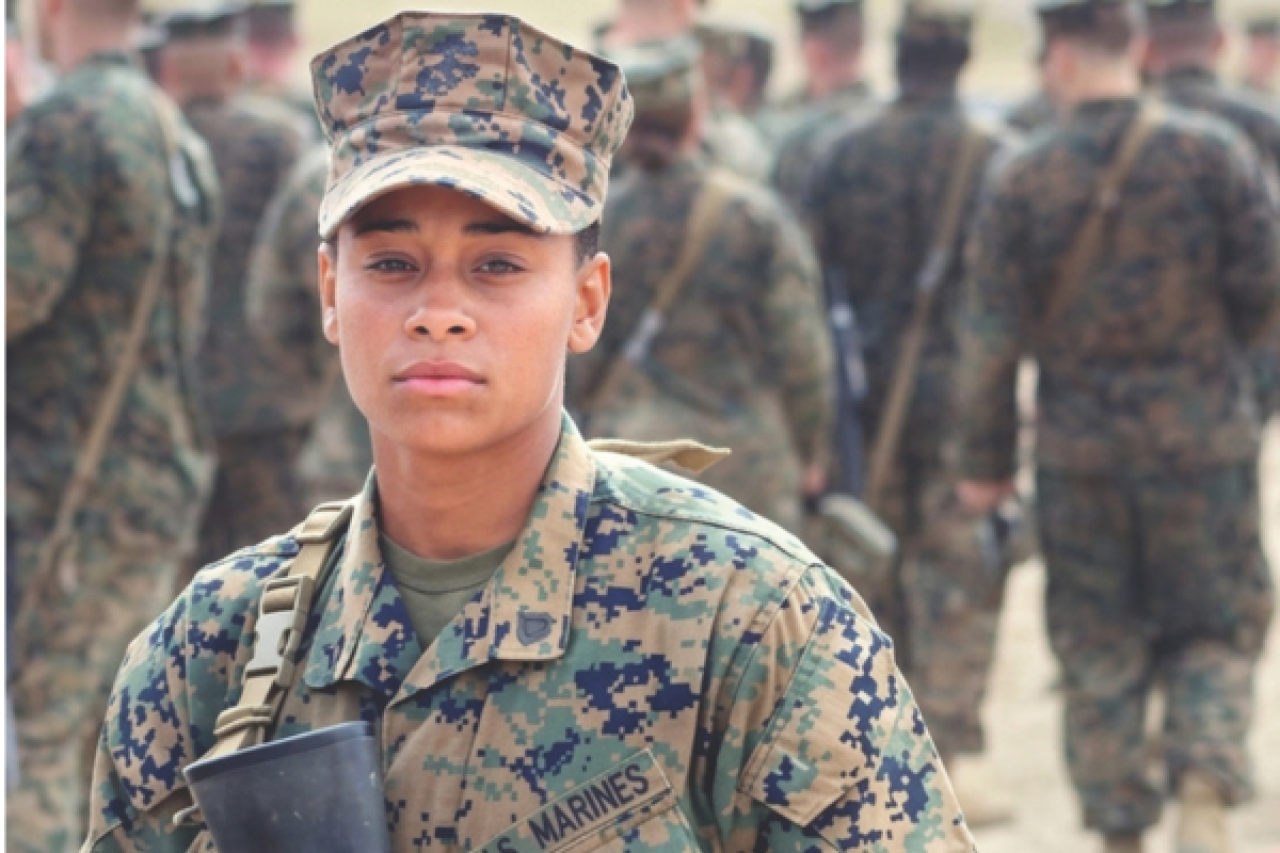
Kristyl Rodriguez, MS '26 and a DNP student, is pictured here in 2017.
A former Marine sergeant who is now working toward her doctorate as a psychiatric nurse practitioner, Rodriguez takes pride in the "listening ear" that she developed during a stint as a barber. "I've always been drawn to people's stories," she says. She didn't know during her years in the military that she would want to be a nurse or therapist, however, until she struggled to find her own mental healthcare at a Veterans Affairs hospital. "There was a two-week waiting period to get an appointment for therapy. I had no agency on who I got. They just assigned me someone," she says.
Unable to find a therapist she trusted and felt safe with, Rodriguez thought about the many gaps in the healthcare system, and how they affect patients whose need for timely care is more critical than hers-such as women with postpartum psychosis. "There are a lot of gaps in communication and follow-up in the healthcare system, and there is no accountability," she says. "The system altogether needs change."
She wanted to make a difference. "I learned that nursing had a psychiatric route, which led me to Columbia," she says.
Discipline
During his four years in the Marine Corps, Brinton befriended a nurse who'd also served in the Marines. The friend advised Brinton that his military training would help him keep up with the fast pace and intensity of an accelerated nursing education program. The friend was right. "During active duty you don't ever stop working," says Brinton, who is now a corporal in the reserves. Indeed, having spent four years maintaining his mental and physical endurance 24/7 helped to prepare him for the MDE program's eight-hour clinical rotations. "The Marines push you to give 100% all the time," says Brinton, who received joint acceptance into the MDE and acute care NP programs.
The MDE program pushes students equally hard, Hahn-Schroeder says. Students in the program can choose between a 15-month, accelerated in-person curriculum or a more flexible, hybrid curriculum-both covering the same material. "We encourage everyone to find people in their life who can meet the demands of everything around them because their focus should be school," she says.
Elizabeth Heeb, DNP student
Rodriguez, whose military assignments included warehouse supply work in Japan and California, followed by field operations in South Korea, says the MDE program instilled in her qualities that she deeply appreciates. "I'm really happy for where it's going to take me," she says, adding that her dream is to work with other clinicians to develop an epidemiology center that identifies populations prone to mental illness.
Among the skills that have translated most effectively to her nursing education, Rodriguez explains, have been adaptability and trustbuilding. "Leadership in the Marines taught me to quickly adjust to different personalities, circumstances, and high-pressure situations while earning the confidence of the people I was responsible for. Those same skills will directly influence my approach to psychiatric nursing, where every patient's experience is unique and trust is essential to providing compassionate, effective care," she says.
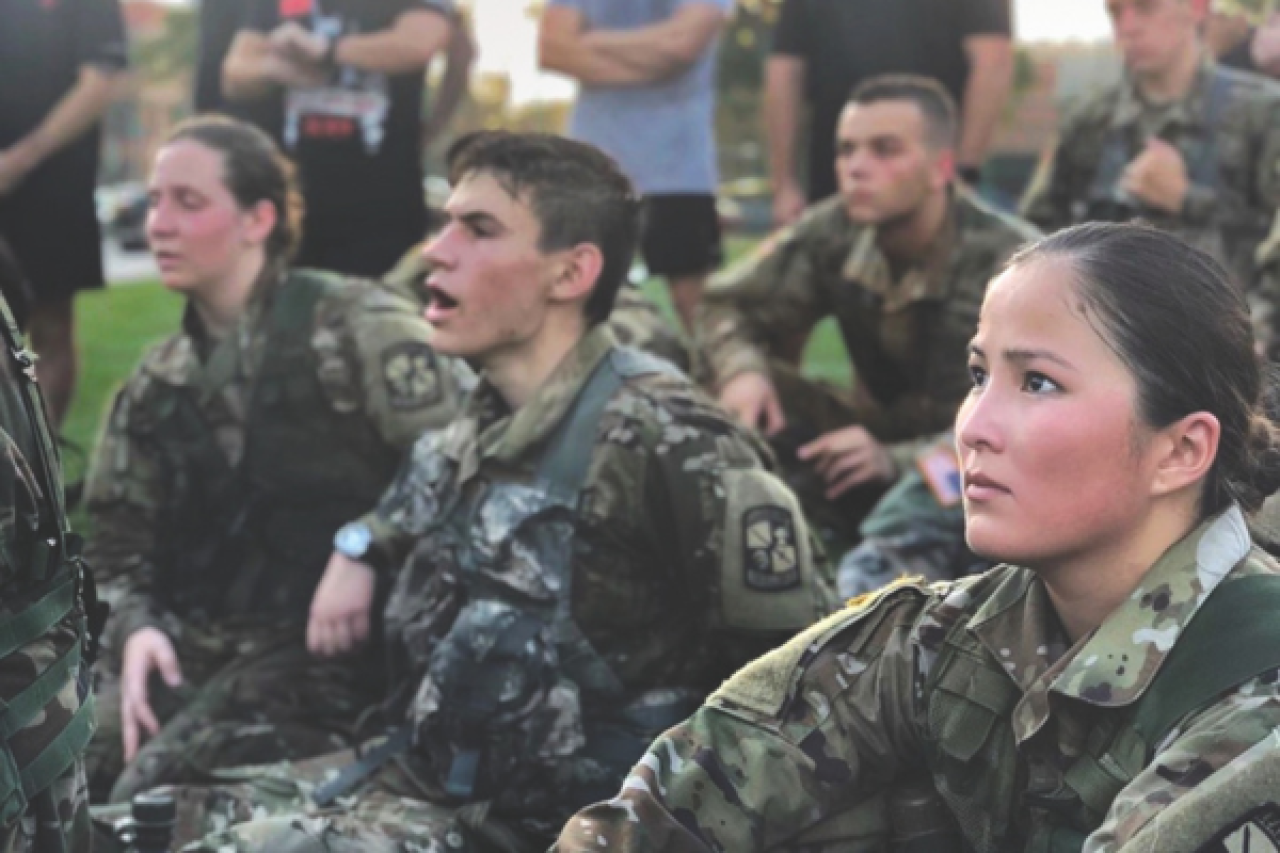
Elizabeth Heeb, right, now a DNP student, is pictured here as an undergraduate in ROTC, at a 2019 event in remembrance of the 1993 Battle of Mogadishu.
Hahn-Schroeder notes that students with the most discipline have the greatest likelihood of becoming successful nurses. "You can't show up halfway at your job. You have to be at your best every time you set foot in a hospital, community, or clinic," she says. "People who have served in the military have a multitude of skills transferable to nursing, and their resilience is incredibly valuable."
The fast pace of military training was a great teacher for family nurse practitioner doctoral student Elizabeth Heeb, formerly a second lieutenant in the U.S. Army. She always knew she wanted to be a nurse and from 2021 to 2024 worked on the telemetry medical-surgical unit at Walter Reed National Medical Center in Bethesda, Maryland. As a charge nurse, she directed other nurses, medics, and Marine Corps members who had deployed. From there, she went to Fort Irwin in San Bernadino, California, where she spent a year working on the medsurg floor and mother-baby unit of a very small hospital.
"I'm always thinking of the next step," Heeb says. "In the military, you have to adapt and expect what's going to happen. That mindset helped me at Columbia. The pace of the program is so fast, things change at the last minute. You have to be adaptable and resilient and know how to do teamwork."
Resilience
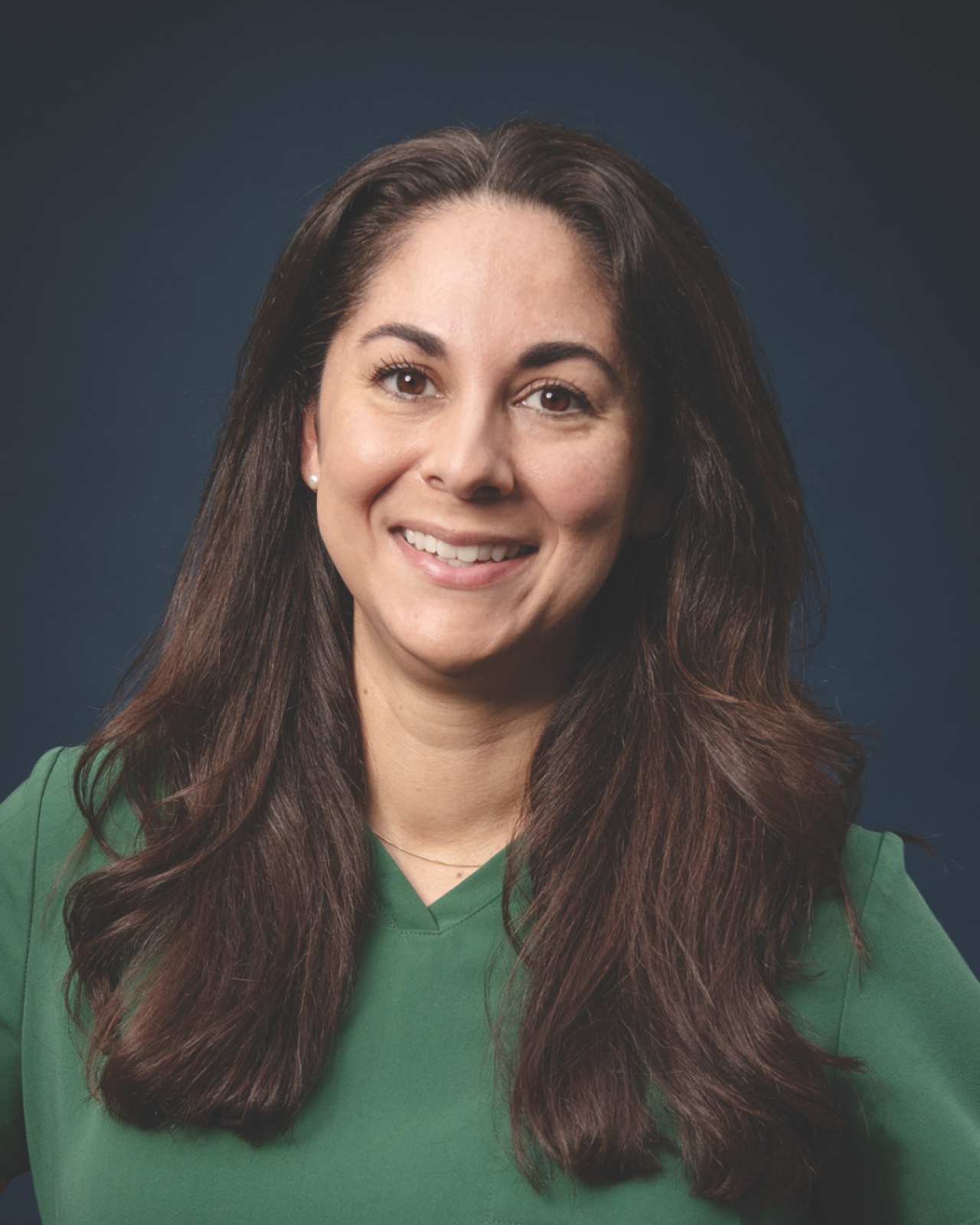
Concepcion "Conchita" Harris, DNP '26
If anyone knows about resilience, as well as staying calm under pressure, it is Concepcion "Conchita" Harris, DNP '26, a U.S. Army veteran whose inspiration to serve began with the terrorist attacks of 9/11 and with having a father in the Army. "Serving my country seemed like the thing to do," Harris says. Following that inner call, she applied for and received an ROTC scholarship at the University of North Carolina, Chapel Hill. Upon graduating in 2007, she was commissioned as a second lieutenant and medical service officer.
In addition to serving as a medical treatment platoon leader, deputy support operations officer, and aerial delivery officer, she served (as did her husband, a lieutenant colonel and foreign area officer who teaches at the U.S. Military Academy at West Point) in Operation Iraqi Freedom and Operation Enduring Freedom in Afghanistan, where she was part of the Third Brigade Combat Team in the Army's legendary 101st Airborne Division.
After four years of active duty and honorable discharge as a captain, plus four years in the reserves, Harris charted a new professional path. When her youngest child entered pre-kindergarten, she began her journey toward becoming a nurse midwife. "I'm on the third version of myself," she says.
Although nursing hadn't initially been on her radar, watching Army healthcare personnel deliver care to soldiers and local nationals during her early deployments gave her a yearning to do hands-on patient care. "I didn't want to do administrative work. I was jealous of the medics, lab techs, doctors, and nurses, and wanted to do what they did," she says.
Watching Army healthcare personnel deliver care to soldiers and local nationals during her early deployments gave her a yearning to do hands-on patient care.
Moreover, giving birth to her own three children and staying home with them for 10 years sparked her interest in women's health, especially pregnancy and childbirth. Qualifying for nursing school entailed redoing some of her undergraduate education to satisfy the necessary prerequisites. Additionally, throughout her DNP program, she worked as a labor and delivery nurse. "The military taught me that I can do hard things," she says, noting that at age 41, she is the oldest person in her cohort of nurse midwives. "I am thankful not only for the military but also the life experiences I had coming into this. They make me a better nurse."
Making a difference
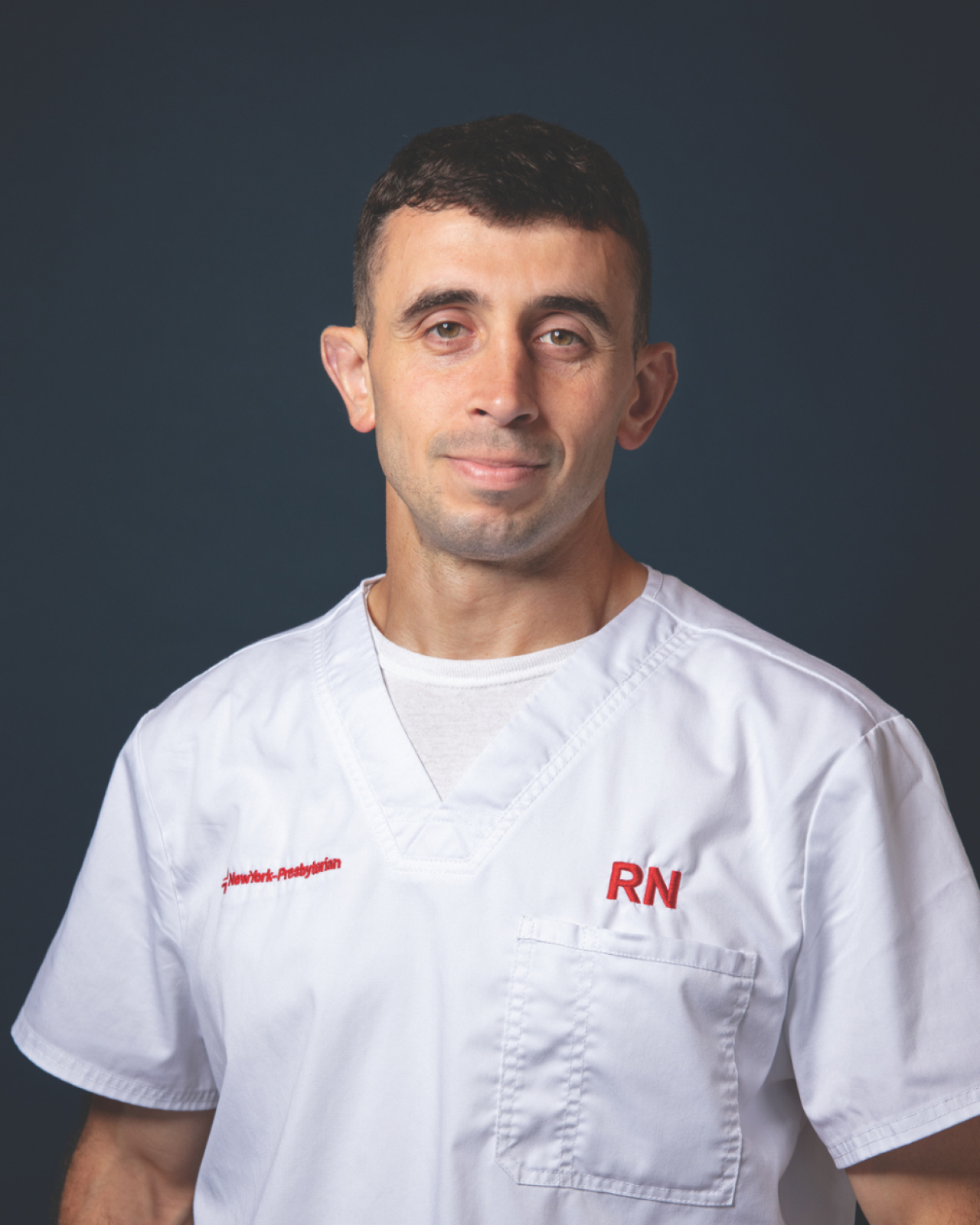
John D'Allara, MS '25
Wanting to help and make a difference is what drew John D'Allara, MS '25, first to the military and later to nursing. The son and brother of New York City police officers, D'Allara says that he and his brother grew up with a sense of service. "I always liked helping people," he says. Attracted to science, he attended Iona College, where he majored in biology, and eventually attained a research tech position at Memorial Sloan Kettering and Weill Cornell Medicine.
D'Allara's admiration for his father, as well as for his brother, who served in the Marines and later graduated from the NYPD Police Academy, moved him to enlist in the Marines. "It felt like doing the right thing," says D'Allara, who is still an anti-tank missile operator in the reserves. "The Marines are huge on integrity, honor, courage, and commitment. Basically, doing the right thing no matter what," he says. He characterizes nursing the same way: "I knew that nursing was a direct way to help and make a difference. That's what I bring to the table."
He also brings a talent for working under pressure, which is as critical when it comes to delivering healthcare as it is to operating an anti-tank missile system. "You have to make sure the battery is connected to the command center, which is connected to the entire unit. It's a diligent process, making sure everything lines up and is functioning properly," says D'Allara, who currently works as an emergency room nurse. "My goal is to help, whether it be within a group such as in the Marine reserves or [with] individuals such as in nursing, and I believe I am doing just that."
Incidentally, D'Allara is the fellow Marine who first encouraged Andrew Brinton to consider nursing.
Leadership and teamwork
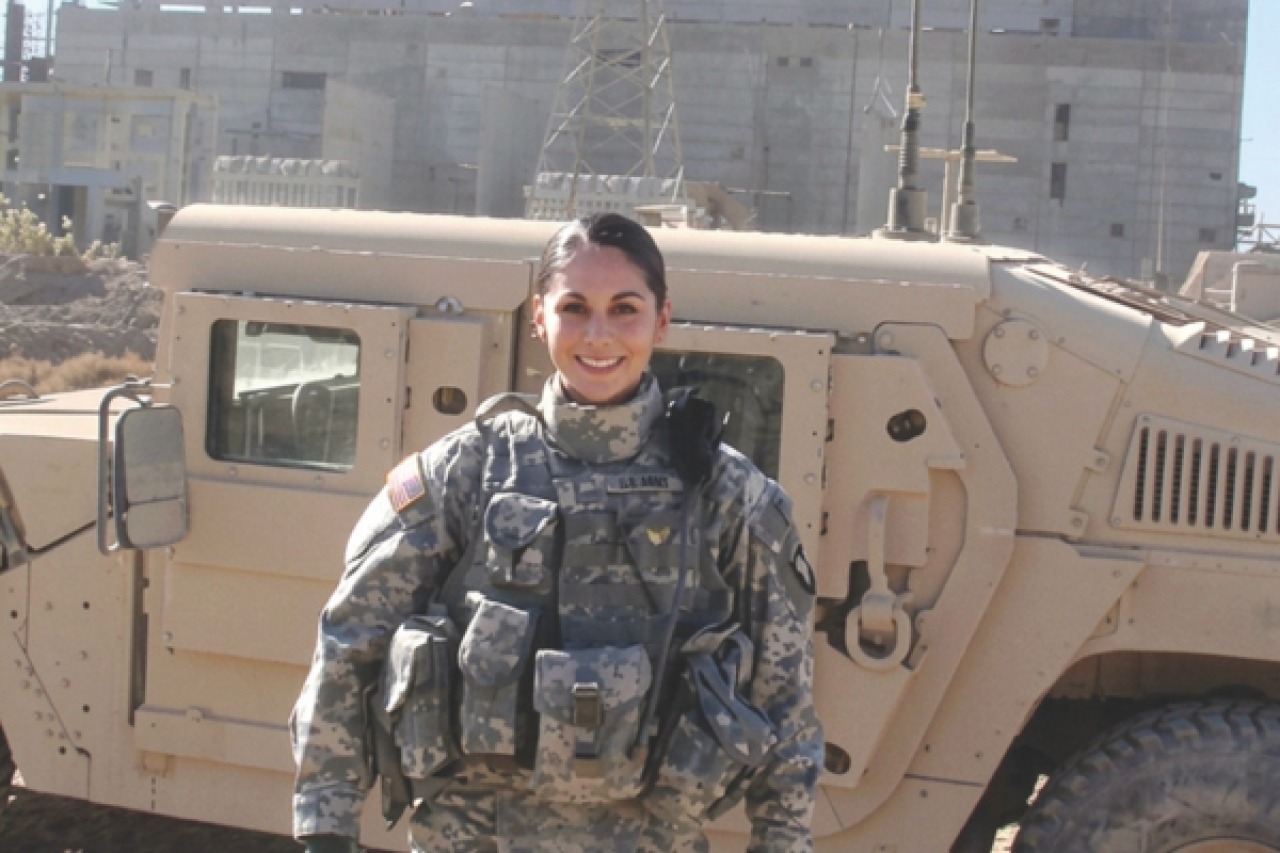
Conchita Harris, DNP '26, is pictured here in 2007 during her deployment in Iraq.
The ability to lead is another of the many qualities that translates from the military to nursing. It requires remaining calm, thinking critically, and making urgent decisions under pressure, while also implementing and getting care to people in all types of healthcare environments. "Both the military and nursing teach you level-headedness and how to stay cool when stuff hits the fan," Brinton says.
It's a lesson that Harris learned on her first day of nursing clinicals, when she heard the code blue broadcast. "I was the person who ran toward it," she says. "I did chest compressions on my first day as a student nurse." Sadly, the patient died, but the military had prepared Harris for sad outcomes. "It's hard when things don't go well, but the military taught me that there won't always be happy outcomes." She learned another crucial lesson: "In the military, especially as a woman, you don't want to cry. We're already fighting to be seen as strong. However, nursing has taught me that my natural empathy and ability to portray emotion is actually a strength, not a weakness."
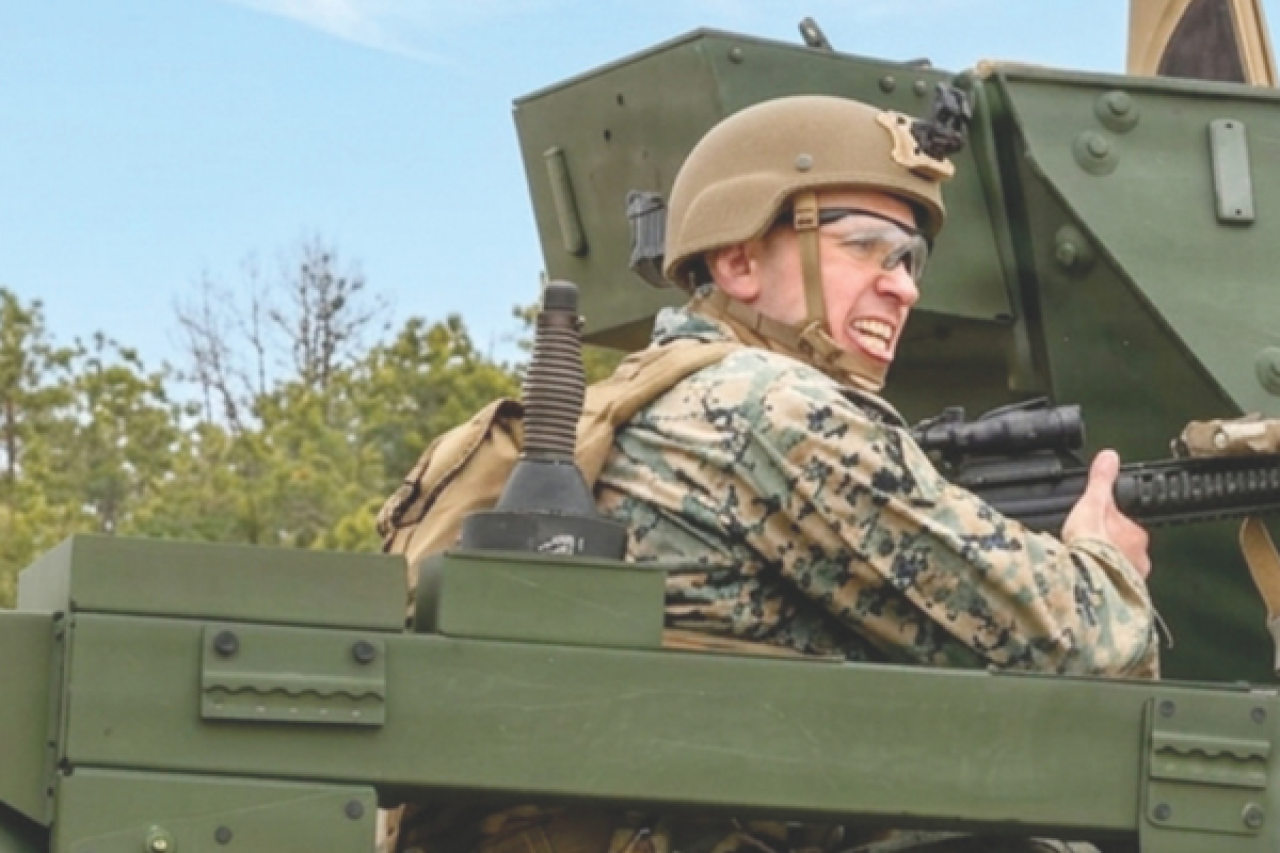
John D'Allara, MS '25, is pictured here in 2025 taking part in a live-fire exercise on a Marine base in New Jersey.
Leadership also demands that soldiers, like nurses, know their staff. This includes building personal rapport and developing cultural competency. "As an infantryman, you get to know your guys, you take care of them," Brinton says. "You want to lead from the front and be there for anybody. You want to be that nurse who people can depend on," he says.
Good leadership also engenders teamwork. "In the military as in nursing, you have to work together," Brinton says. "You can't accomplish a mission without some degree of teamwork, even when it comes to advocating for patients. You have to always be thinking, 'This is my patient. I have to look out for them and make sure they're safe,'" he says.
When it comes to teaching leadership, Columbia, like the military, is unmatched, Brinton says. "The caliber of education that Columbia has, I've never seen anywhere else except for military [education]," he says. "They want you to be proficient, and to learn nursing from different perspectives. That's why I applied there, because the standards are the highest. I feel very prepared."


