
Key takeaways
- Thousands of early modern Japanese books and manuscripts from the libraries of UCLA, UC Berkeley and UC San Francisco are being digitized to create a resource that will be accessible to scholars around the world.
- The digital archive, which could ultimately be the largest of its kind outside of Japan, will encompass rare materials from the early 1600s through 1868, including illustrated scrolls, books, maps and medical texts.
- The project, spearheaded by the Yanai Initiative at UCLA in collaboration with Japan's Ritsumeikan University, is supported by a 2024 gift of $31 million from the Japanese executive and philanthropist Tadashi Yanai.
An expansive project led by UCLA's Yanai Initiative is digitizing thousands of early modern Japanese books and manuscripts housed across the University of California system. The project, a collaboration with the Art Research Center at Ritsumeikan University in Kyoto, Japan, will create what could become the largest digital collection of its kind outside of Japan.
The effort spans libraries at UCLA, UC Berkeley and UC San Francisco — and is planned to also extend to other UC campuses' holdings.
"Given the nature of the materials, this is among the largest digitization projects ever undertaken by an academic institution for premodern Japanese works," said Michael Emmerich, director of the Yanai Initiative and UCLA's Tadashi Yanai Professor of Japanese Literature.
The digitized archive will provide access to rare Japanese materials from the early 1600s through 1868 — including illustrated scrolls, books, hand-copied manuscripts, lavishly illustrated maps and even medical texts.
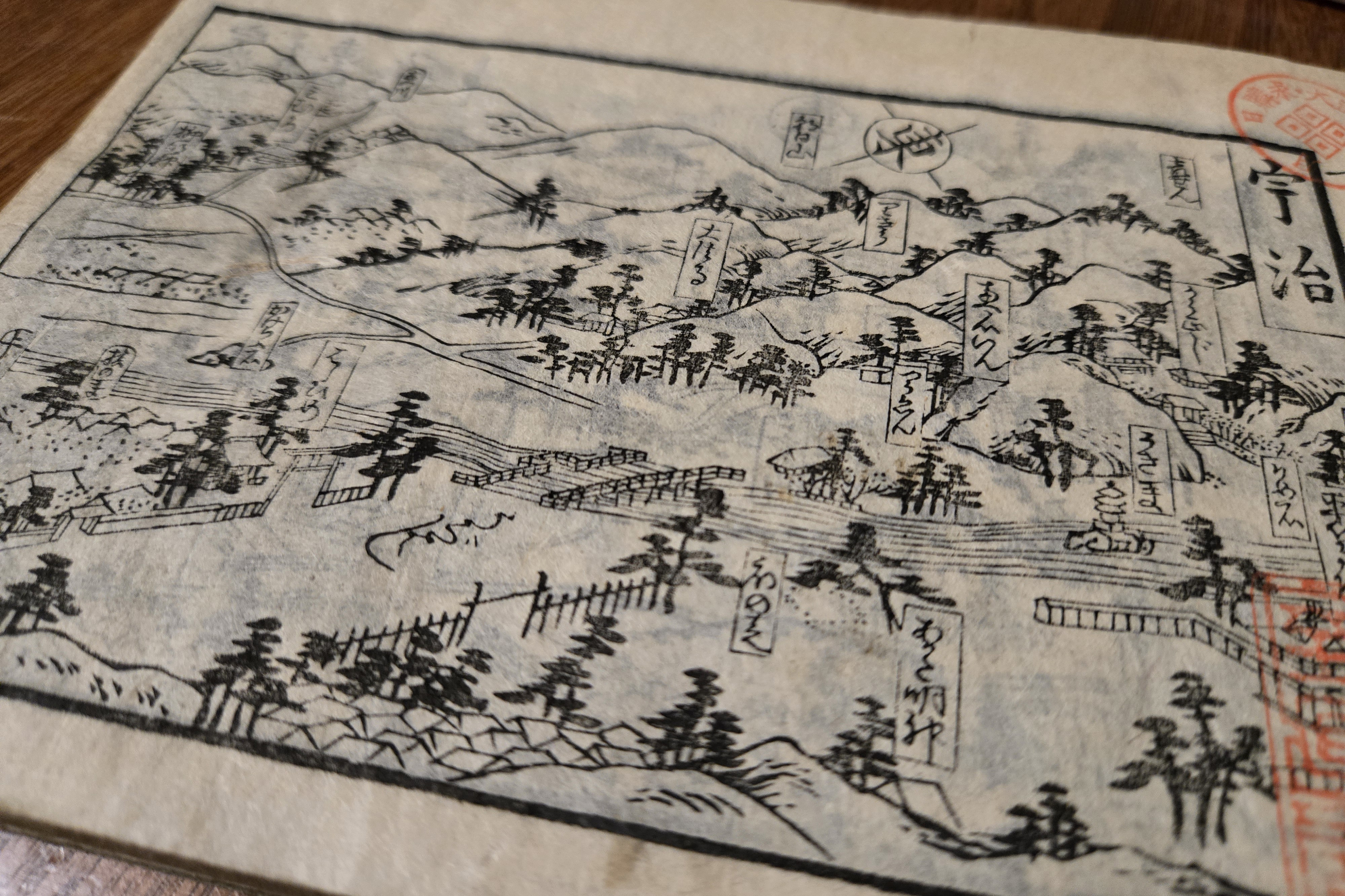
Among the unique holdings in UCLA's collection are such treasures as pocket-sized samurai directories, illustrated with the warriors' family crests, printed in the 17th century. According to Tomoko Bialock, UCLA's Japanese studies librarian, such books are called shūchinbon, or "sleeve books," because they typically were carried in the sleeve of a kimono.
The digitization process is complex, painstaking work, and not only because of the delicate, centuries-old materials and the irregularly sized publications. Some scrolls, for example, require photographs from multiple angles to capture their full detail.
The project is supported by a landmark $31 million gift in 2024 from philanthropist Tadashi Yanai, facilitated by the Japan Foundation.
Expanding teaching and learning opportunities
When completed, the digitized assets will be made accessible through a user-friendly interface in English and Japanese, as part of the Japan Past & Present website, whose development also was funded by the Yanai gift. The Art Research Center, or ARC, will also make the materials available through its online ARC Research Space.
Emmerich said the project will dramatically reshape the way students and researchers engage with the materials.
"It's not just that it offers easier access," he said. "It changes the kinds of questions you can ask. You can compare different printings, trace visual influences or uncover works that scholars have not seen in generations, without ever leaving your desk."
Emmerich said the project also will have benefits for teaching and learning for scholars around the world. Professors will be able to build curricula around rare materials that previously would have been logistically or physically inaccessible to most students.
"We'll be able to create lesson plans around primary sources that live right here in our own system but that students might otherwise never have encountered," he said.
'Major step forward'
UCLA's collections encompass about 1,320 premodern Japanese works in more than 4,200 volumes (because some of the works are multi-volume publications). As of today, roughly two-thirds of the relevant UCLA materials had been digitized; some of them are already accessible through UCLA Library Digital Collections.
ARC is internationally recognized as a leading research hub for digital humanities and a pioneer in the digital archiving of Japanese cultural heritage. Ryō Akama, professor of Japanese literature at Ritsumeikan University and director of ARC, called the project a "major step forward for the discipline of Japanese humanities," noting that it opens new research pathways by enabling scholars to use advanced digital tools developed by ARC, including AI-assisted transcription support.
"By making these materials digitally available to scholars, students and the wider public regardless of geography, we are not only safeguarding cultural memory but also opening up new possibilities for scholarly inquiry, education and interdisciplinary collaboration," Akama said. "This project sets a powerful new benchmark for the field, demonstrating how digital humanities can bridge borders, deepen global engagement with Japanese cultural history and enrich the future of Japanese studies worldwide."
Work is also underway at UC Berkeley, but completing that collection will likely take several more years, given the size of the holdings there; Berkeley's libraries have more than 8,000 titles in about 23,800 volumes. Among the gems of Berkeley's collection are poetry collections that include voluminous handwritten notes from noted 19th-century Japanese scholars who were the books' original owners. Such treasures could give researchers today unique insights into not only the source material but also the analysis of previous generations of experts.
"Our library has consistently worked to make our collections available to researchers," said Toshie Marra, librarian at UC Berkeley's C. V. Starr East Asian Library, adding that the institution routinely hosts Japanese scholars who visit specifically to view the holdings. "The Yanai Initiative's commitment will significantly boost these efforts, building on the solid foundation created by many people over several decades."
Across the University of California
The teams also are digitizing UC San Francisco's collection of Japanese biomedical references, which includes anatomical diagrams, illustrated guides to treating various illnesses and Buddhist texts that bridge medicine and religion.
"This varied and rich collection will be useful to scholars across numerous disciplines," said Kristopher Kersey, a UCLA professor of art history who helped catalog the San Francisco holdings when he was a graduate student. "It not only provides a rich archive concerning the history of medicine in East Asia, but it also helps present-day historians to better account for how differently the body and illness were conceived in various historical contexts."
Emmerich said the project aims to include premodern Japanese texts from other UC campuses as well, including the much smaller collections at Davis, Irvine and Santa Barbara.
Emmerich said the project both advances the Yanai Initiative's mission to expand access to Japanese humanities resources and speaks to UCLA's public mission. "Unlike private universities, UCLA is structured to foster this sort of project that promotes sharing resources widely with our community," he said. "We're not doing this just for ourselves — we're doing it for everyone."
The Yanai Initiative is a collaboration between UCLA and Waseda University in Tokyo.


