
There are nearly 15 billion hectares of land on Earth. This terra firma is crucial to humanitys wellbeing, providing most of our food, filtering our water and storing planet-warming carbon.
But around the world, landscapes are in trouble. Climate change and destructive practices, like deforestation and agricultural sprawl, have left 40 per cent of Earths land degraded. This is imperilling everything from jobs to food security.
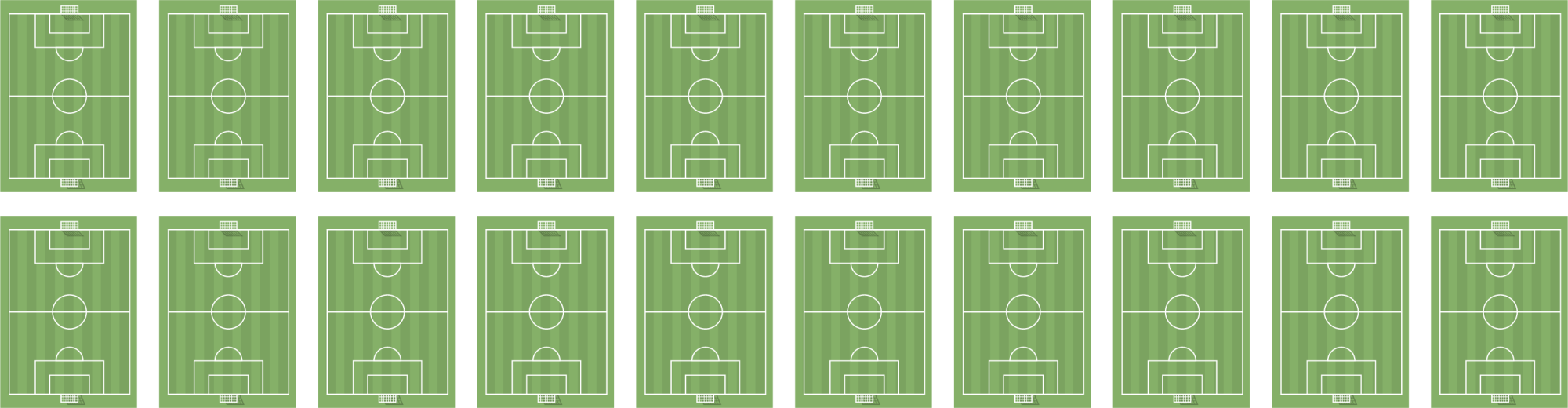
During the 2026 Football World Cup, the planets attention will be drawn to one specific patch of land 105 by 68 meters, to be precise. The world consists of more than 20 billion of these football fields. With footy fervour reaching a feverish, um, pitch we decided to look at land degradation through the lens of the Beautiful Game.
There are about 20 billion football pitches worth of land on Earth.
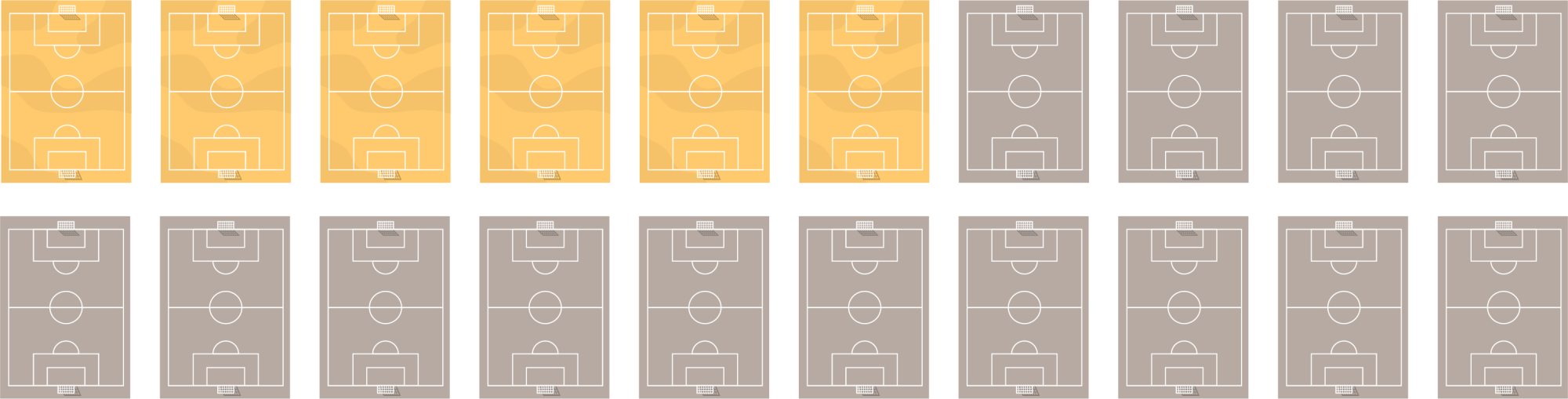
Nearly 6 billion pitches comprise largely inhabitable lands, like deserts and glaciers, as well as built-up areas like cities, towns and factories
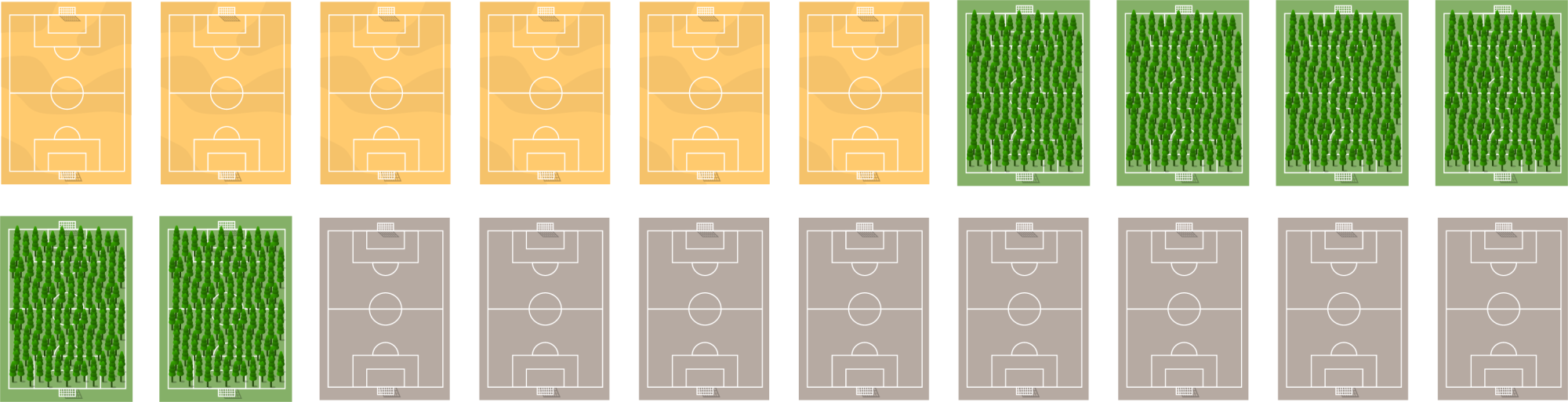
About 6 billion pitches are forests
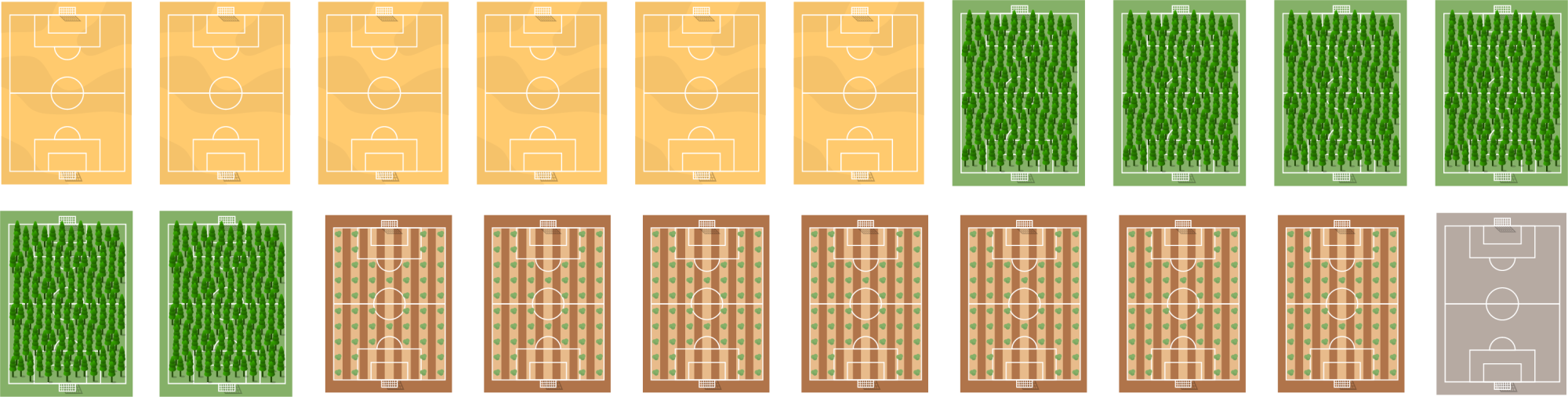
Just under 7 billion pitches are farms. And while the world needs more food to feed a fast-growing global population, agriculture is one of the leading causes of land degradation. (Experts say this means we need to farm and consume better.)
Humans have significantly altered about 75 per cent of land, found one landmark report . That includes the felling of forests, the draining of wetlands and the expansion of cities.
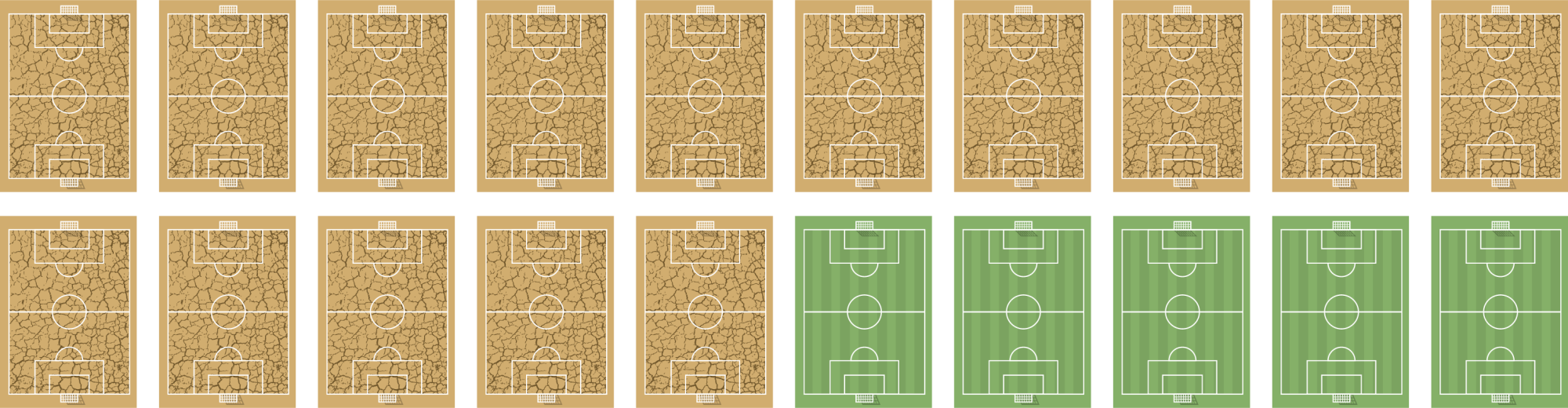
Up to 8 billion pitches worth of land or 40 per cent is officially classified as degraded, according to estimates . And every second, another four football fields wither. This loss of productive lands affects 3 billion people, stokes climate change and feeds biodiversity loss.
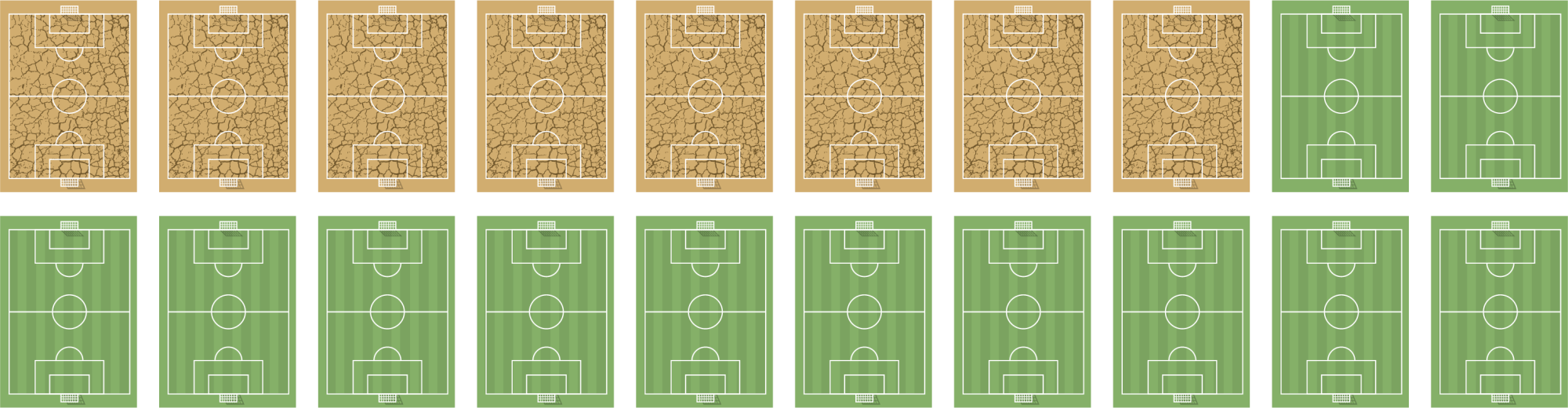
Forests are among the hardest hit ecosystems. Between 2015 and 2025, even with tree-planting efforts, the total size of the worlds forests still shrank by over 50 million pitches. Though, the rate of deforestation was less than half of what it was in 1990s.
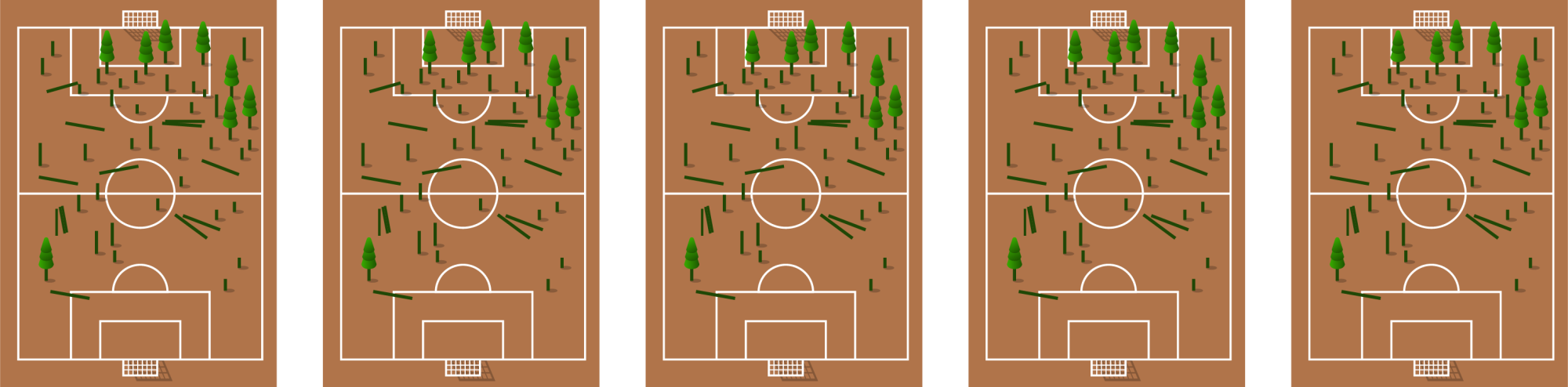
Some 70 per cent of farmland is already degraded and threatened with desertification. Each year, the combined effects of land degradation, desertification, and drought cost the global economy US$878 billion annually.

But there is a global movement afoot to set things right. Communities around the world from the plains of South Asia , to the mountains of Central America to the margins of the Sahara Desert are working feverishly to restore land-based ecosystems. Since the start of the UN Decade on Ecosystem Restoration , hundreds of millions of hectares have been put under restoration.
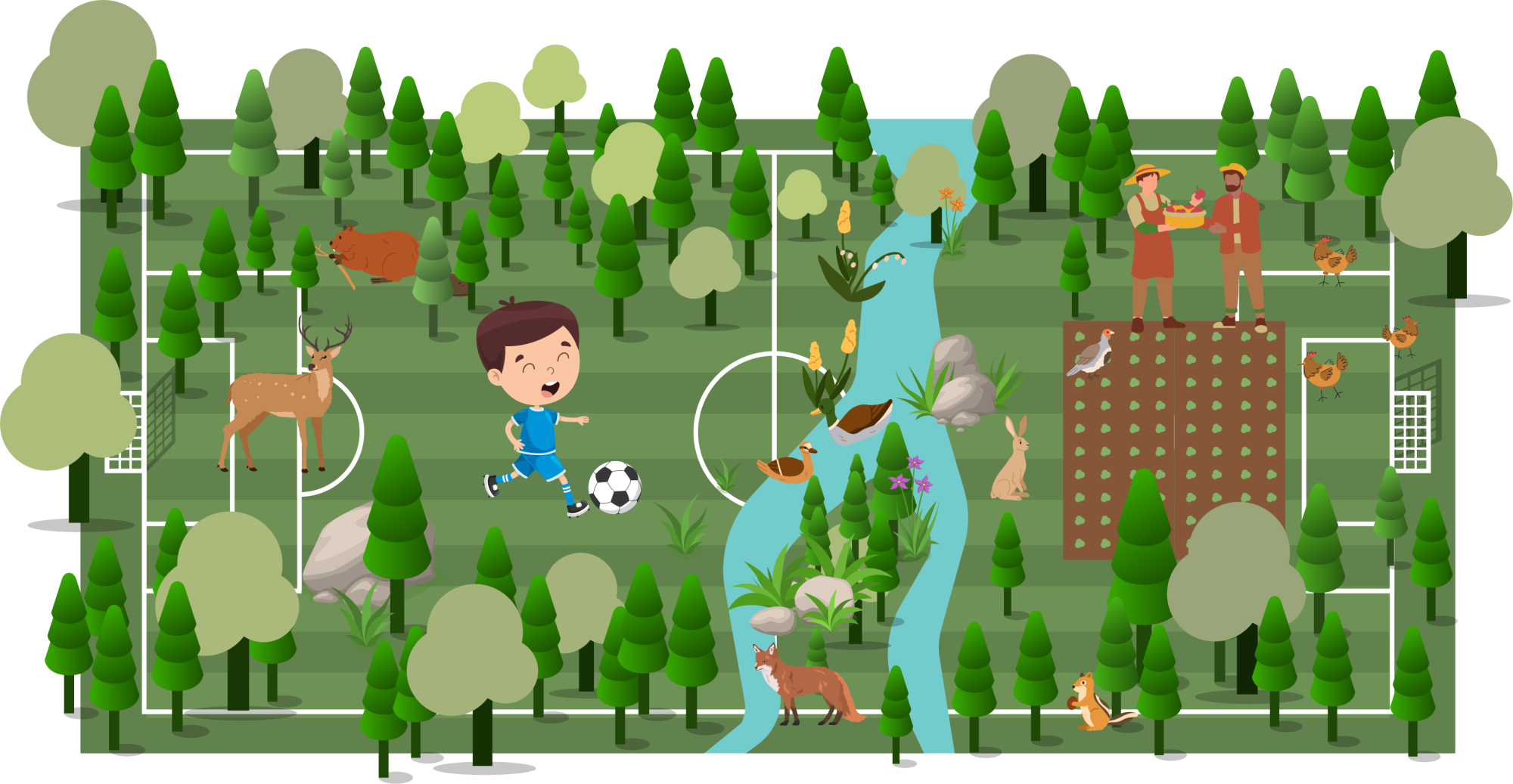
That could be the tip of the iceberg. Countries have pledged to restore 1.4 billion football pitches of degraded land, an area larger than China. Doing this, experts say, could create jobs, counter climate change, bolster food security, increase water supplies and make people healthier.
Reviving land is a massive undertaking but one that can succeed with a whole-of-society approach where governments, the agricultural sector, other industries and civil society all pitch in . Read up on what everyone can do to prevent, halt and reverse land and nature degradation.
Written by: Ann-Kathrin Neureuther
Reviewed by: James Lomax, Julian Blanc


