
Original article published in Asahi Shimbun Globe+, available here (Japanese).
For those who experience major surgeries such as hip or knee replacements, cancer patients and other severe disease sufferers, pain can be crippling. Often opioids like morphine, codeine, and fentanyl are seen as the only solution. Yet these can come with severe side effects. Opioids are known to affect breathing, and repeated usage can result in increased tolerance (meaning higher and higher doses are needed for the same pain alleviating effects) and withdrawal symptoms. According to the World Health Organization, in 2019 around 125,000 people worldwide died from opioid overdoses.
Scientist Dr. Peng Zhou wants to find a better alternative. By researching the underlying biological mechanisms of pain, he's developing safer, more effective drug treatments. Now, Zhou has co-founded Surzen Biotherapeutics, a new biotechnology startup based in Okinawa, Japan.
"My father was the reason I first became a scientist. He was always encouraging me to expand my horizons," says Zhou. Zhou's father, Shu Sheng, was an engineer at an industrial steel factory in China. He was passionate about education, and dreamt that his son would become a doctor. "And I did become one - just not a medical doctor. But maybe the next best thing!" Zhou smiles.
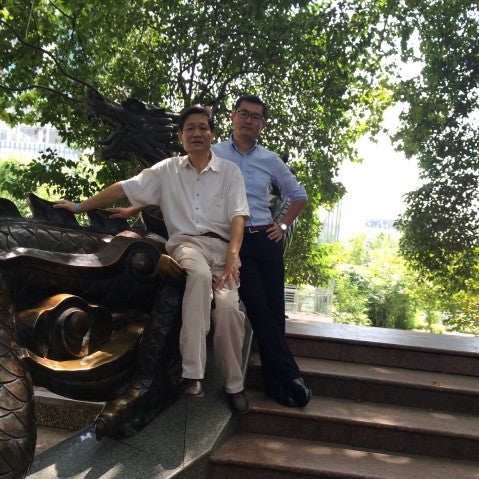
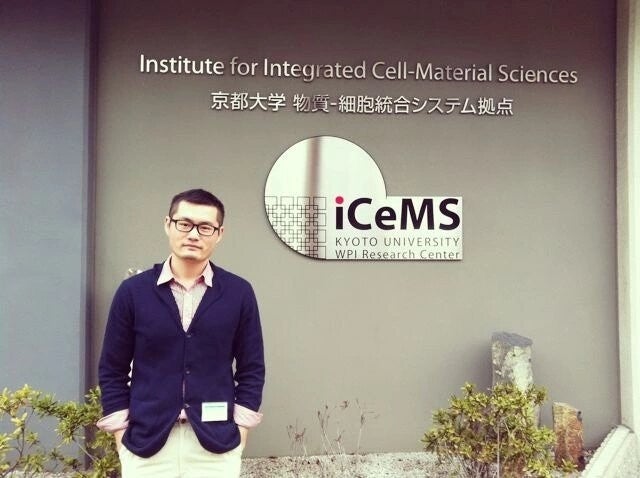
Growing up, Zhou was endlessly asking questions. He wanted to know how we humans and the world around us worked. This, alongside his father's academic encouragement, naturally led him to study biological sciences. In 2012 after finishing his PhD, Zhou moved to Japan to join the lab of Professor Akihiro Kusumi at Kyoto University. There, he studied cell membranes, using advanced techniques to track individual cells under the microscope. With these methods, he investigated different proteins within cell membranes, to understand their different biological roles and how each one worked. Zhou didn't have a specific driving force behind his research, except academic curiosity. However, within a few years, his father had fallen ill.
"He was diagnosed with late-stage cancer, so I returned to China to care for him," Zhou confirms. During his frequent hospital visits, he became passionate about supporting cancer patients. However, although he had studied biology, none of his research had focused on cancer, which left Zhou questioning how best to help. But he quickly realized that, while he might not be able to cure cancer, he did have training which might help him bring hope to patients and their families.
"For late-stage patients, time is often limited. So many people struggle through these final moments in immense pain, unable to fully enjoy the company of their loved ones. During this time with my father, it became my dream to help cancer patients and others in similar situations, to improve their quality of life," explains Zhou.
Zhou realized that his single-cell imaging studies could be applied to pain pathways, to learn the biological mechanisms of pain and understand how best to reduce pain symptoms.
"Recent research even suggests pain management can affect survival rates," adds Zhou. "Improving pain management can make a huge difference to people's health and enjoyment."
After his father passed away, Zhou returned to Kusumi's lab, now at the Okinawa Institute of Science and Technology (OIST), with a renewed focus on opioid receptors - key proteins involved in pain signaling pathways.
The mechanisms of pain
All the opioid drugs currently available target single opioid receptor molecules. However, in biology, these receptor molecules are often found bonded together as pairs.
After many years of focused research, Zhou, Kusumi and colleagues discovered a peptide that could target these bound pairs of receptors, with results showing increased effectiveness and less severe side effects compared to other pain management treatments.
This research became the scientific foundation of Zhou's startup, Surzen Biotherapeutics, which he named after his father.
From researcher to businessman
After seeing the new peptide research, Zhou was contacted by OIST's Innovation team, who helped him to patent the new technology. Through their support, Zhou accessed dedicated lab space to develop further evidence of the peptide's effectiveness, as well as entrepreneurship training and a wide range of business support resources. In 2025, Zhou was introduced to James Feliciano, a Venture Partner at Saisei Ventures, who fund and support Japan-based innovation. Saisei Ventures provided seed funding for the company and Feliciano, an experienced pharmaceutical executive, joined the Surzen Biotherapeutics team as CEO.
"I was so excited for James to join the team," says Zhou. "His commercial expertise and depth of experience have been invaluable in building the company."
Together, Zhou and Feliciano decided to base Surzen Biotherapeutics in Okinawa, taking advantage of the wealth of scientific talent emerging from OIST's labs. The team hopes to provide OIST students and researchers with opportunities for internships and real-world industry experience.

Though developed in Japan, Zhou and Feliciano hope their biotechnology will reach global markets such as the US and Canada, where medical opioid usage and risks are amongst the highest in the world.
When asked about his hopes for the future, Zhou says, "Our aim is to build a better quality of life for patients around the world by unlocking new pain management approaches. I hope to build a company that would make my father proud, and that through Surzen Biotherapeutics, people remember his name."
Brief Biography
Peng Zhou is Chief Technology Officer and co-founder of Surzen Biotherapeutics. He obtained his PhD in Biochemistry from Wuhan University, China, before joining the lab of Prof. Akihiro Kusumi at Kyoto University, which later moved to the Okinawa Institute of Science and Technology (OIST), Japan. Zhou started Surzen Biotherapeutics while he was a Technology Pioneer Fellow at OIST.


