Around the world, governments, researchers and industry are already racing to define and build the next generation of mobile networks: 6G.
Connectivity is no longer just about faster downloads. Mobile networks are becoming critical infrastructure that underpins healthcare, emergency response, transport, industry and everyday digital services. 6G is expected to take that a step further.
In Australia, the stakes are especially high. As a country defined by distance and dispersed populations, the success of 6G will be measured not just by performance in cities, but by its ability to deliver reliable, affordable connectivity across regional and remote areas.
So, what's the current state of play, and what's next for 6G?
All quotes below are available for use by media.
What exactly is 6G?
Dr Hajime Suzuki, Principal Research Scientist at CSIRO:
6G is the next generation of mobile communication technology, expected to emerge in the next five years. While each generation of mobile networks has delivered faster speeds, 6G marks a broader shift – from connectivity alone to systems that can also sense, learn and adapt.
In addition to building on 5G's strengths, 6G is being designed to support entirely new capabilities. These include networks that can understand their environment, extend connectivity almost everywhere, and use AI to optimise performance in real-time. In practical terms, it moves us from faster networks to smarter, more responsive infrastructure.
How is 6G different from 5G?
Dr Chandra Thapa, Senior Research Scientist at CSIRO:
6G won't arrive as a clean replacement. Like previous generations, it will sit alongside 5G and 4G for many years, each serving different needs.
Where 5G focused on improving connections between people, devices and industries, 6G is being designed as an AI-native system that can monitor conditions, adapt in real-time and manage itself.
Performance gains will be significant – potentially reaching terabit-per-second speeds and near-instant response times. 6G networks are expected to bring together communication, sensing, positioning and computing into a more integrated platform. The transition is from faster networks to intelligent infrastructure that evolves over time.
How will 6G networks work?
Dr Hajime Suzuki, Principal Research Scientist at CSIRO:
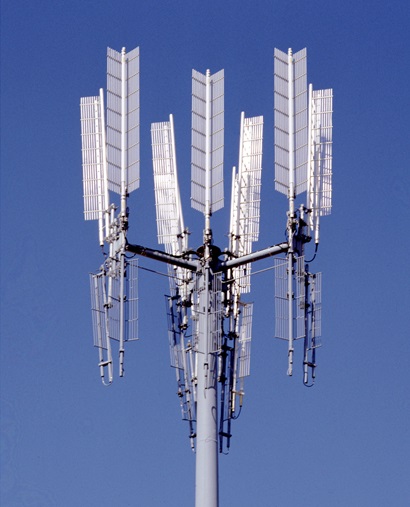
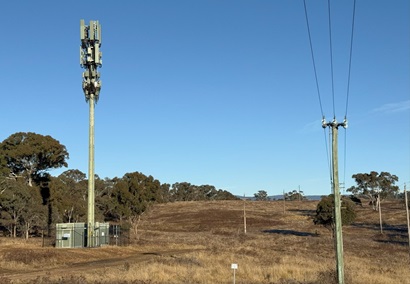
At its core, 6G will still rely on devices communicating with base stations connected to broader networks and the internet. Future networks are expected to combine terrestrial infrastructure with satellites and high-altitude platforms, creating a seamless, layered system that can deliver connectivity well beyond traditional coverage areas.
What will 6G be used for?
Dr Chandra Thapa, Senior Research Scientist at CSIRO:
6G is being designed for a class of applications that today's networks struggle to support. These range from highly immersive digital experiences to systems that rely on ultra-fast, ultra-reliable connectivity to operate safely in real-time.
6G enables technologies that depend on near-instant response and extremely high reliability. Across sectors like healthcare, emergency response, infrastructure and manufacturing, 6G could enable systems that are more connected, precise and responsive.
Where does Australia stand on 6G?
Dr Chandra Thapa, Senior Research Scientist at CSIRO:
Australia has joined a group of countries advocating for a 6G ecosystem built on openness, security and resilience. This includes support for trusted technologies, strong privacy protections and global, industry-led standards developed through transparent, collaborative processes.
In practical terms, Australia's position signals that 6G should be treated as critical infrastructure – where security, reliability and accessibility are foundational, not optional.
What does 6G mean for regional and remote Australia?
Dr Ming Ding, Group Leader of the Privacy Technology Group at CSIRO:
6G presents a genuine opportunity to improve connectivity in regional and remote areas. Unlike earlier generations, 6G is being developed as a flexible system that can integrate multiple technologies. This makes it better suited to Australia's diverse and often challenging environments.
What impact will 6G have on privacy and safety?
Dr Ming Ding, Group Leader of the Privacy Technology Group at CSIRO:
As 6G becomes embedded in critical services, the stakes around privacy and safety will increase.
Future networks will connect more devices and generate far greater volumes of sensitive operational, location, and environmental data. This makes both resilience and data governance central to how 6G is designed and deployed. Privacy and safety can't be treated as add-ons. They need to be built into the system from the beginning, across the entire data lifecycle. The challenge is not just technical, but systemic – requiring coordination across infrastructure, regulation and industry.
Will 6G use more energy?
Dr Chandra Thapa, Senior Research Scientist at CSIRO:
6G is likely to increase overall energy demand as networks expand and carry significantly more data. However, it is also being designed with efficiency as a central principle.
More capability doesn't have to mean more waste. Advances in AI-driven optimisation and low-energy communication are expected to significantly reduce the energy required per unit of data. Energy is no longer a secondary concern, but a design constraint shaping how 6G is built.
What is CSIRO doing to address 6G?
Dr Chandra Thapa, Senior Research Scientist at CSIRO:
CSIRO's full physical twin testbed which is designed to test systems under a multiuser environment. It allows testing of radio networks where users may interfere with each other, or where significant loads change operating conditions.
CSIRO's 6G security research is focused on understanding how future networks behave under real-world conditions.
We're moving into highly software-driven, AI-enabled networks, which introduce new types of risk. To explore this, researchers are combining physical testbeds with advanced simulation environments to model how complex systems perform at scale. The work concentrates on addressing security, virtualisation and standards gaps.
Where will we see 6G in everyday life?
Dr Hajime Suzuki, Principal Research Scientist at CSIRO:
Early 6G services are expected to begin appearing around 2030, although they are likely to roll out gradually rather than all at once.
As with 5G, initial deployments may not deliver the full vision immediately. The technology will evolve over time, with capabilities expanding as infrastructure standards and use cases mature.
What's the key takeaway for Australians?
Dr Chandra Thapa, Senior Research Scientist at CSIRO:
The most important thing to understand is that 6G is not just about faster phones. It's about how we build the next generation of critical infrastructure. For Australia, the real opportunity lies in extending reliable, high-quality connectivity across the entire country.
In a nation defined by distance, the success of 6G won't be measured by peak speeds, but by whether it can meaningfully close the connectivity gap and support the critical infrastructure and services Australians depend on every day.
/Public Release. This material from the originating organization/author(s) might be of the point-in-time nature, and edited for clarity, style and length. Mirage.News does not take institutional positions or sides, and all views, positions, and conclusions expressed herein are solely those of the author(s).View in full here.