
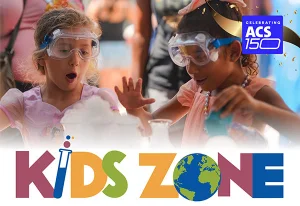
WASHINGTON, March 19, 2026 - Families are invited to explore the science of forests at this year's ACS Kids Zone, a free public event hosted by the American Chemical Society (ACS). The program will take place on Saturday, March 21, from 11:00 a.m. to 2:00 p.m. ET at Morehouse College's Shirley A. Massey Executive Conference Center in Atlanta.
The event is sponsored by ACS President Rigoberto Hernandez and the ACS Office of Science Outreach. The 2026 Kids Zone brings together local chemists, student volunteers, and community partners for an afternoon of hands-on science. Families can take photos with Meg A Mole, participate in activity stations, and learn how chemistry connects to the natural world.
This year's theme highlights the chemistry of forests. Visitors can explore the structure of trees, the colors found in plants, the role of fungi, and the properties of materials that help living things survive in their environments.
Featured activities include the following:
Tree Detectives Participants study slices of tree trunks to uncover growth rings and environmental changes while learning about the functions of inner layers such as xylem, phloem, and cambium.
Arctic Insulators Visitors experiment with mitts inspired by bark and blubber to compare how different materials retain heat in cold conditions.
Slime Lab Children create clear slime and explore how repeating molecular units and cross linking form stretchy polymers.
Color Quest Guests use chromatography to separate pigments found in leaves and markers and discover the chemical colors that appear during the process.
Twirl Science Participants design marbled paper with shaving cream and dyes while learning how cellulose fibers in paper interact with colorful liquids.
Forest Clean Up Crew Visitors investigate the role of fungi and lichen in recycling nutrients. They sort lichen samples and watch an active enzyme reaction foam and bubble.
What's Up with Water Children explore how water moves through trees by observing hygroscopic pine cones and completing simple demonstrations of surface tension, cohesion, and adhesion.


