
New genetic evidence suggests marine life in the deep Gulf may be more vulnerable than previously believed.
A biodiversity crisis is unfolding across the planet, but the deep sea was thought immune and even a refuge for marine life. New research led by Florida International University scientists and published in Nature Communications suggests that assumption may be alarmingly wrong.
By examining more than a decade of genetic data, the research team uncovered troubling signs of extinction risk among five species living hundreds of meters beneath the surface of the Gulf, raising the possibility that a biodiversity crisis is also unfolding in one of the planet's largest and least understood habitats. Led by FIU marine scientist Pedro A. Peres from the Bracken-Grissom Lab, the study examined three species of lanternfish and two species of deep-sea shrimp collected between 2011 and 2023.
Researchers analyzed genetic information from 486 specimens to understand how populations have changed over time and how vulnerable they may be to future environmental pressures. This is one of only a few studies to examine how the DNA of deep sea animals has changed over time, according to Peres.
All five species exhibited genetic warning signs associated with elevated extinction risk, Peres said. One lanternfish species, Diaphus dumerilii, lost approximately 8% of its genetic diversity over 12 years — a decline comparable to or greater than losses documented in some threatened and endangered animals over much longer periods. The researchers also found that each species had a relatively small effective population size. This doesn't mean there are necessarily few animals. It means relatively few individuals are contributing genetically to future generations.
Genetic diversity is essential to a species' survival, according to Heather Bracken-Grissom, assistant director of the Institute of Environment's Coastlines and Oceans Division. A co-author of this study, she has spearheaded the research investigating the genetic diversity and resilience of deep-sea species.
"Genetic diversity provides the variation populations need to adapt to changing conditions, resist disease and recover from environmental disturbances," she said. "When that diversity disappears, a species can also lose the ability to withstand future threats."
This challenges the idea that deep-sea species are naturally more resilient because they occupy such vast environments," Peres said. "It shows how much we can miss when we look only at population abundance without considering their genetic diversity and long-term viability."
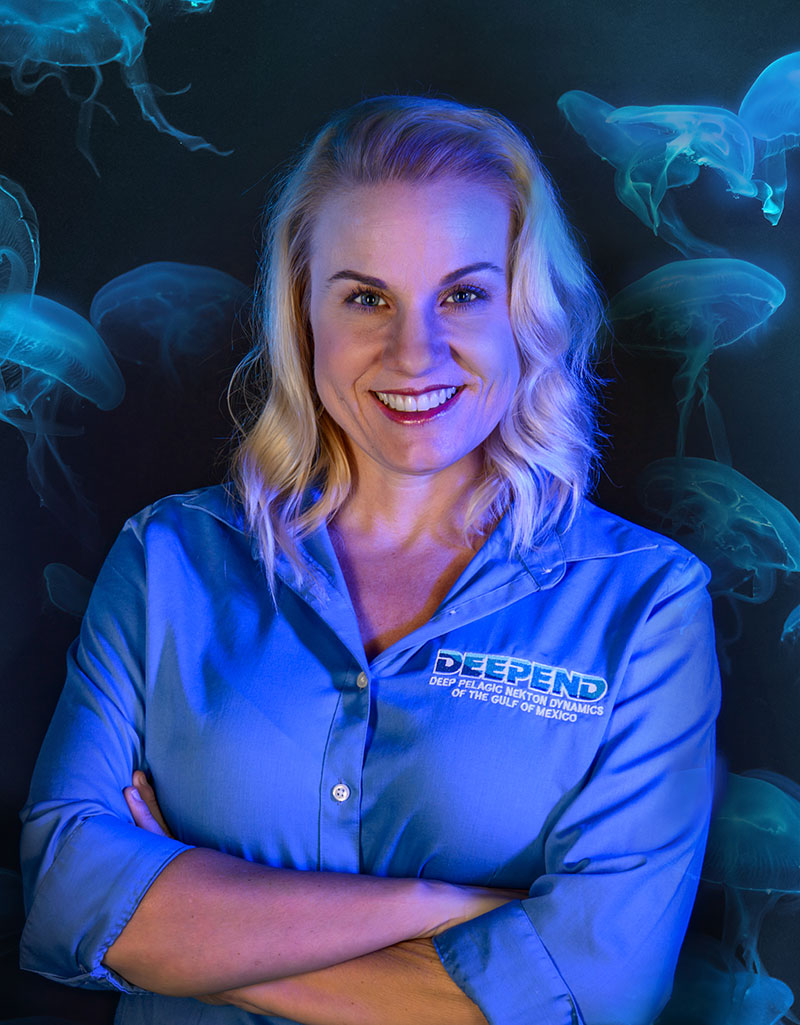
Heather Bracken-Grissom is a marine evolutionary biologist who was the first to identify an unknown species of "monster" larva, part of an international team that captured the first-ever video of giant squid in U.S. waters and has both a species of crab and shrimp named after her. A marine biologist and assistant director of Coastlines and Oceans Division in FIU's Institute of Environment, she has dedicated her career to uncovering the mysteries of the ocean including the deep sea hydrothermal vents and the animals that call this extreme environment home.


