
The first event in the Series this academic year questioned whether the digital sphere is changing our understanding of who we are.

The Sheldonian Series returned for its third year on Tuesday 10 November, 2026 when guests and a packed audience at the Sheldonian Theatre explored 'Personal Identity' and whether the digital world is changing our understanding of who we are, how we relate to others and what we understand about being human.
In a world defined by technological change, political polarisation and contests over history, the Sheldonian Series will examine what role identity plays in our lives throughout this academic year.
Professor Irene Tracey CBE, FRS, FMedSci, Vice-Chancellor of Oxford University, who gave the opening address, said:
'It was wonderful to see a packed theatre as we commenced the third year of our Sheldonian Series. Over the past two years, the series has brought together people from across the Oxford community and beyond for lively and thought-provoking discussions, reflecting our commitment as a University to freedom of speech, high quality dialogue and respectful exchange of ideas.
'This year, we turn to a new theme that touches all of us: 'Identity' - and we will examine it from the personal, national and cultural perspective. Our first explored personal, where in an increasingly digital world, with social media, artificial intelligence and digital relationships transforming how we understand ourselves and interact with others, the question of personal identity is both timely and topical. I am very much looking forward to exploring these complex and challenging issues through the Sheldonian Series this year. Do join us.'
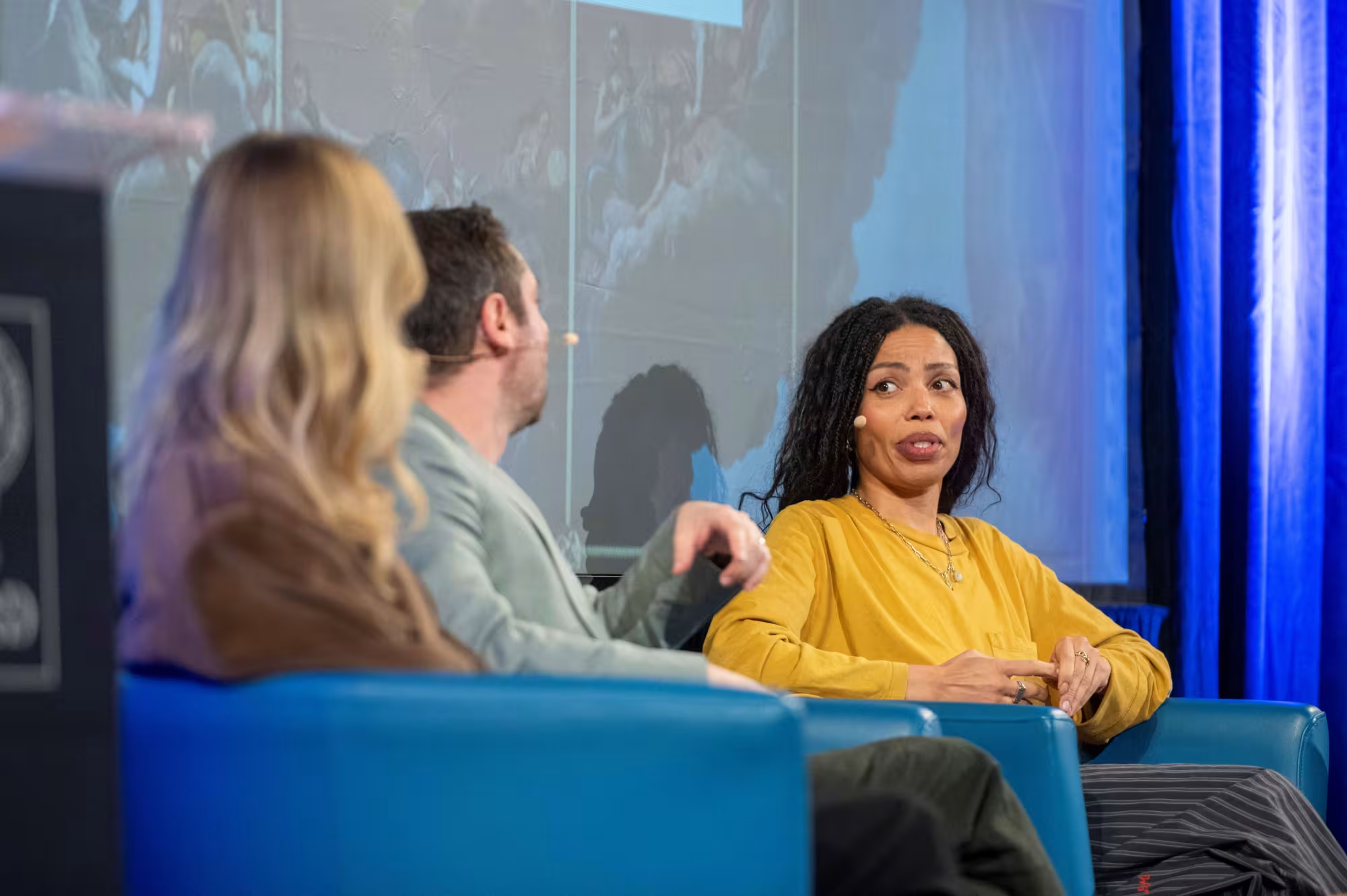
Panellists for the first event on Personal Identity were:
- Emma Dabiri, author and broadcaster
- Jon Harvey, comedian, writer and the human alter-ego of Count Binface
- Catrin Nye, investigative journalist
- Moderator: Professor Lady Sue Black, President of St John's College, Oxford
Being human
The evening's discussion on personal identity began with panellists exploring what it means to be yourself in a digital world?
Key themes included racism on social media, the gladiatorial nature of the arena and whether social media is still a platform to have a voice or whether it has become too much of a divisive and polarised landscape. Talking points also included needing to protect elements of personal identity within the digital sphere and even at times experiencing a desire to retreat from it.
Panellists examined 'going viral' with Jon Harvey sharing his own experiences over the summer with Count Binface standing in the Clacton by-election and BBC journalist Catrin Nye, who presented the podcast series A Very British Cult, sharing her own experiences following the documentary. The topic expanded into a broader dialogue about when interactions become unacceptable as well as users in the digital world engaging with online perceptions with impunity.
Mass migration
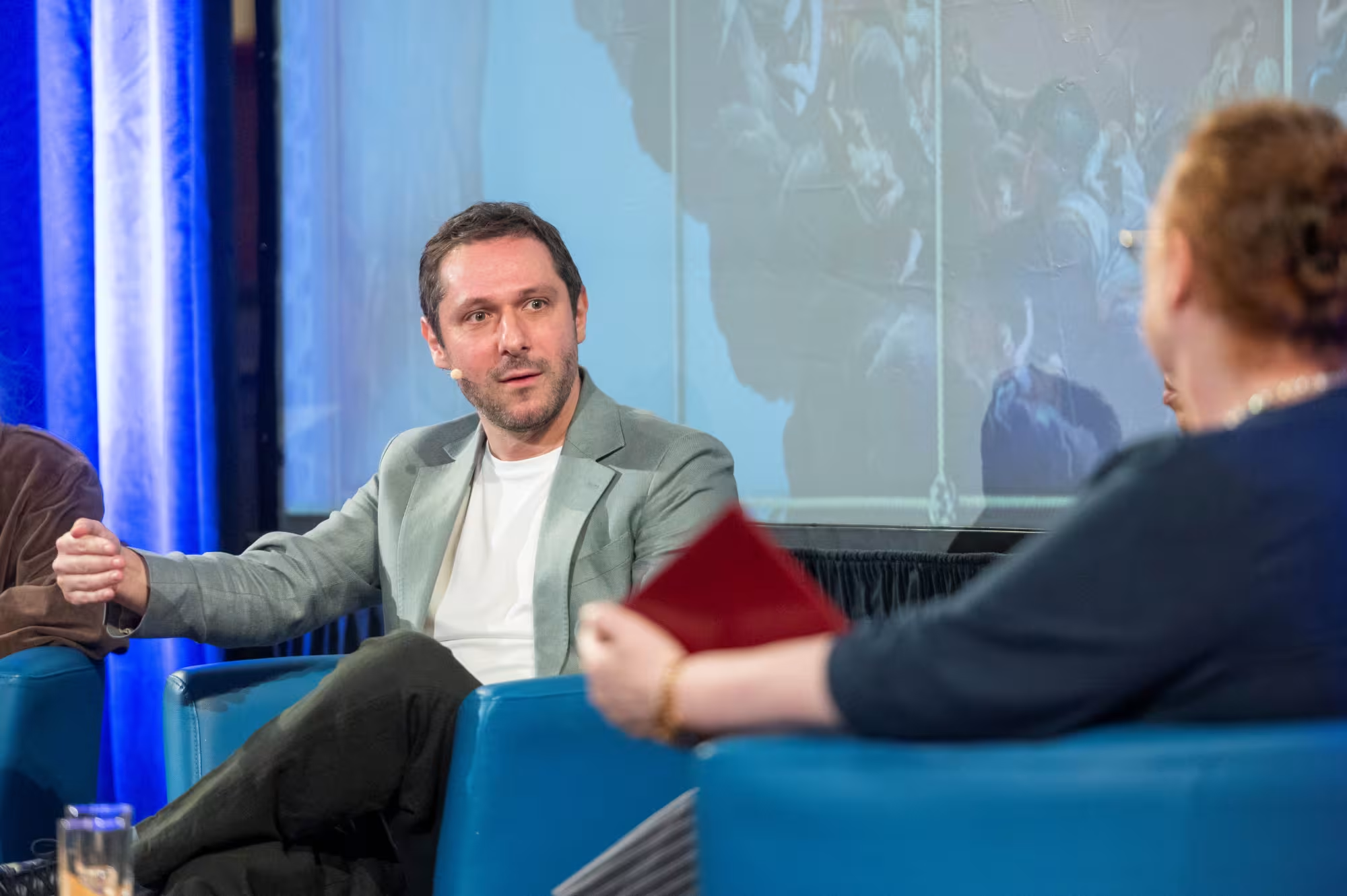
It wasn't long before the debate moved to artificial intelligence and whether we should we be worried. The role of billionaire owners, their responsibilities, accountability and huge influence over our lives, and whether we have been reduced to mere numbers and data to big companies, was also debated.
Whilst acknowledging the power and potential of the digital world, panellists questioned what it would look like if we empowered ourselves and whether we are really living the vision of the pioneers of the 1990s. Emma Dabiri asked whether a mass migration offline might be the most powerful thing we could all do.
It was also highlighted that, despite the appeal of the digital world, a large audience had gathered at the Sheldonian Theatre to hear actual people talking in an actual setting.
Comedian Jon Harvey, who is also well known as Count Binface, said:
'I loved being part of the panel on the subject of personal identity - in a year in which I garnered international fame for a completely different identity (as an intergalactic space warrior) and at the same time experienced multiple misrepresentations of my real identity, especially on the internet. While there seemed to be a consensus about the disquieting state of the internet and the AI revolution, I found the consensus itself energising, Catrin and Emma inspiring, and it made me all the more grateful to be part of a live discussion 'IRL'. I'm excited to see how this year's series develops through the year.'
Investigative journalist Catrin Nye said:
'As a journalist, I've investigated from people creating completely fake identities to try and con people - I've looked at others giving their entire lives over to cults. So much of our identity now exists in spaces we don't really control, shaped by algorithms, huge tech companies, and the perceptions of strangers. It was fascinating to explore what that means for us as individuals and as a society, alongside such brilliant panellists. There was a lovely irony in discussing the increasingly fractured nature of our online lives in a packed theatre full of people engaging thoughtfully with one another. Getting together IRL more is likely part of the answer.'
Professor Lady Sue Black, Baroness Black of Strome LT, moderator on the evening and President of St John's College, Oxford added:
'As a forensic scientist, my world has focused on the identity of the living and the dead. Through science, we seek to establish not only biological identity but, as far as possible, personal identity, helping to bring perpetrators to justice and families closer to closure. Digital identity is a world we touch less often, which made the Sheldonian Series an irresistible opportunity to explore what happens when the real person crosses into the digital world. Our panellists brought fascinating perspectives to a subject that increasingly affects us all. But one question stayed with me: how much of what we see is real, and how do we know what truth is any more?'
This evening drew to an engaging and interactive conclusion with an audience Q&A. Questions explored the digital world as a complimentary part of the human experience, whether social media can still be a place to show what is happening in the world, how the digital world can 'level the playing field' for many but whether short term gains are outweighed by long term consequences. The future direction of AI avatars, AI's impact on the jobs market, legislation for generative content and the potential for a future where we can no longer trust anything online were also deliberated.
Tim Soutphommasane, Chief Diversity Officer at the University of Oxford, delivered the closing remarks.
Watch online
Watch the Sheldonian Series event exploring Personal Identity in full online:
This video is hosted on YouTube. Please enable video cookies to play it.
Cookie preferences
In Hilary and Trinity terms, national and cultural dimensions of identity will also be explored. The Sheldonian Series is open to all and aims to promote freedom of speech and inclusive inquiry.


