
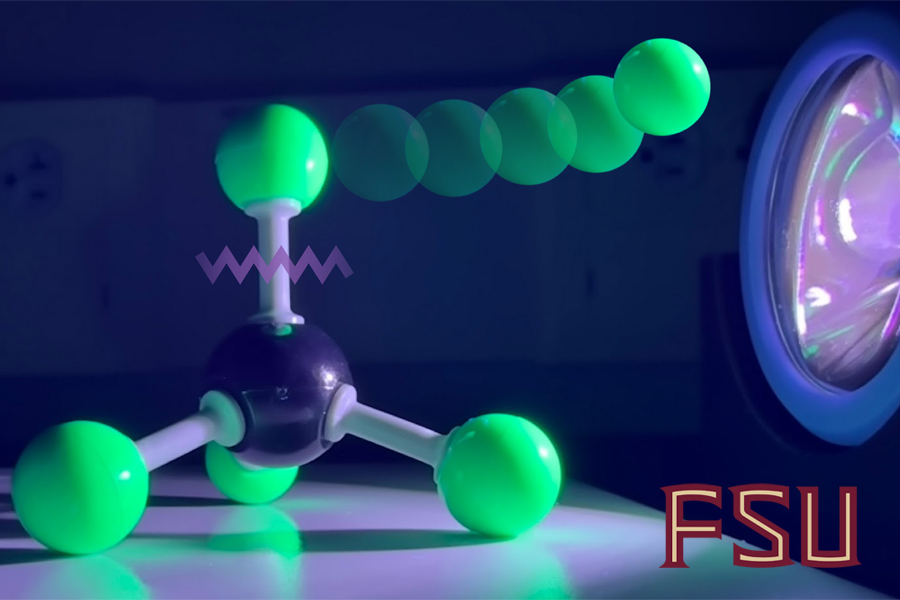

Florida State University researchers have discovered a pathway within a certain type of molecule that limits chemical reactions by redirecting light energy. The study could help develop more efficient reactions for pharmaceuticals and other products.
The researchers examined ligand-to-metal photocatalysts. Ligands are a molecule bound to a larger molecule, in this case, to a metal. Photocatalysts are materials that use light to accelerate a chemical reaction.
Theoretically, these molecules should be readily able to harness light energy toward chemical reactivity. But in experiments, chemists only found inefficient reactions.
The FSU research published in the Journal of the American Chemical Society shows why: The molecule quickly moves into a less energetic state before the absorbed energy can break chemical bonds. The energy is drained too quickly into the wrong place, so bond-breaking is limited.
"Even though the molecule is absorbing the light and it's getting the energy, it doesn't always do the thing that you want it to do, which is to rip itself in half and catalyze some photochemical reaction," said co-author Bryan Kudisch, an assistant professor in the Department of Chemistry and Biochemistry.

When molecules absorb energy from light, that energy has to go somewhere. Sometimes it causes a chemical reaction. In other cases, it dissipates as heat or radiates light back; that is, it glows.
But ligand-to-metal charge transfer molecules didn't behave as expected. When combined with other reactive materials and exposed to light, they produced chemical reactions, but at much lower efficiency than expected. They also didn't radiate much heat or light. That posed a mystery: where was the energy from that light going?
The answer: the electron configuration within the material was moving. Instead of breaking chemical bonds, the electrons rearranged to move to a lower energy state.
"Whenever you give something a lot of energy, the thing that it wants to do is get rid of it," said co-author Rachel Weiss, a graduate researcher. "The two ways that this system has is to either break the bond or rearrange its electrons, and it just tends to go in the rearranging pathway much more often."
In the examples the researchers examined, molecules rearranged their electrons in about 85% of cases.
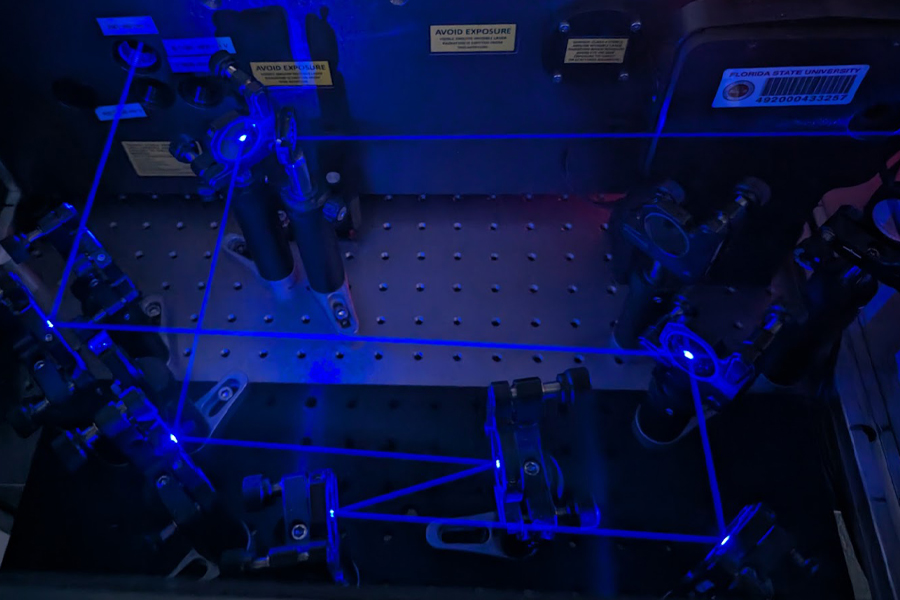
The electron-rearrangement pathway doesn't directly allow for more efficient reactions in applied settings such as manufacturing. But understanding how this reaction works is crucial for future research that could lead to more efficient chemical processing.
"Right now, we don't know what determines the path these molecules use, but it implies we can make these reactions five or ten times faster," Kudisch said.
In the context of pharmaceutical manufacturing, for example, in which companies are producing millions of doses of medicine for patients, cutting the time for a single reaction represents a major increase in efficiency.
"The economics of making a molecule depends on how much time is needed for a reaction to occur," he said. "The faster your reactions are, the more products you can make."
The research was supported by the American Chemical Society Petroleum Research Fund and by FSU.


