
Leonie Sundmacher is Professor of Health Economics at the Technical University of Munich (TUM) and serves on several scientific advisory bodies to the German federal government, including the German Advisory Council on Health and Care. In this interview, she talks about what it is like to help shape health policy as a researcher and about the work of the Munich Center for Health Economics and Policy (M-CHEP).
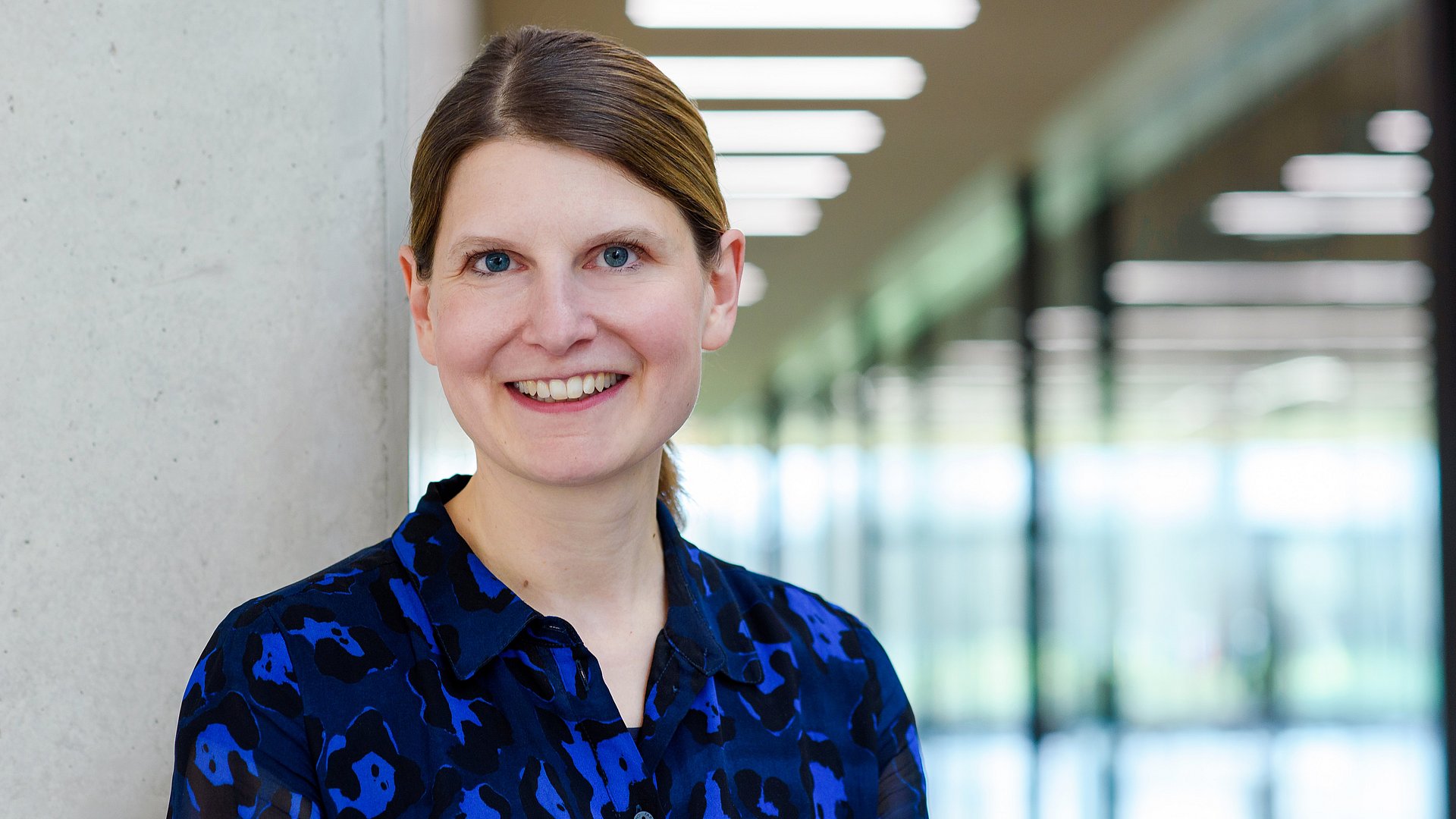 Silvia Beres / beresfotografie
 Prof. Sundmacher, can research contribute to making healthcare systems better?
In health economics, our work is very practice-oriented. For example, we ask how health care systems can be designed so that existing resources are used as effectively as possible to deliver care while keeping the system financially sustainable over the long term. Decisions in the health care system should be based on evidence - and scientific research provides that evidence.
Do the complexities of the German health care system ever limit what you can do as a researcher?
The German health care system is structured so that accredited physicians, hospitals, and health insurers make decisions jointly. Naturally, all of these actors run up against limits - but those limits are exactly what shape the consensus that ultimately emerges. Change requires strong momentum: either especially robust evidence or clearly defined political goals.
You and several of your colleagues serve on scientific bodies that advise policymakers at the highest level - for example, the federal government's Health Finance Commission, which develops recommendations on financing the statutory health insurance funds. What has your experience with policymakers been like? Do they try to steer the process strongly?
No, I have not seen any direct political interference so far. In the Health Finance Commission, too, our independence has always been respected. That said, we have always insisted on this independence. The secretariats support our work, but they do not intervene in the substance. At the same time, our influence ends once the reports and recommendations are complete. What is ultimately implemented is up to policymakers, who bring yet another perspective to these issues.
At TUM, you founded the Munich Center for Health Economics and Policy, or M-CHEP, an alliance of researchers with the stated goal of improving health care systems and population health through research…
We will celebrate the launch on March 20, and we are very glad that Judith Gerlacht, Bavarian State Minister for Health, Care and Prevention, will attend, among others. At M-CHEP, we bring together health economics expertise from across Bavaria to address key questions in health economics and health services research. Researchers from the TUM School of Medicine & Health, the TUM School of Management, and the TUM School of Social Sciences and Technology are represented. Across Bavaria, our network also includes renowned health economists from the University of Bayreuth, Friedrich-Alexander-Universität Erlangen-Nürnberg (FAU), the University of Augsburg, and Ludwig-Maximilians-Universität München (LMU).
Why was it important for you to establish a Bavaria-wide network?
Collaboration simply achieves more than competition. Every group has its own strengths, its own access to data, and its own particular expertise. On top of that, our research is data-intensive and organizationally demanding - it is much easier to manage together. Quite honestly, it is also simply more fun to work as part of a strong group. It is especially important to us to encourage our research staff and doctoral researchers to collaborate across disciplines and universities.
What does that collaboration look like in practice? Do you all sit around one big health economics table?
We are spread across Bavaria, so much of the collaboration happens digitally. There are monthly meetings and two weekly hybrid seminars for early-career researchers. We also have topic-specific groups for each of our five focus areas: health systems design, health services research, the economics of population health, global health, and health care management. In addition, we are in close contact with our Scientific Advisory Board and our Expert Committee.
What is the role of the Expert Committee?
It includes practitioners from the health care sector - from health insurers, hospital management, the National Association of Statutory Health Insurance Physicians, and public research institutes. As I said, being close to practice is important to us. The Expert Committee also helps us prepare students and doctoral researchers specifically for the demands of the job market.
Speaking of practice: you have also published policy briefs, short recommendations for healthcare policy from a scientific perspective. What is behind this?
Research on health care delivery is part of our day-to-day work. Naturally, we want to make that work available to all potential users. The policy briefs are an offer to anyone interested - whether they work in politics or come from another background - to access scientifically grounded information.
- Prof. Leonie Sundmacher is a member of the TUM School of Medicine and Health and the TUM School of Management
- M-CHEP
- Further information on the launch ceremony


