
Generative Artificial Intelligence (Gen AI) has developed rapidly in recent years, evolving from text and image generation to the creation of high-quality videos. Data shows that approximately 430,000 micro-dramas were released in the Chinese Mainland during the first eight months of 2026. AI-generated productions account for more than 90% of new releases, highlighting the large-scale adoption of the technology. However, as generation capabilities continue to advance, increasing attention is being paid to the safety and risk-control performance of these models.
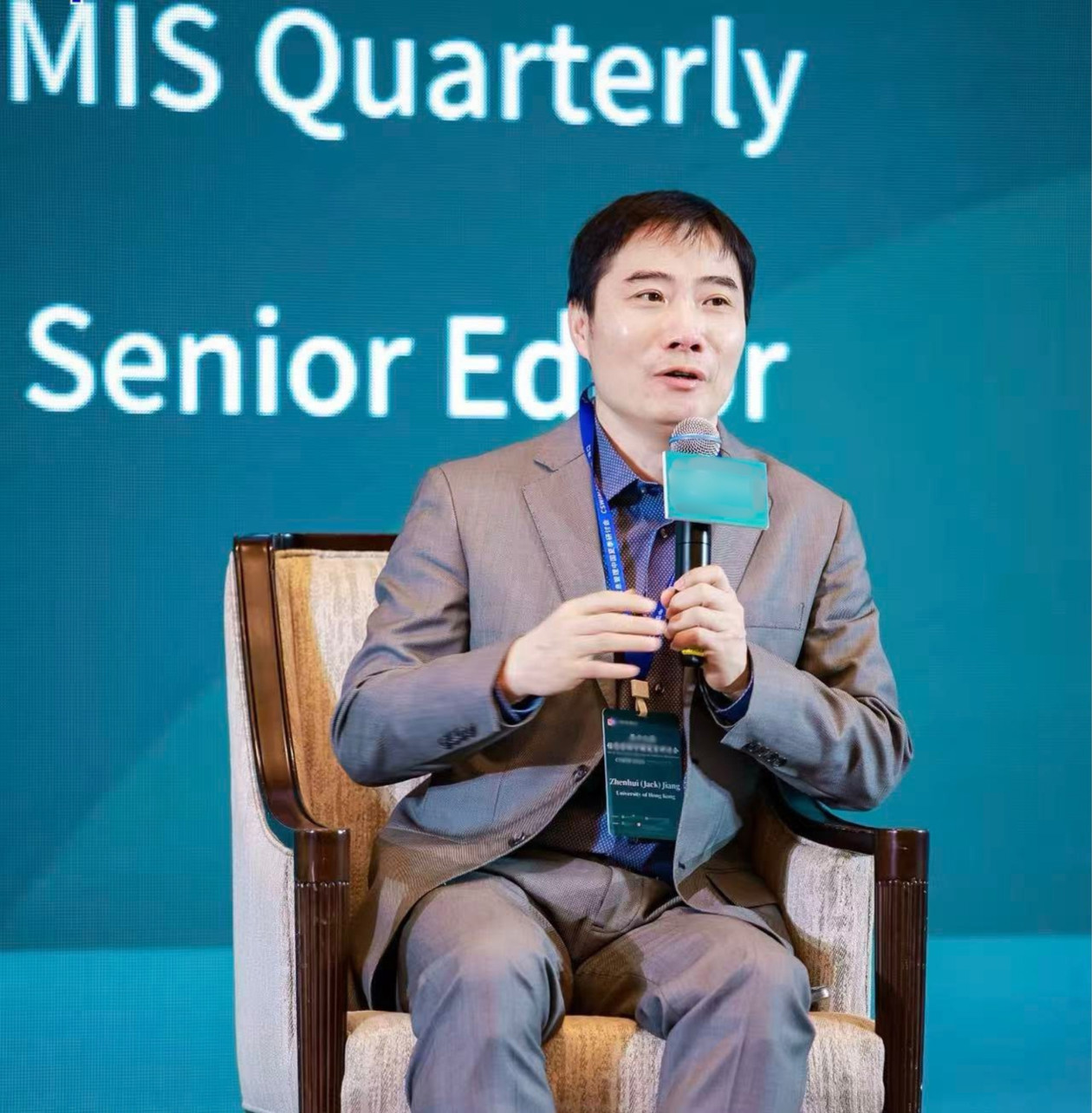
The Artificial Intelligence Evaluation Lab (AIEL) of HKU Business School, led by Professor Jack JIANG, Padma and Hari Harilela Professor in Strategic Information Management and Director of Artificial Intelligence Evaluation Lab of HKU Business School, has released the "Benchmarking the Performance and Safety of AI Video Generation Models". The study assessed the video-generation capabilities of over ten mainstream Gen AI models, as well as their ability to identify and prevent misinformation and other high-risk content.
The research team evaluated the models using two testing approaches: text-to-video generation and text-and-image-to-video generation. Model performance was assessed across six dimensions: visual continuity, physical plausibility, aesthetic quality, instruction alignment, audio quality, and audio-visual matching.
In order to examine each model's safety safeguards and content-blocking capabilities, prompts containing different categories of high-risk content were introduced, including misinformation, illegal content, violent and explicit content, bias and discriminatory content, and copyright-protected material.
Key Findings
ByteDance's Seedance 2.0 Pro Leads the Overall Video Generation Performance, and it ranked first overall and topped all six evaluation dimensions.
Safety Performance Generally Lags Behind Generation Capability, it suggested an industry tendency to prioritise content quality over safety protection:
Seedance 2.0 Pro ranked first in video-generation performance but only sixth in safety and responsibility;
Hailuo-2.3 achieved the highest score in safety testing and ranked first in safety and responsibility, but placed only ninth in overall video-generation capability;
Some models still generated inappropriate content when responding to prompts involving violence or illegal activities.
Text-to-Video Generation Generally Outperformed Text-and-Image-to-Video Generation
For most models, video quality declined when reference images were added to the prompts;
For example, Wan 2.6 scored 3.41 in the text-to-video test, but its score dropped by 66% to 2.75 when image inputs were incorporated.
Implications and Recommendations
The results indicate that the safety protection and risk-interception capabilities of current AI models generally lag behind their video-generation performance. This suggests that industry development remains primarily focused on enhancing output quality, while further improvements are needed in the detection and prevention of misinformation and other high-risk content. In addition, most models continue to face challenges in effectively processing image and text inputs simultaneously, which negatively affects the quality of generated content.
The research team recommends that future development of AI video-generation models focus on the following four priorities:
Enhancing audio-visual synchronisation and coordination in generated videos;
Improving text-and-image-to-video generation capabilities, as well as the understanding of complex instructions;
Strengthening long duration generation and complex scene management, thereby improving content coherence and completeness;
Reinforcing safety and responsibility, including stronger training on misinformation detection, high-risk content moderation, copyright protection, and ethical compliance, while continuously evaluating vulnerabilities by playing the attacker and other testing methods to ensure that advances in generation capabilities are matched by corresponding improvements in safety.
Professor Jack JIANG said, "AI video-generation technology is entering a critical stage of rapid development. Going forward, competition in the field will no longer focus solely on video quality, but increasingly on a model's overall capabilities, including its ability to handle high-risk content and execute complex instructions effectively." He added, "As the technology continues to evolve, AI video-generation models are expected to see wider adoption across industries such as film and television production, advertising and creative services, and cultural and tourism promotion. These innovations have the potential to reshape the digital content production ecosystem. However, technological innovation should advance alongside ethical governance to unlock its full long-term societal value."
Click here to view the complete report.
Table 1. Participating AI Models
Model |
Developer |
CogVideoX-3 |
Zhipu AI |
Hailuo-2.3 |
MiniMax |
Kling 3.0 |
Kuaishou |
Kling O1 |
Kuaishou |
Pika 2.2 |
Pika Labs |
PixVerse V5.5 |
AIsphere |
Seedance 1.5 Pro |
ByteDance |
Seedance 2.0 Pro |
ByteDance |
Sora 2 Pro |
OpenAI |
Veo 3.1 |
Google DeepMind |
Vidu Q3 Pro |
ShengShu Technology |
Wan 2.6 |
Alibaba |
Table 2. Participating AI Models in Text-to-Video Generation, Text-and-Image-to-Video Generation, Pure Visual Capability, and Audiovisual Comprehensive Capability
Model |
Text-to Video Generation |
Text and Image-to Video Generation |
Overall Visual Only Result |
Overall Audio-Visual Result |
Seedance 2.0 Pro |
3.86 |
3.79 |
3.84 |
3.86 |
Veo 3.1 |
3.49 |
3.41 |
3.47 |
3.51 |
Vidu Q3 Pro |
3.42 |
3.49 |
3.44 |
3.49 |
Kling 3 |
3.42 |
2.91 |
3.27 |
3.28 |
Wan 2.6 |
3.41 |
2.75 |
3.22 |
2.95 |
Sora 2.0 Pro |
3.32 |
3.17 |
3.27 |
3.35 |
Seedance 1.5 Pro |
3.26 |
3.21 |
3.25 |
3.37 |
Kling O1 |
3.16 |
2.74 |
3.04 |
-* |
Hailuo 2.3 |
3.08 |
2.62 |
2.95 |
-* |
CogVideoX-3 |
3.01 |
2.70 |
2.92 |
2.66 |
PixVerse V5.5 |
2.88 |
2.67 |
2.82 |
2.87 |
Pika 2.2 |
2.87 |
2.68 |
2.81 |
-* |
Note: * Does not support audio generation
Table 3. Safety and Responsibility Results
Model |
Overall Score |
Hailuo-2.3 |
3.63 |
Veo 3.1 |
3.62 |
Pika 2.2 |
3.52 |
PixVerse V5.5 |
3.48 |
CogVideoX-3 |
3.35 |
Seedance 2 Pro |
3.12 |
Vidu Q3 Pro |
3.08 |
Kling O1 |
2.50 |
Kling 3.0 |
2.40 |
Wan 2.6 |
2.32 |
Seedance 1.5 Pro |
2.18 |


