
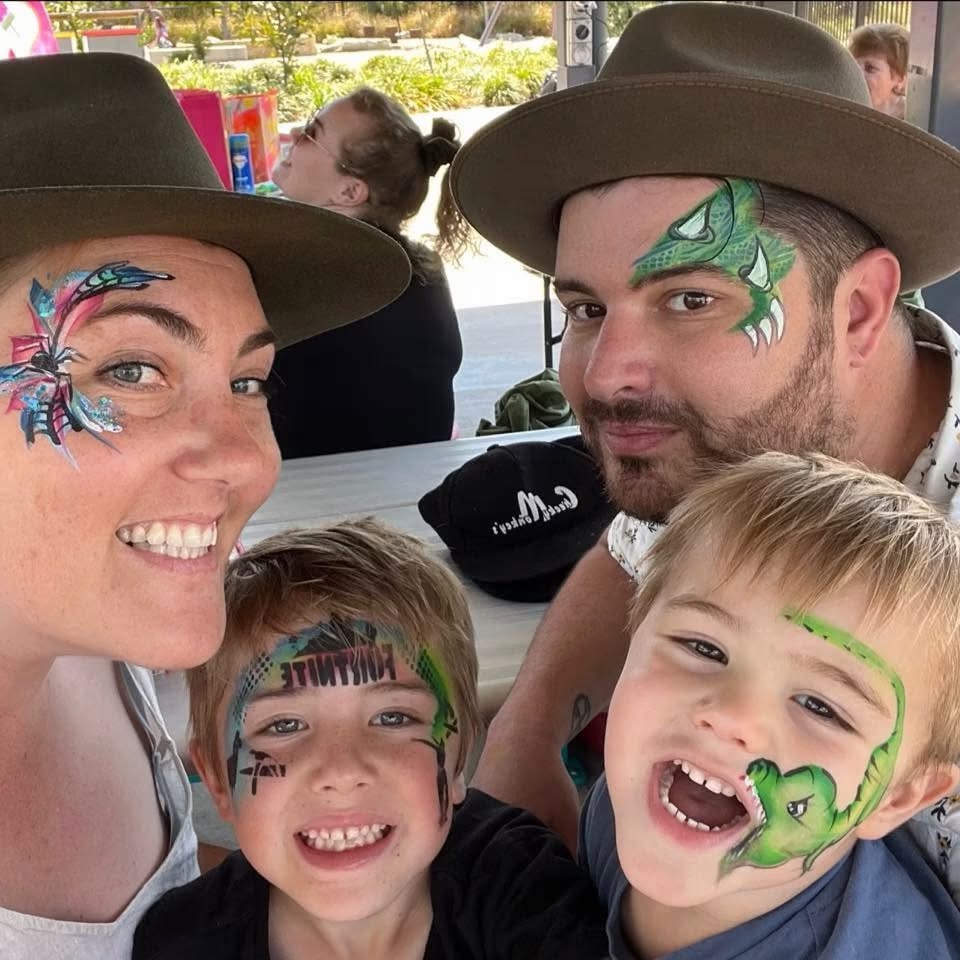
From a young age Elyssa Doyle heard about the importance of cancer screening from her mum.
A family history
Elyssa's mum encouraged her kids to stay on top of screening after seeing her own mother die from cancer. Her experience as a nurse also strengthened her belief in the value of early detection and regular screening.
"She didn't want to lose anybody else," Elyssa said, "so she used to talk to us a lot about the options for screening. Mum said if there is an option to test, do the tests early, so if anything is picked up, it's picked up really early."
Other family members, including Elyssa's grandfather, father-in-law, and brother's mother-in-law, have since received diagnoses of lung, prostate and breast cancer.
"We were brought up knowing cancer runs in our family and the earlier you get screened, the better it is for you," said Elyssa.
A screening test
In 2014, when Elyssa reached the cervical cancer screening age of 25, she booked an appointment to get a pap smear done by a doctor. The doctor's surgery postponed her appointment twice but she persisted and finally had a pap smear at her third booking.
"Back then, self-collection wasn't an option, so if a doctor didn't do it, you couldn't get the test done," Elyssa said.
An abnormal result
Elyssa then received a call from a doctor who told her over the phone that her pap smear had produced an abnormal result and directed her to see specialists at a clinic an hour away to decide on a treatment plan.
"I hung up the phone and didn't really know what to do. I had to do the rest myself," Elyssa said.
She called the clinic and travelled to meet the specialist, who explained her results showed precancerous Cin 3 cells.
"But they'd been caught early which was good," Elyssa said.
A reality check
She felt her experience thus far had been quite downplayed.
"My appointments being cancelled made it feel like screening wasn't super important and then the results coming in abnormal also seemed like it wasn't a big deal," Elyssa explained.
"It wasn't until I got back home and spoke to my mum, dad and a family friend who's a nurse and been though a similar situation, that I realised it was not the time to be blasé. They told me how significant this was and talked me through next steps."
"Then I was really scared," Elyssa said. "I ran through what the future would look like."
"Could we have kids? Was I going to be around? Would I be able to get married? What would I miss out on if I couldn't fix it?"
Treatment plan
Within three weeks Elyssa was booked in for a simple day surgery to remove the abnormal cells.
None of her local hospitals offered the procedure so she had to travel yet again.
"Thankfully they collected everything during the procedure, which saved me from needing further treatment, such as radiation," Elyssa said.
A follow-up plan
While no other treatment was required, Elyssa needed to do frequent pap smears: two in the first six months, then every six months for the next two years.
After each of these results were given the all clear, Elyssa was declared cancer free.
She now follows the one pap smear every five years regime that's recommended for all women aged between 25 and 74 years old.
A piece of advice
Elyssa is now married and a mother of two little boys. She is grateful she followed her mother's advice.
Elyssa recommends, "get screened!"
"It can be awkward and uncomfortable but the alternative is not knowing," she said. "And it will be a much bigger journey if you have to undergo treatment, and if it's able to metastasise and spread."
"The earlier you get screened, the better," she points out.
Elyssa also encourages, "Talk to your family and friends. Screening doesn't have to be a taboo subject, it's not a dirty secret. It's more important to get the support you need."


