
India is using sub-seasonal forecasts to help farmers anticipate rainfall, drought and pest risks, with examples showing how longer-range weather information supports planting, harvesting and more efficient irrigation.
In May 2026, farmers in Bargarh, in the eastern Indian state of Odisha, received an early warning of rain and thunderstorms that could threaten their mature crops. Issued on 8 May, the two-week forecast indicated possible adverse weather during 8 - 14 and 15 - 21 May, giving farmers time to prepare. They were advised to harvest mature dry-season crops early, move produce to safe locations and protect crops and livestock from thunderstorms and strong winds. Recommendations tailored to the crops' stage of development were distributed through the Meghdoot and Damini digital platforms.
The guidance illustrates how India is putting sub-seasonal forecasts, which look 2 - 4 weeks ahead, to practical use in agriculture. While five-day forecasts already support routine decisions such as irrigation, crop treatment and harvesting, longer outlooks can help farmers plan activities that require more preparation, including sowing, water and nutrient management and pest prevention.
India began applying these extended-range forecasts to agriculture experimentally in 2014. Feedback on their usefulness was collected from different parts of the country until the service became operational in 2018. The aim is to turn information about likely weather conditions into advice linked to a particular crop, place and stage of growth.
Early lessons from Assam
In late March 2016, farmers in Ganokdoloni village in the northeastern Indian state of Assam had still not sown their rice. A severe dry spell from late November 2014 to early May 2015 had exposed seedlings to water stress and sharply reduced yields. Farmers were understandably hesitant to plant the same type of rice again.
Then the India Meteorological Department (IMD) forecast continuous rainfall during April. Farmers were advised to complete sowing in the first or second week of the month. The rain arrived as forecast and, although conditions had initially appeared worse than the previous year, farmers who followed the advice completed sowing successfully.
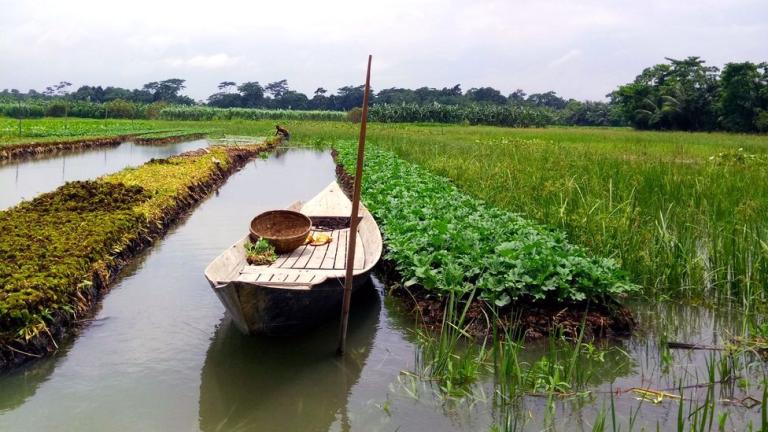
A second case in Assam concerned rice hispa, a leaf-feeding beetle that damages rice plants. In August 2016, forecasters expected below-normal rainfall after sustained rain in July and early August. The likely sequence of wet conditions followed by sunny, hot and humid weather favoured a rise in the pest population. The risk was greatest for the main monsoon-season rice crop, which was at an early stage of growth in areas where flooding had delayed transplanting.
Farmers were advised to take preventive measures. The dry spell occurred after the earlier rain, creating conditions favourable for an infestation. Those who followed the agrometeorological advisories, or weather-based farm guidance, avoided losses caused by rice hispa.
Better information for irrigation and crop planning
In 2023, grape growers around Nashik in Maharashtra received guidance based on several rainfall forecasts, satellite measurements of soil moisture, field observations and a model of how water moves through soil and plants. The system provided water-planning information about two weeks ahead and detailed irrigation guidance for the following 1 - 7 days, while accounting for forecast uncertainty. Farm evaluation showed water savings of 20%-45% during the monsoon growing season and 17%-35% during the dry-season crop cycle, without any loss of yield.
In Madhya Pradesh, weekly extended-range forecasts were combined with the Decision Support System for Agrotechnology Transfer, a computer model that simulates crop growth. The study covered rain-fed rice, which relies on rainfall rather than irrigation, in 10 districts over three monsoon growing seasons. Adding the forecasts during the stages when rice produces and ripens its grain improved yield simulations. For example, during the 2019 ripening stage, the model's prediction error fell from approximately 393 to 80 kilograms per hectare when the forecasts were included.
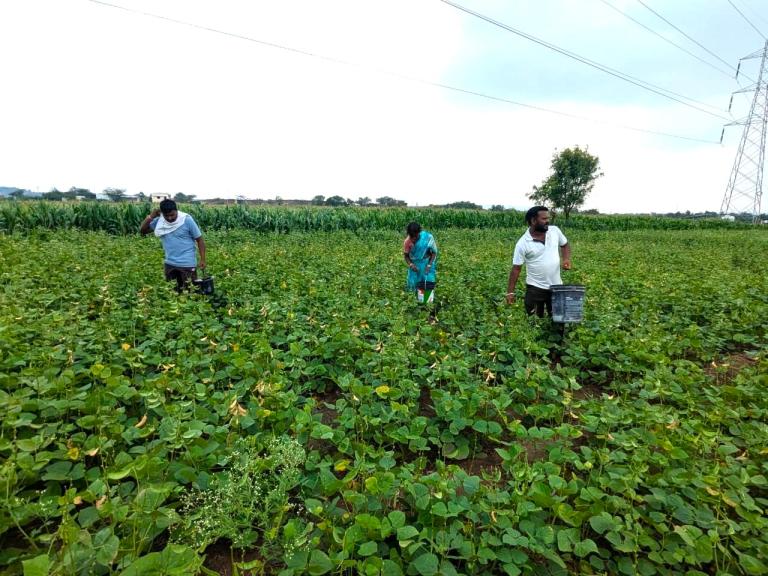
These cases show that sub-seasonal forecasting works best as part of a wider advisory service. Forecasts gain practical value when combined with information on soil and crop conditions, satellite observations, crop models, local knowledge and forecast uncertainty.
Greater accuracy and spatial detail, more regular updates and advances in artificial intelligence and digital delivery could make these services more useful and accessible. Their success will ultimately be measured by whether farmers receive clear, timely advice they can act on.


