Stories are drawn across cave walls, written into history books and verbally passed down through generations. The origins of storytelling are rooted in survival, and it's such an essential skill, it's a core part of the curriculum in the College of Arts and Sciences (CAS).
As a student, Nathan Harris, BA '14 (English), studied the flow of narratives, how to introduce characters, the importance of dialogue and the value of "show, don't tell" through foundational writing courses like Writing Composition 1. While these topics are common to someone majoring in English, Harris, author of The New York Times bestseller, "Sweetness of Water," learned how essential storytelling is beyond English and writing settings.
"Across every field, if you want to connect with others on a human level, you must be able to tell a story," Harris said. "An idea is meaningless if others can't understand it, and a vision is powerless if it can't be conveyed through a narrative grounded in the real world."
At its core, storytelling is communication. It's a way to share complex ideas and singular experiences in a way that can be more easily understood across industries and specialties.
As a writer, professor and head of the Creative Writing Program, Jason Brown knows the importance of being intentional in storytelling. Whether writing a fiction or non-fiction story, the information included and the way it's presented impacts how an audience receives a narrative.
"If you can organize your thoughts on a page and articulate why you're the right person for the job, then you are in a position to become a leader, to have a voice and to become valuable," said Brown. "Being able to tell a story is a foundational skill that is essential for many career paths, from being a writer to a doctor to a psychologist."
Storytelling in natural and social sciences
Maria Soto Cuesta, BS '26 (biochemistry) has used principles of storytelling to accurately communicate findings as a researcher, as a student and at her job as a CAS student communications writer.
"There is a lot of miscommunication between what is actually said in a research article and how someone understands it, because the jargon used in a research article is very intense and technical," said Cuesta. "We need that storytelling skill to condense and reform big research into something the general public can be aware of and understand."
Cuesta also noted how essential storytelling is to students and professionals specifically involved in research.
Erica Bornstein - professor, anthropologist and divisional associate dean of humanities - stresses the importance of storytelling proficiency in relaying and understanding research.
"A lot of the work done by academics is incredibly specialized," said Bornstein. "The ability to share your findings is equally as important as your research. Without proper communication, including telling the stories about your work, it won't be understood."
'The ability to share your findings is equally as important as your research. Without proper communication, including telling the stories about your work, it won't be understood.'
Erica Bornstein
Professor, Anthropologist and Divisional Associate Dean of Humanities
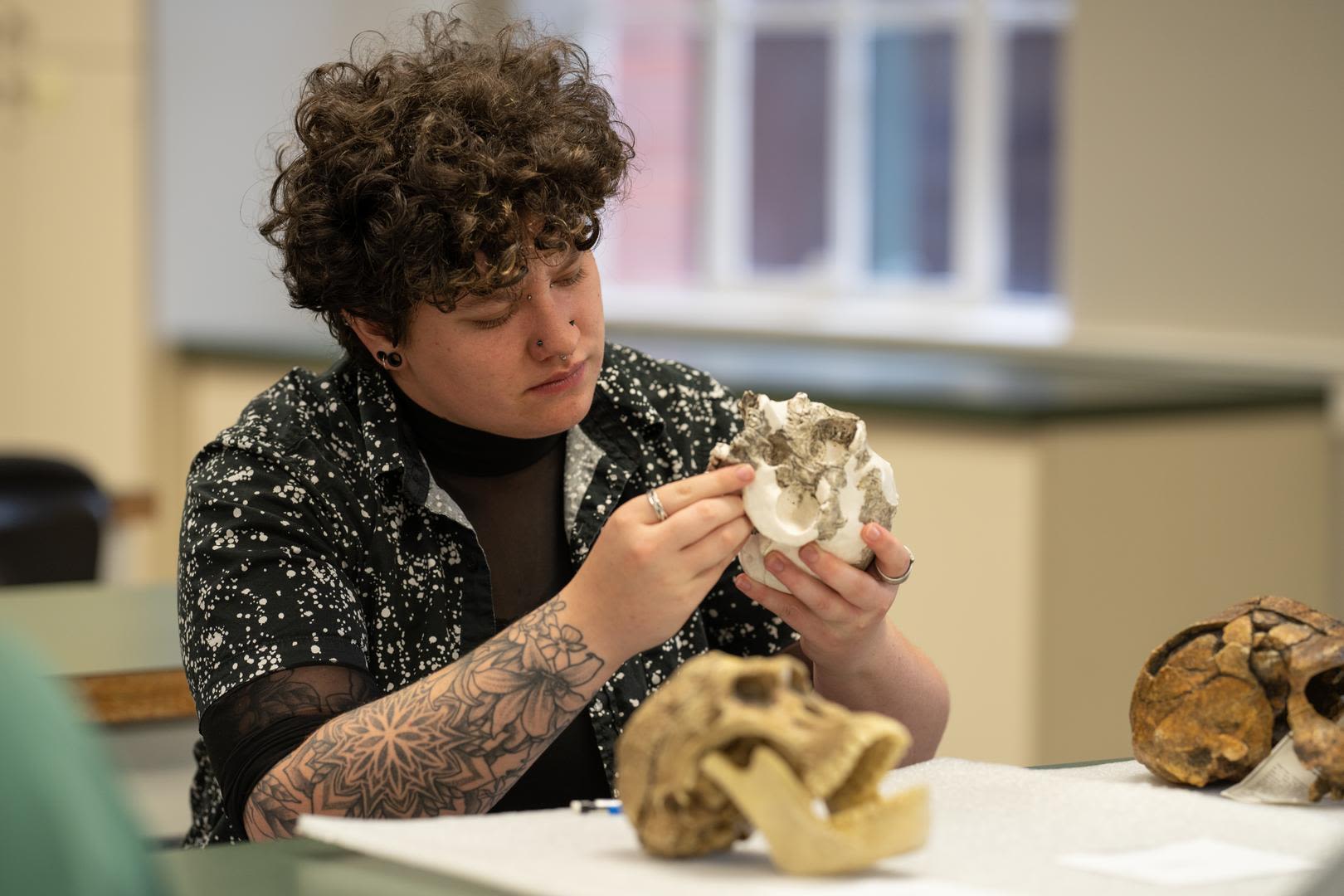
In Anthropology 270, during lab time, students examine bones, looking for clues that tell the story about the time and place the person may have lived.
Storytelling is human
Before graduating with a bachelor's degree in English, Sophia Freeman spent four years studying the art of storytelling. Through her respective coursework in English, creative writing and French, she learned how storytelling is not only imperative to those in writing fields but is an essential skill for all CAS students to practice and perfect.
"Any student must be able to tell the story of what they're working on, why the work is important, what they are trying to do with their project or career or relationships," Freeman said. "Storytelling is, like writing, one of those skills that everyone needs; it opens doors, builds better relationships and it can deepen connections with people you work with, meet and interview."
With the advent of AI and constant technological innovation, we should remember that storytelling is one skill we cannot outsource. It's connective, it allows people to relate to one another and it fosters empathy in community. We are the only ones who can tell the stories that will guide us into the future.
"In an increasingly inhuman world, we are craving this human connection, and stories are connective," said Freeman.
Storytelling Across Majors
Students from different majors across the College of Arts and Sciences were asked how they are learning to use storytelling in their studies and how they see using it in their future careers.
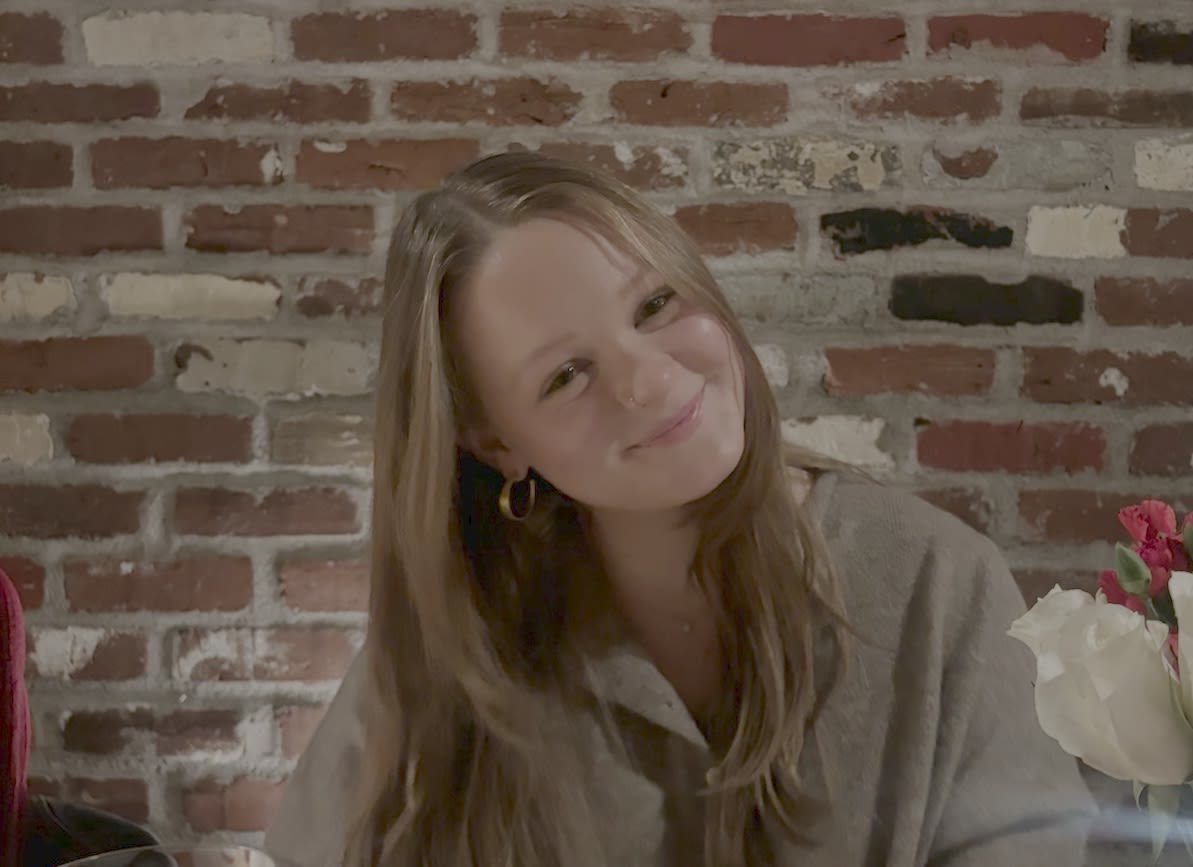
Rose Siemers '26
Psychology and Italian Studies major
Business Administration minor
"In my psychology studies a lot of the work is focused on research findings, but part of that includes participant experiences. Looking at research as a type of storytelling makes it a lot easier to digest and comprehend. In my Italian studies, so much of the work is focused on history and cultural understanding, both of which are driven by storytelling. Individual stories come together to create what we know to be history."
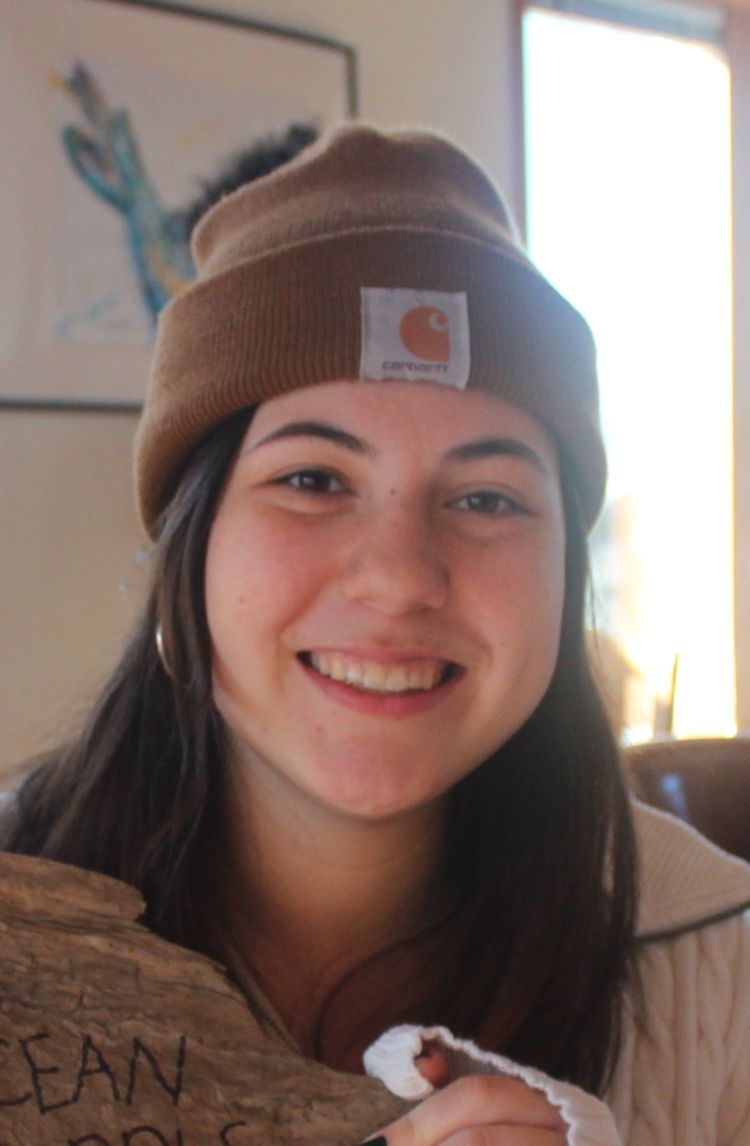
Emily Cooney '26
General Social Science major
Anthropology and Sociology minor
"Storytelling in criminal prosecution is pivotal, and it can make or break someone's case. Having strong storytelling skills is essential to ensure your view comes across clearly, whether you're the prosecution or the defense. If you're walking through a criminal case and the story doesn't add up, even if it's the smallest detail, your credibility can be diminished within seconds."
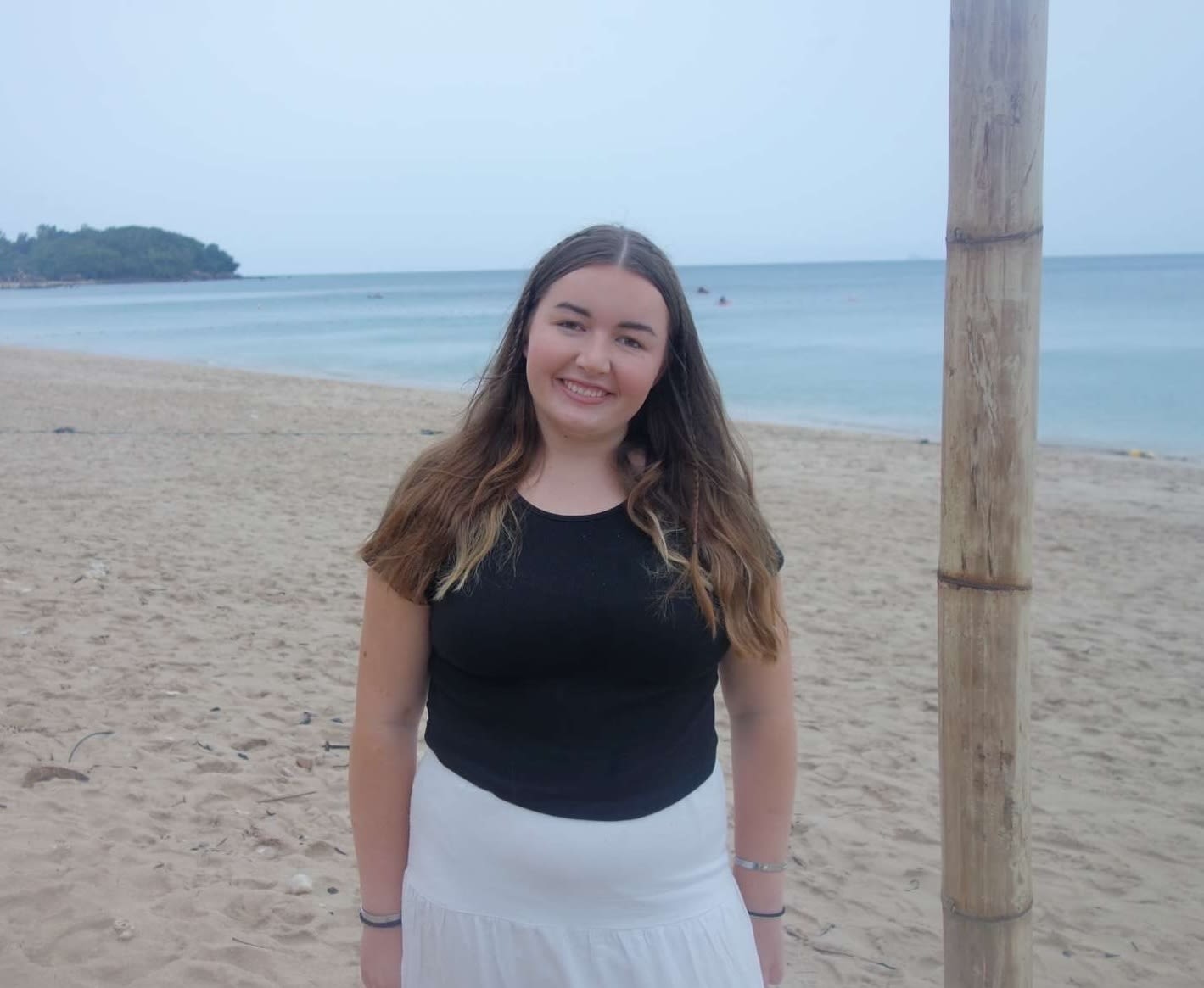
Zoë Dixson '26
Political Science major
Legal Studies minor
"Concepts I've learned through political science classes directly connect to applied experiences such as internships, specifically when I am assisting in drafting advocacy letters by describing others' life experiences, as well as explaining how a given bill will impact their life and the lives of others."

Sarah Tracey-Cook '26
Neuroscience major
"In my lab this term, I get the honor of working with cadavers, which has opened my eyes drastically to how our course material pushes past standard coursework and is directly related to people's real life stories. It is often easy to get caught up in the fundamentals of natural sciences, but to take a step back and understand why the work matters is equally as important."