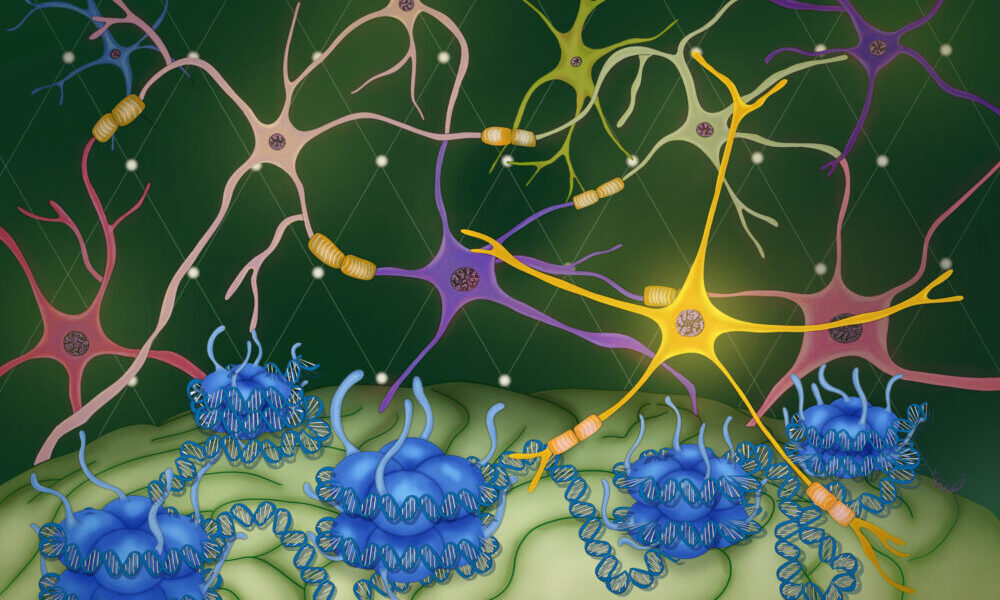
A recent EMBO Workshop brought together researchers who are expanding our understanding of how layers of genetic and epigenetic regulation underlie critical brain functions
By Jumana Noureldin, German University in Cairo
For decades, neuroscience, genetics, and epigenetics developed largely as separate disciplines. Today, these fields are rapidly converging. A recent EMBO workshop on the brain (epi)genome brought together scientists from across the world working at the forefront of this intersection.
While neuroscience often focuses on how neurons and circuits generate behaviour, genetics studies inherited variation and disease, and epigenetics explores how the same genome can produce radically different cell types and developmental outcomes.
Now, advances in genome sequencing, single-cell analysis, and 3D genomics are allowing researchers to study not just the genetic code itself, but how the genome is regulated, folded, and dynamically reshaped across different cell types and experiences. This has become especially important in the brain, where hundreds of distinct neuronal and glial cell types emerge from a single genome. Increasingly, researchers are asking not only which genes are expressed in the brain, but how gene regulation, chromatin organisation, and environmental experience interact to shape neuronal identity, plasticity, and disease vulnerability.
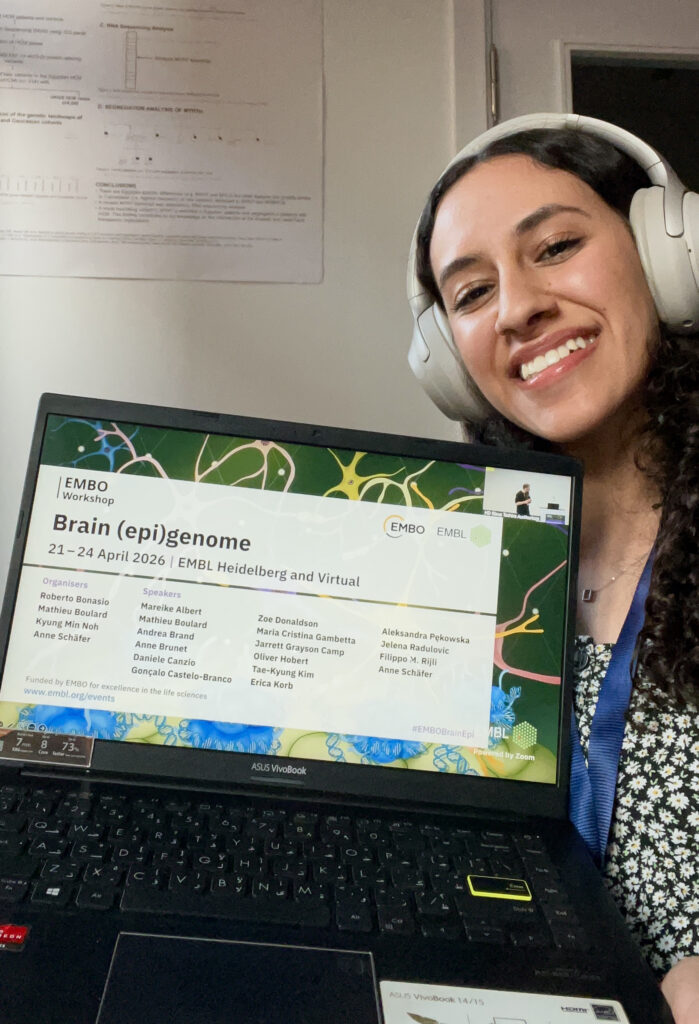
These questions were at the centre of the EMBO Workshop on the brain (epi)genome, which brought together more than 200 researchers working across neuroscience, genomics, and epigenetics. Discussions ranged from the molecular architecture of neuronal identity to the epigenomic basis of memory, ageing, addiction, and neurodegeneration. Here are some of the major themes that emerged throughout the meeting.
The genome in 3D: architecture as regulation
A foundational theme running throughout the conference was that the 3D organisation of the genome is not just a packaging solution, but it also acts as a regulatory mechanism. Work presented at the conference showed that specific proteins form long-range loops between distant genomic regions in neurons, and that these loops are cell-type-specific: silencing one set of identity genes in excitatory neurons and a different set in inhibitory ones. This architecture is established as early as the second trimester of human development.
The most striking finding in this area came from Daniele Canzio (UCSF, USA), who described a paradox in olfactory sensory neurons: key neuronal identity genes sit inside densely compacted, typically silent chromatin, yet they are actively transcribed through regulatory elements that physically loop into that silent domain. The finding raises broader questions about how many other genes may be regulated by similar mechanisms.
Experience leaves a molecular imprint
Some of the most compelling work presented at the conference covered how transient experiences (e.g. a drug exposure, a stressful event, a single learning episode) can leave lasting traces not just in neural circuits, but in the molecular organisation of the genome. Research presented by Dominik Szabo (Max Delbrück Center for Molecular Medicine, Germany) showed that a single exposure to cocaine is sufficient to induce changes in the 3D structure of the genome in neurons that persist long after the drug has cleared from the body, and that these changes alter how the genome responds to a subsequent exposure.
Separately, work on addiction vulnerability showed that pre-existing variation in the epigenome can predict which individuals are more susceptible and that experience subsequently remodels the very regions that carried that predictive signal. The epigenome, in this framing, is both a risk factor and a recorder.
Sex, identity, and neural circuits
How sex differences in the brain are established at the molecular level was another recurring theme, and one with direct relevance to understanding why many neurological and psychiatric conditions affect men and women differently.
Oliver Hobert (Columbia University, USA) gave one of the conference's most fascinating talks, centred on a transcription factor in the roundworm C. elegans called LIN-29A. This single protein integrates four independent parameters (cell type, developmental timing, sex, and the animal's internal state) to regulate the formation of sex-specific synaptic connections in the brain. LIN-29A signalling is also closely linked to the microRNA pathway whose discovery was awarded the 2024 Nobel Prize in Physiology or Medicine. Its human equivalent, however, remains almost entirely unstudied, a gap Hobert flagged as an open opportunity in the field, and an exciting reminder that important biology could sometimes be hiding in plain sight.
Other researchers explored how master regulators of sex-specific behaviour shape chromatin accessibility across neuronal circuits in a dosage-dependent manner, and how sex hormones acting in early life organise gene expression programs that determine sex-specific behaviour and differential disease risk in adulthood.
From development to ageing to disease
Several talks traced a trajectory that is becoming increasingly central to the field: the regulatory programs established during early brain development continue to shape disease vulnerability across the entire lifespan.
Research presented by Aleksandra Pękowska (Nencki Institute of Experimental Biology PAS, Poland) showed how human astrocytes, the star-shaped brain cells that play an important role in many neuronal processes, differ from those of other primates in ways that appear to slow down synaptic maturation. This could potentially be a key contributor to the extended developmental timeline that characterises the human brain, and might have links to neurodegeneration. Anne Schaefer (Max Planck Institute for Biology of Ageing, Germany) presented work showing that the brain's resident immune cells are better understood as existing in dynamic, environment-responsive states than fixed subtypes. She also showed how a single transcription factor can play a central role in determining whether the cellular response to Alzheimer's disease is protective or harmful.
Anne Brunet (Stanford University, USA) showcased the importance of choosing the right model organism. Her lab has built a system to track individual African killifish (the shortest-lived vertebrate capable of reproducing in captivity) continuously from adolescence to death, finding that behavioural patterns in mid-life can forecast future lifespan. A systematic genetic screen subsequently identified neuropeptides that extend or shorten life, pointing toward an active role for the nervous system in regulating longevity, one which is only beginning to be understood.
A field coming into focus
What made this conference distinctive was not any single finding, but the sense of a field consolidating around a shared set of questions and an increasingly powerful toolkit to address them. New technologies presented at the meeting enable whole-genome molecular recording over time at single-cell resolution, simultaneous mapping of all chemical modifications across the genome, and high-dimensional epigenetic profiling of individual cells by flow cytometry. Industry advances in long-read and multi-omic sequencing are also pushing the field toward more integrated data generation at scale.
Increasingly, the genome is being understood as a dynamic regulatory system rather than a fixed blueprint: one that responds to development, experience, sex, and disease in ways that are only now becoming legible, and that may hold the answers to some of medicine's hardest problems. The questions that brought these researchers together remain open. But if this meeting is any indication, the next few years will bring some of the most fascinating insights yet and will definitely reshape how we think about the brain.
Jumana Noureldin is a Research Assistant at the German University in Cairo, where her work focuses on the bioinformatic analysis of pediatric brain tumours, with a particular interest in the role of long non-coding RNAs in epigenetic regulation of cancer. She recently joined the genetics and genomics team at the Magdi Yacoub Heart Foundation. She attended the workshop virtually as an event reporter.