
Dr Rosalba Garcia-Millan will make new strides in coupled particle-field dynamics with a grant from the Carl-Zeiss-Stiftung.
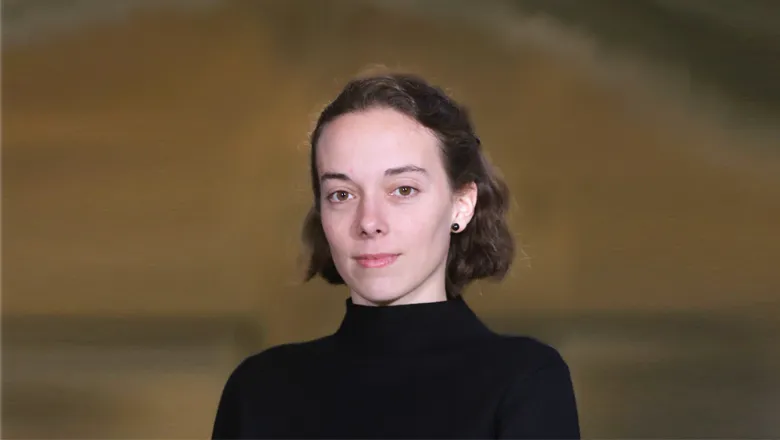
Dr Rosalba Garcia-Millan, Lecturer in Disordered Systems in the Department of Mathematics, has been awarded a €894,000 grant to develop a new theory on the fundamentals of how clouds and neurodegenerative disease evolve over time.
The project, Coupled renormalised integrals for snow and proteins: do all path integrals lead to Rome?, will be carried out with collaborators from Johannes Gutenberg University Mainz as part of the Carl-Zeiss-Stiftung 'Wildcard' initiative funding bold interdisciplinary ideas in STEM.
Both the evolution of clouds from water vapour and abnormal protein build up, a hallmark of neurodegenerative disease like Alzheimer's, can be seen mathematically as the change over time of a large number of particles driven by a background field. In the case of clouds, this is the interaction between water droplets and fields of water vapour, and in the case of Alzheimer's is the relationship between the misfolded proteins which cause abnormal build up and the protein droplets which house them.
Addressing the complexity of these systems is a vitally important task that requires new mathematical tools - with a better understanding we can ultimately warn people about heavy rain and snowfall before it endangers lives, and with a better theory of protein aggregate formation, we may even be able to tackle Alzheimer's."
Dr Rosalba Garcia-Millan
Both phenomena evolve randomly but follow patterns that can be seen in several contexts, from quantum systems in elementary particle physics to pollen floating in a pond. Typically, to model such systems and predict their evolution, scientists employ two variations of the path integral formalism.
These are the Martin-Siggia-Rose formalism (MSR) and Doi-Peliti field theory (DPFT) and these are powerful tools in different systems. While DPFT keeps track of objects that can be counted in units, such as particles or pebbles, MSR is suitable for continuous quantities, such as a volume or density.
Although both formalisms have their distinct advantages, they have not been able to be combined - until now. By taking the advantages of each, scientists applying this new theoretical approach could help predict more accurately dangerous rain and snowfall, as well as enhance our understanding of abnormal protein build up, without the prohibitive cost and limitations of complex computer-based simulations.
This progress is reliant on a robust mathematical framework for better, more efficient computation and it is my hope that our work will accomplish this."
Dr Rosalba Garcia-Millan
Speaking on her project, Dr Garcia-Millan said "Current approaches to modelling cloud evolution and protein aggregates meet serious difficulty when they deal with randomness and rare events. For example, there are only about 100 ice particles in a volume of one litre in a cloud and accurately predicting collisions between them is hard, but it is these rare collisions that can unfold big storms.
"Addressing the complexity of these systems is a vitally important task that requires new mathematical tools - with a better understanding we can ultimately warn people about heavy rain and snowfall before it endangers lives, and with a better theory of protein aggregate formation, we may even be able to tackle Alzheimer's.
"This progress is reliant on a robust mathematical framework for better, more efficient computation and it is my hope that our work will accomplish this."
In addition to the meteorological and biological implications of the potential new mathematical framework, the team believe this general method could be used to help solve a range of particles-and-field problems. Furthermore, if MSR and DPFT turn out to be not compatible, their incompatibility would still be of interest to mathematicians as this would pose a new fundamental question in the field.


