A 'perfect storm' of conditions combining upwelling from the deep with run off from the land may be driving crown-of-thorns starfish (COTS) outbreaks on the Great Barrier Reef.
In new research from the Australian Institute of Marine Science (AIMS), scientists detected larvae of the destructive coral-eating starfish deeper than ever before, indicating they have access to enhanced food sources at those depths.
COTS larvae feed on free floating phytoplankton, and these microscopic algae bloom when more nutrients are available. Nutrient availability increases when wet season floods transport sediment and nutrients from the land into the ocean, or when naturally-occurring upwelling along the edge of the continental shelf bring nutrients from the deep.
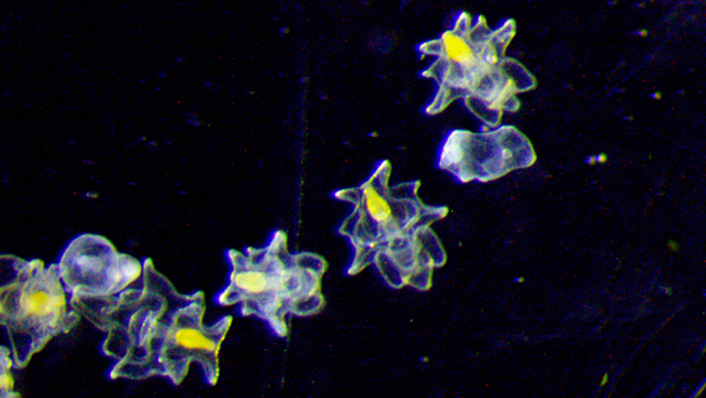
AIMS scientist and research lead Dr Sven Uthicke said the availability of food helped to improve the survival of young starfish, leading to more adults, and possibly new outbreaks.
"COTS can occur in plague proportions and are responsible for extensive loss of reef-building corals on the Great Barrier Reef," he said.
"Our latest research is the first evidence from the field that COTS larvae are reaching into deeper waters of up to 30 metres. Our sampling at depth also suggests that upwelling intrusions are common during the annual COTS spawning season over the summer months. As such, the larvae have a high likelihood of encountering elevated nutrient concentrations at greater depth.
"A fifth COTS outbreak was recently confirmed on the Great Barrier Reef. As pressure increases on corals under climate change, it is important to understand and manage other pressures - like COTS - that may be hampering recovery. Understanding what is driving outbreaks will be key to this effort."
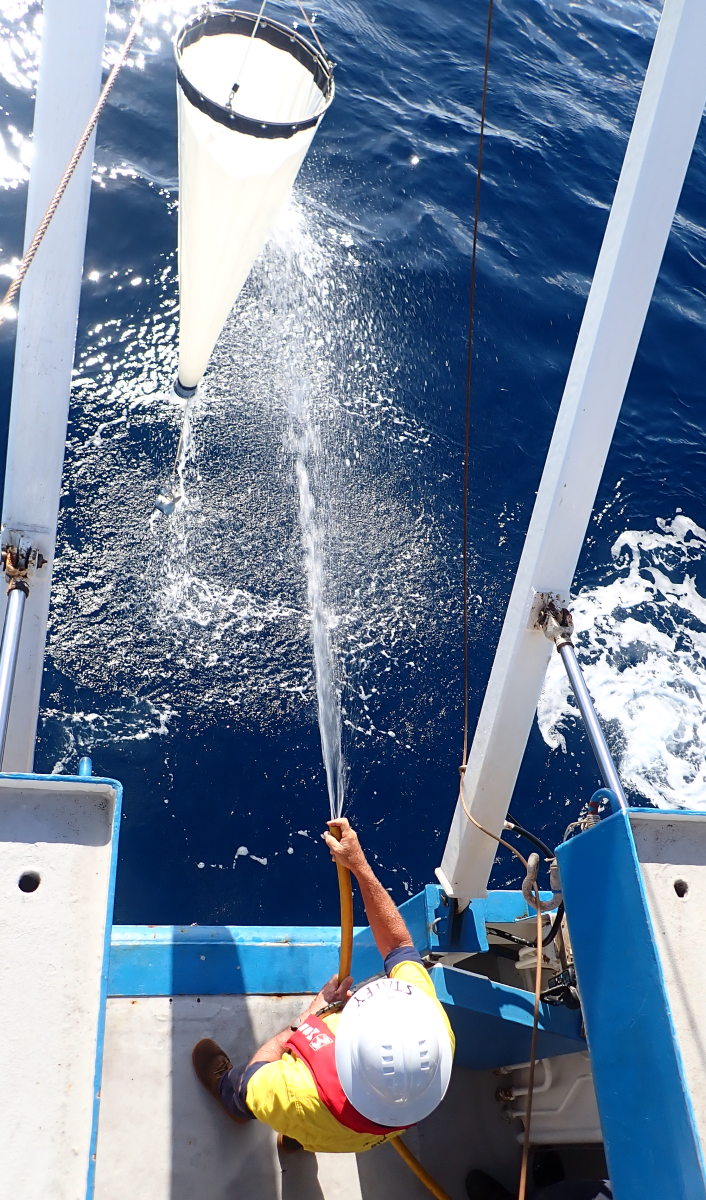
For the study, the scientists collected water samples across eight COTS spawning seasons from more than 250 locations at a range of depths in the northern and central regions of the Great Barrier Reef. Outbreaks are thought to begin in the northern region.
Using an environmental DNA (eDNA) method, the scientists found COTS larval DNA at 20% of these locations across the eight seasons (between 2014 and 2024). This is the first time a large dataset on COTS larvae has been gathered, with practical information on larvae in natural settings.
Surface waters were found to be low in phytoplankton cells and chlorophyll, which are important for accelerated COTS larval development. By contrast these markers were significantly elevated at depth (between 11m and 60m), likely caused by upwelling, which occurred frequently during the COTS spawning season. Upwelling has rarely been studied on the GBR and the extent to which this occurred during the COTS reproductive season surprised the researchers.
"Terrestrial runoff may still play a role in promoting or modulating COTS outbreaks by further increasing the chance of larvae encountering elevated nutrient concentrations - it is important we do not discount this link," Dr Uthicke added. "It may be that the combination of the land run-off with the upwelling create the perfect conditions for outbreaks of COTS."
AIMS is conducting ongoing research on the effect of food availability on COTS larvae in the National Sea Simulator , which is one of the world's most advanced research aquaria complexes.
The study , published in the journal Marine Pollution Bulletin, is the first on the relationship of COTS larvae and nutrients from data collected in the field.
The study was funded by AIMS.