
The University of Melbourne has established Melbourne National Security and Defence (MNSD) to strengthen its capability to partner on research and education supporting Australia's national security.
MNSD will lead the University's coordination on industry engagement, supporting the Australian and Victorian government's responses to national security, including cybersecurity and natural disasters, across Australia and the Asia-Pacific region.
The new function will serve as a trusted point of entry for government and industry engagement, providing faster access to relevant expertise and more consistent partner experiences. It will ensure clear governance of national security issues and improve transparency for the community.
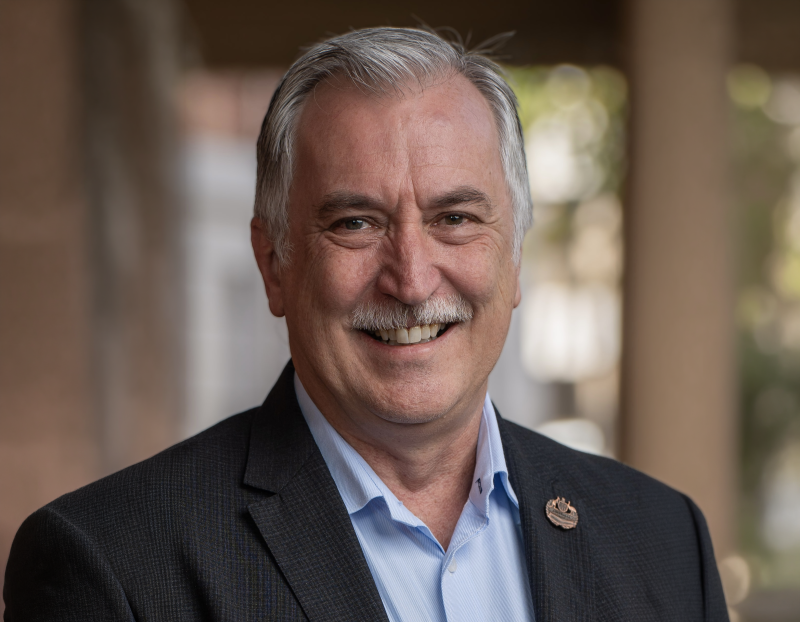
Transformational leader Professor Michael Webb has been appointed MNSD's inaugural Executive Director.
Professor Webb is the former Executive Director of Defence and National Security at Adelaide University, where he held various academic appointments in defence and national security over 18 years. He previously spent 20 years working in the Australian Department of Defence with the Defence Science and Technology Group.
University of Melbourne Deputy Vice-Chancellor (Research) Professor Mark Cassidy AM said the University's enduring purpose is to benefit society through transformational education and research.
"Professor Webb is a respected academic leader in national security, which is an increasingly complex global challenge and a focus for our institution as a strategic Impact Accelerator," Professor Cassidy said.
"Universities play a critical role in developing technologies, influencing policy and facilitating social and cultural diplomacy, which can contribute to enhancing our national security and defence with openness, integrity and ethics at the forefront.
"We are committed to working with the Australian and Victorian governments, Australian Defence Force and first responders, and community partners to build critical sovereign capability and support Australia's security, resilience and readiness."
MNSD will consolidate how the University engages with government and industry partners to provide institutional and sector leadership on this national priority.
Professor Webb said University of Melbourne researchers are already contributing to the national interest through research, innovation, workforce and policy development.
"Ensuring government, industry and public organisations can respond effectively to society's most pressing challenges requires interdisciplinary research, cross-sector collaboration and innovative approaches," Professor Webb said.
"I am excited to be appointed the inaugural executive director of MNSD and look forward to working with colleagues across the University and beyond to support Australia's national security."
The University's national security capability is interdisciplinary, with expertise in submarine technologies, underwater acoustics, computational modelling, advanced materials, human-machine interfaces, quantum sensors, autonomous systems and AI.
This breadth enables the University to address national security challenges across the human, societal and technological domains. Our work combines intelligence, information and influence, covering health security, public policy and law, addressing disinformation, food security, veteran and trauma mental health, resilience and peacebuilding, and workforce development.
MNSD will be part of the University's national security Impact Accelerator to be launched in 2027.


