
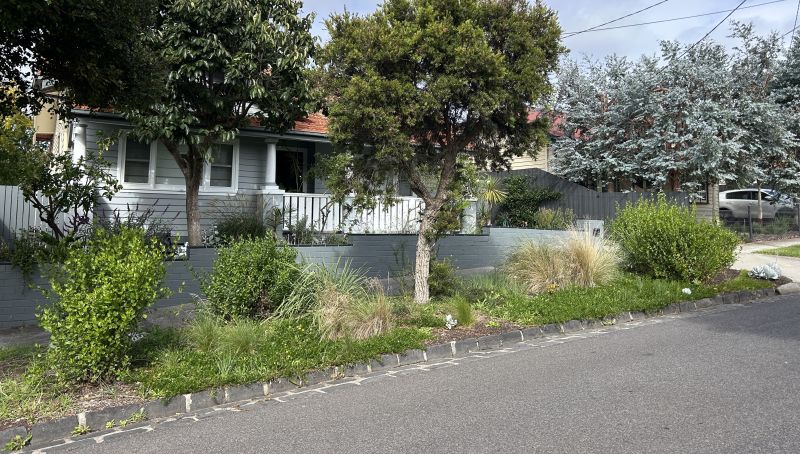
University of Melbourne researchers have found that planting native gardens on suburban nature strips can boost urban biodiversity, with insect numbers increasing seven-fold and the number of species approximately doubling.
Published today in the Journal of Applied Ecology, researchers studied the before and after impacts of planting habitat gardens on nature strips across Merri-bek City Council in Melbourne's north to quantify the biodiversity benefits these overlooked urban spaces can play in supporting native pollinators.
Lead author, University of Melbourne researcher Dr Philippa Bell from the School of Agriculture, Food and Ecosystem Sciences, said insect pollinators such as bees, beetles and butterflies are vital to ecosystem functioning, yet many species are declining due to habitat loss and environmental change.
"As pollinator populations decline, the ecosystems and agricultural industries that depend on them face increasing pressure," Dr Bell said.
"Like us, insects need food and shelter to survive and thrive. Traditional lawn nature strips offer little in the way of shelter and frequently mown lawns rarely allow plants to flower."
Following the addition of native habitat gardens, insect abundance was seven times higher and species richness was approximately double compared to conventional grass-covered nature strips.
The strongest response came from bees, which were closely associated with the abundance and diversity of flowering plants in the gardens. Butterflies and beetles also responded positively, although the effects were more variable.
"Bees showed the strongest affinity for these gardens and were positively associated with the amount of flowers and number of different plants in flower," Dr Bell said.
With nature strips, also referred to as road verges, found throughout cities, Dr Bell said these spaces offer a unique opportunity to create connected habitat for insect pollinators and other wildlife.
"Road verges are ubiquitous across cities and usually contain simplified vegetation that offers little value to urban fauna," Dr Bell said.
"While individual nature-strip gardens are a great start, collective urban-greening actions on nature strips have the capacity to effectively support pollinators in cities."
The findings have important implications for local governments and policymakers seeking ways to improve biodiversity outcomes in urban environments.
Councils across Greater Melbourne already permit residents to garden in nature strips, and many actively encourage the practice through urban greening and biodiversity programs.
"Many people still hold the perception that gardening in their nature strip is prohibited or discouraged, but councils across Greater Melbourne permit it. We encourage residents to check their local council guidelines and consider getting involved," Dr Bell said.
"This research provides evidence that can support council investment in nature-strip gardening and help inform future biodiversity strategies."
Beyond diversity, Dr Bell said nature strips can also provide important social benefits.
"As cities and human populations grow, more people will experience less nature. This 'extinction of experience' means that people are becoming disconnected from nature and apathetic towards the environment," Dr Bell said.
"As people in cities become disconnected from nature, the streetscape presents an opportunity to support wellbeing and nature connectedness.
"People who are more connected to nature do more to protect it."


