
Advancing biological solutions to break down plastics, supporting more effective recycling and reducing environmental pollution.
Plastic waste is a growing global and national challenge, with hundreds of millions of tonnes produced each year and only a small proportion successfully recycled. New approaches are needed to complement existing recycling systems and reduce long‑term environmental impacts.
ARC‑funded research is contributing to this effort by advancing Australia's capability in synthetic biology-an emerging field with applications across environmental remediation, advanced manufacturing and biotechnology. Synthetic biology involves redesigning organisms such as microbes for useful purposes, by engineering them to have new abilities.
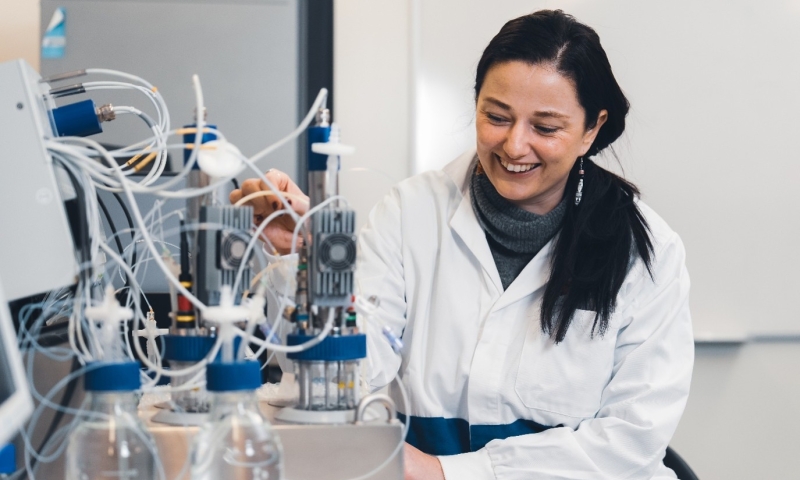
Supported by an ARC Future Fellowship, Professor Amy Cain is leading research into how naturally occurring microbes can be harnessed and adapted to break down common plastics. The work focuses on microbes found in the gut of the wax moth caterpillar (galleria mellonella), which has demonstrated an unusual ability to degrade low‑density polyethylene, a common component of single‑use plastic products.
'It's the only organism in the whole world that can eat this particular type of long, low-density polyethylene, which is the [typical] single-use plastic bag,' Professor Cain says.
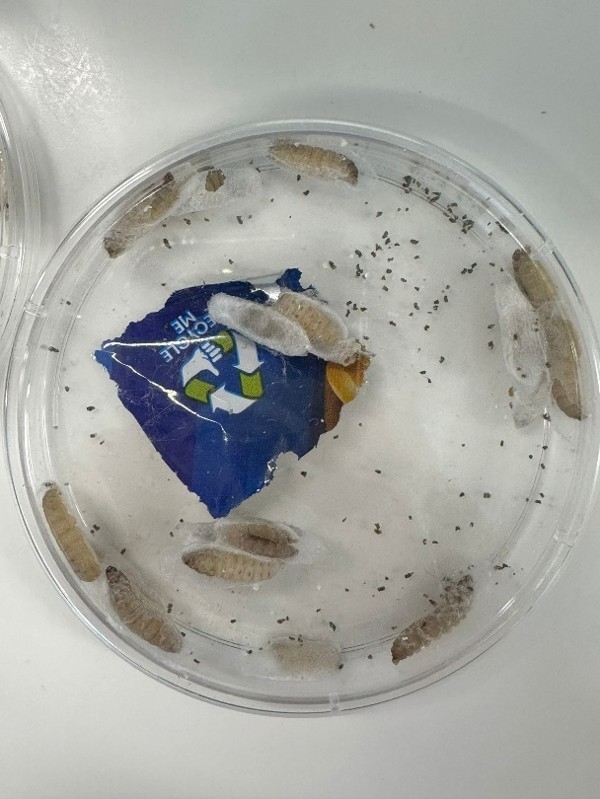
Rather than focusing on the organism itself, the research identifies the genes and enzymes that enable this process, with the aim of applying them in controlled, scalable systems. This approach reflects broader advances in synthetic biology, where microbial 'chassis' can be engineered to perform new functions in areas such as waste processing, energy and industrial production.
A key challenge has been linking large volumes of genetic data to specific biological functions.
'It's like trying to pinpoint a needle in a haystack,' Professor Cain says.
Using advanced genomic techniques and support from the Australian Genome Foundry, the research team has developed new methods to rapidly test gene function and identify promising candidates for plastic degradation.
This work has already produced early results, including the identification of microbial strains capable of degrading multiple types of plastic, and improvements in their performance through adaptive laboratory techniques.
'We enhanced it using adaptive laboratory evolution… basically training them on plastic to become better,' Professor Cain says.
The project has also generated potential intellectual property, highlighting pathways from discovery to application.
The research contributes to a growing national effort to develop sustainable, science‑based solutions to environmental challenges. It also demonstrates the role of ARC funding in supporting foundational research that builds new capability and creates opportunities for future translation and industry collaboration.
Professor Cain is now exploring pathways for further development, including engagement with industry partners through the Solving Plastic Waste Cooperative Research Centre.
'My vision is to create an at-home plastic recycling system...where you seed some microbes into the recycling system and then you can put plastics in there like a compost,' she says.
ARC funding has supported this work across multiple stages, enabling the development of novel approaches that may not otherwise have been pursued. As this capability matures, it has the potential to contribute to new technologies for managing plastic waste and reducing environmental harm.
This work reflects the role of the ARC in supporting research that strengthens national capability in sustainable materials and environmental management.


