
Read a text description of this video
TEXT ON SCREEN
October 28, 2025
Rio de Janeiro, Brazil
NARRATION
On the morning of October 28th, 2025, hundreds of police officers surrounded two low-income neighborhoods in Rio de Janeiro.
By nightfall, the operation would become the deadliest in Brazil's history.
TEXT ON SCREEN
WARNING. This video contains graphic content, including blurred images of dead bodies. Viewer discretion advised.
NARRATION
122 people were killed, including two children and five police officers. According to the autopsy records, over eighty five percent of non-police victims were Black.
Police in Rio de Janeiro are required by Supreme Court order to wear body cameras.
However, only twenty-three percent of officers wore body cameras that day, and in the footage reviewed by Human Rights Watch, not a single killing was captured on camera.
LOWER THIRD
Damir Khairat
Research Technologist
Digital Investigations Lab
NARRATION
Human Rights Watch was given access to the prosecutor's investigation into the operation, including 8,800 pages of records, 122 autopsies, and nearly 4,000 hours of body camera footage.
TEXT ON SCREEN
Prosecutors have released the body camera footage shown in this video. Most footage is sealed as evidence and cannot be published.
NARRATION
Watching all the footage day and night without any breaks would have taken a single researcher almost six months. So, we trained several artificial intelligence models to help us identify the moments that mattered most.
First, we needed to organize everything.
The models, alongside software that Human Rights Watch developed, synchronized recordings from different officers, mapped their locations, and scanned footage for gunshots and signs of camera tampering.
From there we had a searchable platform that let us view the operation as one coordinated event, rather than thousands of separate recordings.
What we found was evidence of widespread tampering and obstruction of body cameras. And it consistently happened at the exact moment cameras should have been recording, during arrests, shootouts, or while officers entered homes.
Authorities said that the purpose of the raid was to arrest suspected drug traffickers. The evidence we found points to an operation that appeared lethal by design.
To explain how we came to this conclusion, let's look at some examples of the moments we trained our AI models to detect.
An officer's camera captured this video in an alleyway as a large group of his colleagues pass by, after which the officer quickly covers his camera.
He or another officer then flags that there's a camera recording.
SOUNDBITE [IN PORTUGUESE]
The team has a camera. The team has a camera. No, no I'm talking about the thing there.
NARRATION
It's unclear why he covered it, but prosecutors later charged him with camera tampering.
SOUNDBITE
So, this would be the kind of like overall operational view.
NARRATION
To find incidents like this across almost 4,000 hours of footage from nearly 500 officers, we trained a model to detect similar moments when a camera continued recording, but the lens was covered.
Here, an officer is seen struggling to pick the lock on the door of someone's home. Once it's open, he removes his camera and leaves it unattended for over an hour, presumably while he's inside the home.
Because the camera was still capturing an image, this recording wasn't initially flagged by our software.
So, we trained a second model to identify "stale scenes" where the recording stays the same for long periods of time.
As our models learned and improved, they uncovered lots of suspicious recording gaps.
In the end, we documented more than 250 camera obstructions.
Moments like these are exactly the situations that body cameras are meant to document, helping ensure that any unlawful behavior is captured and that circumstances surrounding the 122 killings can be properly investigated.
Another method we used was an AI system that analyzes audio to detect gunshots.
After we trained it specifically for Rio police body cameras and local conditions, the model successfully detected most gunshots in a test set of videos.
We were also able to use AI to pull text directly from the videos, like the date, time, location and ID number of the officer wearing the camera.
But one of the most striking findings came from what we didn't see.
Despite the scale of the operation and the number of deaths, we found no footage showing the killings themselves.
NARRATION
To understand what was missing, we organized body camera recordings across the operation using extracted timestamps.
TEXT ON SCREEN
Unusable footage
Usable footage
NARRATION
We found that more than half the officers' recordings had either ended or had significant gaps by noon. From there, the usable footage continued to decline, just as the operation became most deadly.
The missing footage, combined with extensive evidence of camera tampering, suggests that body cameras were deliberately misused to prevent killings from being recorded.
Throughout our investigation, AI was one tool out of many.
Our team of researchers interviewed witnesses in Rio, visited the neighborhood where the killings took place, analyzed police records and autopsies, verified photographs and videos, and manually reviewed AI findings.
What AI provided was speed and scale.
It helped us process thousands of hours of footage, connect pieces of evidence, and focus our attention where it mattered most.
In other words, AI helped us find needles in a very large haystack.
Now, it's up to Brazilian prosecutors to thoroughly investigate both the killings and the decisions that led to such a deadly operation.
Those who use disproportionate force or misuse body cameras should be held accountable.
To learn more about the events of October 28th and Human Rights Watch's findings, visit HRW.org and read our investigation, A Strategy of Death.
- Police officers tampered with body cameras and was responsible for serious investigative failures during an operation ostensibly to arrest gang members in a low-income neighborhood in Rio de Janeiro on October 28, 2025.
- A year-long Human Rights Watch investigation concluded that police breached Supreme Court orders and their own protocols during Operation Containment, which appeared to be lethal by design.
- Federal and state prosecutors should initiate criminal and civil proceedings to investigate those responsible for abuses, including senior officials and police commanders.
(Rio de Janeiro, October 28, 2026) - Police officers tampered with body cameras and failed to take crucial investigative steps during an operation in a low-income neighborhood in Rio de Janeiro, Brazil, on October 28, 2025, Human Rights Watch said in an investigation published today. Evidence indicates police used excessive force and may have intentionally killed scores of men and boys.
The investigation, "'A Strategy of Death': Investigating Brazil's Deadliest Police Operation," documents Operation Containment (Operação Contenção), in which a total of 122 people were killed. This included two children and four police officers killed that day, and a fifth police officer who later succumbed to his wounds. An additional two men were killed in the early morning before the official start of the operation. Eighty-five percent of non-police victims of the October 2025 raid were Black.
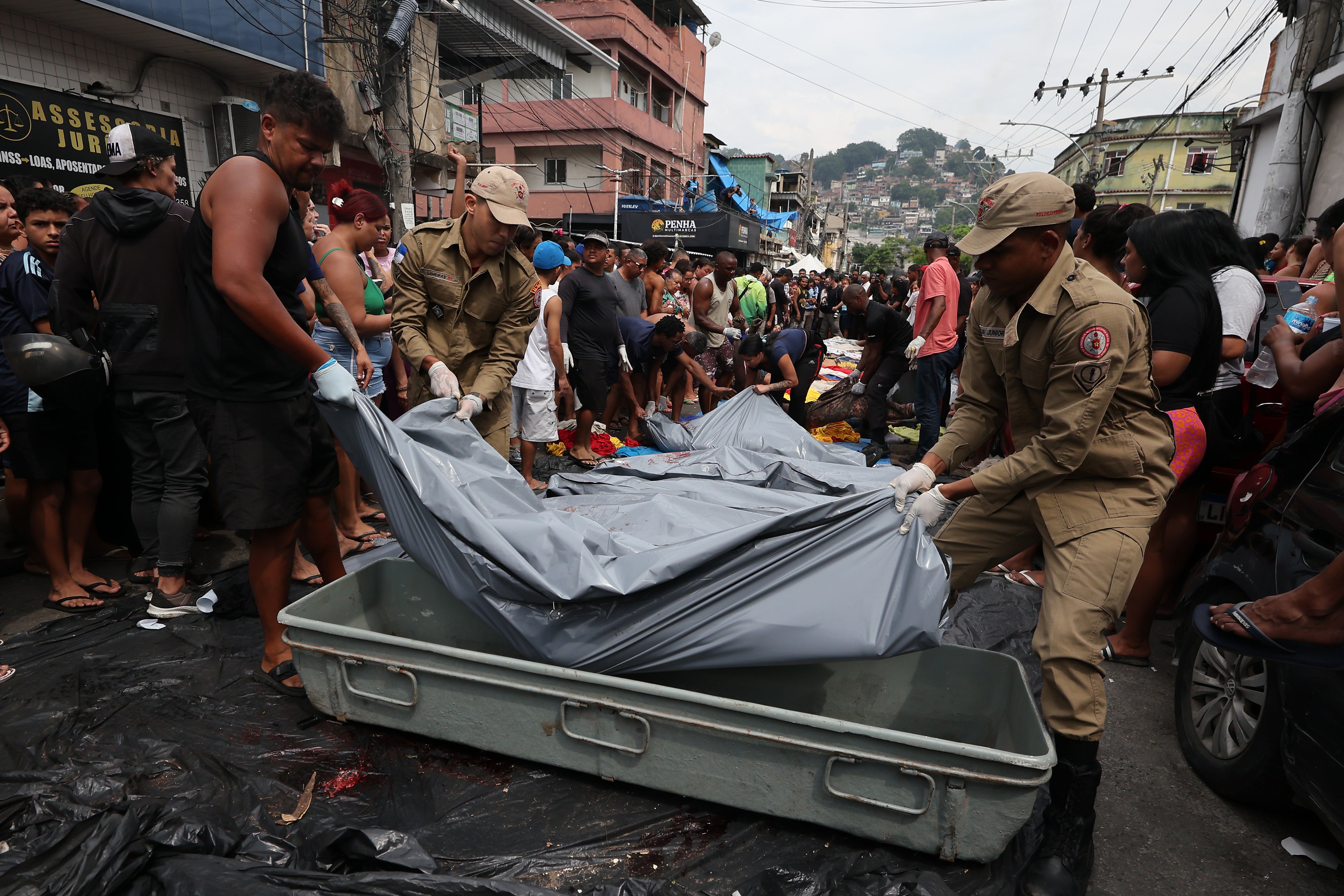
None of the killings were captured in the thousands of hours of body camera footage sent by Rio de Janeiro Military Police to the Public Defender's Office, which Human Rights Watch reviewed after being granted access.
"Human Rights Watch processed thousands of hours of body camera footage and analyzed videos, official investigation files, and autopsy records for every victim, yet crucial questions remain because police failed to properly record killings, preserve crime scenes, or collect crucial data," said Sophia Jones, open source researcher with the Digital Investigations Lab at Human Rights Watch. "The families of those killed, including police officers, deserve answers and accountability with a thorough, independent investigation."
Human Rights Watch interviewed 41 witnesses, family members, and experts, and analyzed 4,400 hours of body camera footage, 9,000 pages of official investigation files, 122 autopsy reports, court records, and hundreds of videos and photographs. Human Rights Watch analyzed the data using several machine learning models built in-house, followed by manual review and assessment by researchers.
Based on Human Rights Watch analysis of data from Rio-based security research lab GENI (Grupo de Estudos dos Novos Ilegalismos or Group for the Study of New Illegalities), nongovernmental think tank Fórum Brasileiro de Segurança Pública (Brazilian Public Security Forum), independent security monitoring organization Fogo Cruzado (Crossfire), and media reports, Operation Containment was the deadliest documented one-day police operation in a country where police forces kill more than 6,000 people per year.
Human Rights Watch visited the Complexo da Penha, the site of the operation, six months after the raid and found that the criminal group Red Command (Comando Vermelho)-the target of the operation-continued to impose its rule on residents.
Despite the stated goal of carrying out 100 arrest warrants for alleged Red Command members, police records show they arrested only 17 of those for whom they had warrants, although it is not clear whether those are the warrants that justified the operation or other pending warrants. Police did not enter the home of the local Red Command leader, for whom they had a warrant, a Civil Police commander told prosecutors, even though body camera footage shows police moving around it.
Despite a state law and a Supreme Court order mandating that police wear body cameras, only about 23 percent of the 2,500 civil and military police officers who participated in the raid did, the Rio de Janeiro government said.
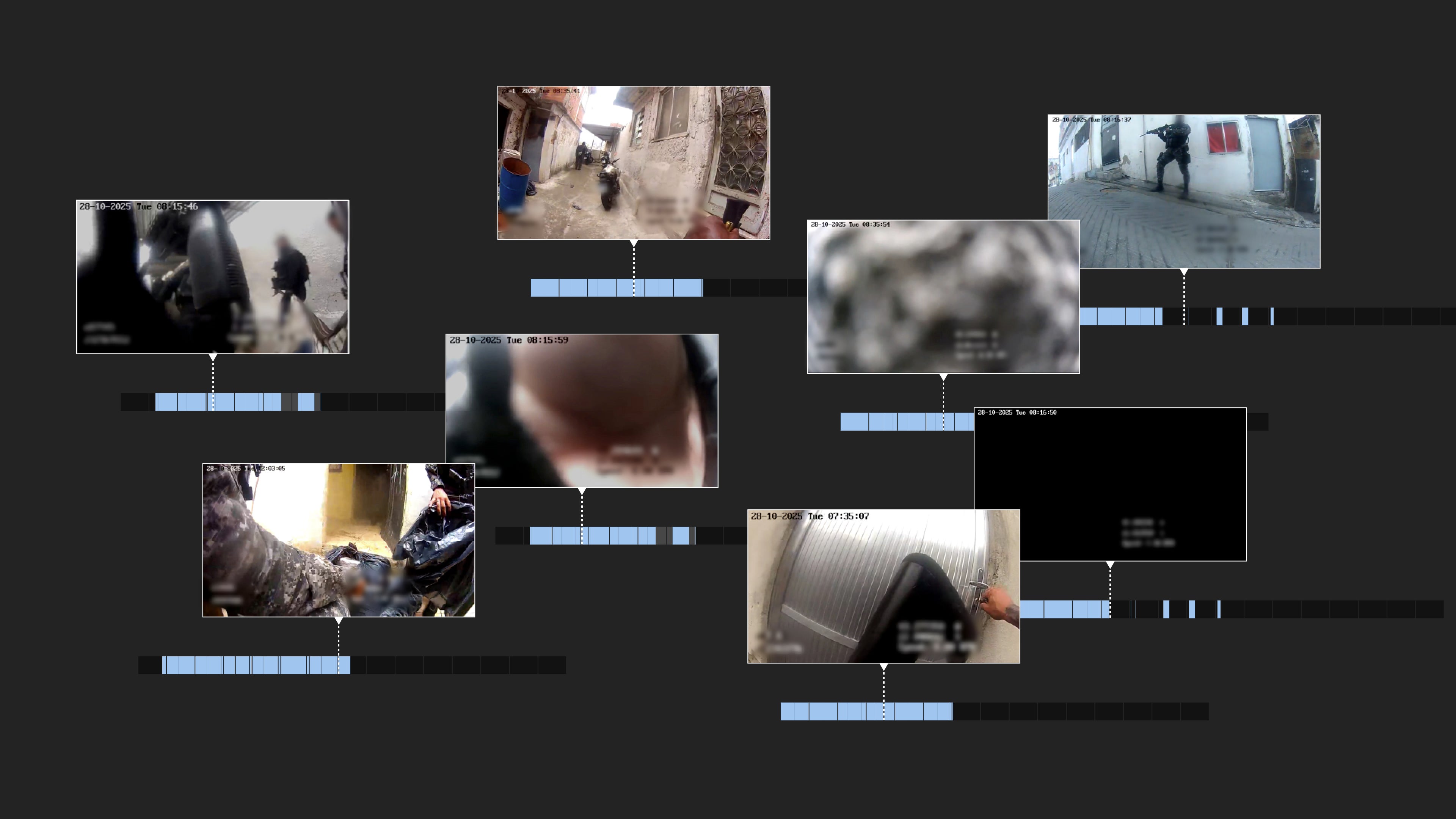
How Human Rights Watch used Artificial Intelligence to Analyze Body Camera Footage from Rio's Deadliest Police Raid
Human Rights Watch analysis of the footage of the 527 military police officers who wore the cameras found widespread tampering and obstruction of their use. Officers left cameras running before the operation, effectively draining batteries; covered lenses; placed cameras where they would not capture officers' actions; and left cameras in vehicles.
Such tampering consistently occurred at key moments, during arrests, shootouts, or while officers entered homes, researchers found. Most tampering was on cameras worn by officers whose units engaged in frontline operations, such as the Battalion of Special Police Operations of the Military Police, the unit deployed to the forested area where the majority of killings took place. Researchers determined that 36 percent of gunshot clusters heard on their cameras occurred when the cameras were obstructed.
Body camera footage showed officers assaulting and threatening to kill detainees, including a child, whom they forced to lie down next to a dead body while photographing him. In another recording, an officer tells officers to shoot detainees in the legs if they ran. In a third clip, an officer expressed frustration that body cameras prevented them from killing suspects.
Researchers also analyzed or verified hundreds of videos and photographs taken by members of the local community that day. In one series of verified videos, officers pile dead bodies, some with their genitalia exposed, into an armored police vehicle, while joking. "Look how wonderful," one officer said. "We like this."
While police said they spent months planning the operation, there was no evidence that they made any advance preparations to protect crime scenes and conduct forensic analysis. In addition, Civil Police failed to collect basic information for all but two of the 117 non-police victims, such as the names of police officers and residents who brought some of them to a hospital.
Only seven suspects were taken to a hospital and subsequently arrested, compared with 117 people killed by police. That unusually high ratio of people killed to people injured (17 to 1) raises serious questions about whether police prioritized lethal force over arresting suspects.
An analysis of victim autopsy reports also points in that direction. Over 40 percent of non-police victims in the reports analyzed were shot in the head, over 60 percent were shot four or more times, and nearly 75 percent were shot at least once on the back. One man was shot and then decapitated.
According to forensic experts from the Independent Forensic Expert Group of the International Rehabilitation Council for Torture Victims consulted by Human Rights Watch, the evidence suggests that many were targeted and killed intentionally. In many instances, the trajectory of gunshot wounds was from bottom to top, which can be indicative of execution, such as when an individual is shot while lying down or otherwise incapacitated.
Brazilian authorities should ensure a thorough and independent investigation into the planning and decisions by senior officials and police commanders that led to the deadly operation. Rio de Janeiro's new governor, who will take office on January 6, 2027, should introduce a bill to separate forensic services from the Civil Police.
"Our investigation shows police flouted the law and their own protocols during the disastrous raid," said César Muñoz, Brazil director at Human Rights Watch. "Abusive police practices undermine public security by making communities less willing to collaborate with police, while fueling a cycle of violence that endangers both residents and police officers. Brazil needs new effective public security strategies that uphold human rights."


