
A research and public engagement project aimed at raising awareness of issues surrounding space exploration has been launched at the University of Exeter.
No one's Moon is an interdisciplinary initiative that brings together experts in science, humanities, and the arts to consider the environmental impact of lunar missions.
As it develops, the project's leaders will seek to engage policymakers and advocate for better regulations and safeguards similar to the model established by the Antarctic Treaty.
Members of the team will formally unveil the project at The Planetary Lab exhibition this weekend in Barnstaple, with public talks and interactive arts sessions.
The project's launch comes in the week when reports have emerged that a stray SpaceX rocket accidentally struck the moon.
"No one's Moon has been founded with a mission to protect our moon from commercial exploitation that is likely to impact on the Earth's ecosystem," said Dr Suzanne Conway, the Project Founder and Manager, who is also a poet and writer in the Department of English and Creative Writing. "Our research teams are investigating how the current legislation, which might be described as 'symbolic', can be tightened to safeguard the moon. We want to raise awareness that so much space exploration is being done without the public's consent."
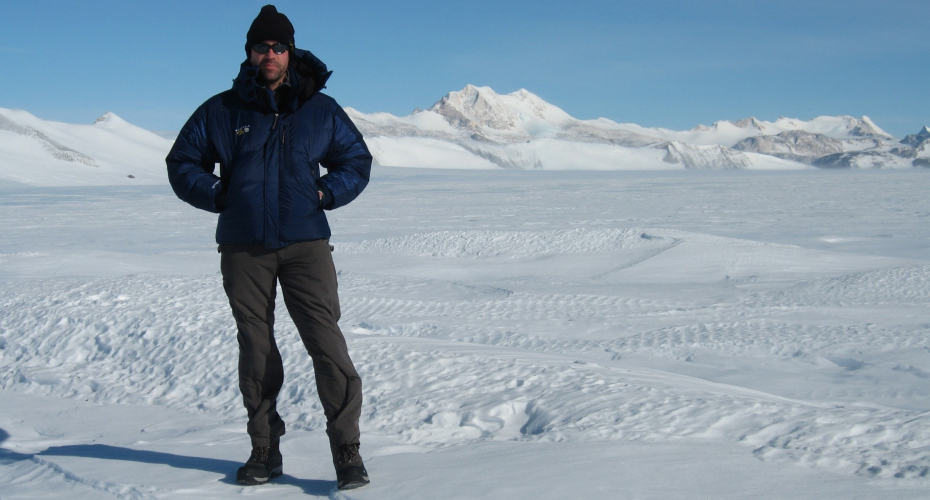
Among the leading researchers supporting the project is world-renowned polar scientist Professor Martin Siegert, Vice-President and Deputy Vice-Chancellor of the University of Exeter, Cornwall. Professor Siegert will be investigating the suitability of the Antarctic Treaty as an exemplar of global commons governance.
Professor Nathan Mayne and Senior Research Fellow Arwen Nicholson bring exoplanet expertise from the University's Department of Physics and Astronomy.
"Missions to the Moon risk damaging its unique and fragile environment and come at a cost to the Earth," said Dr Nicholson. "There is an urgent need for transparency and accountability from the increasingly commercialised space industry, especially as we grapple with the reality of the climate crisis."
Dr Conway and Dr Nicholson will both be delivering sessions at The Planetary Lab's exhibition on Saturday 8 August. Dr Nicholson will talk about 'Space Exploration or Space Exploitation?', while Dr Conway will deliver moon-inspired creative writing and art workshops. Dr Conway will return on the 29th for further creative sessions.
Professor Jamie Hampson, historian and indigenous art specialist in the Department of Humanities and Social Sciences, Cornwall, will deliver talks throughout Saturday 15 August on 'The anaconda in the sky: Indigenous rock art and 100,000 years of beliefs about space'.
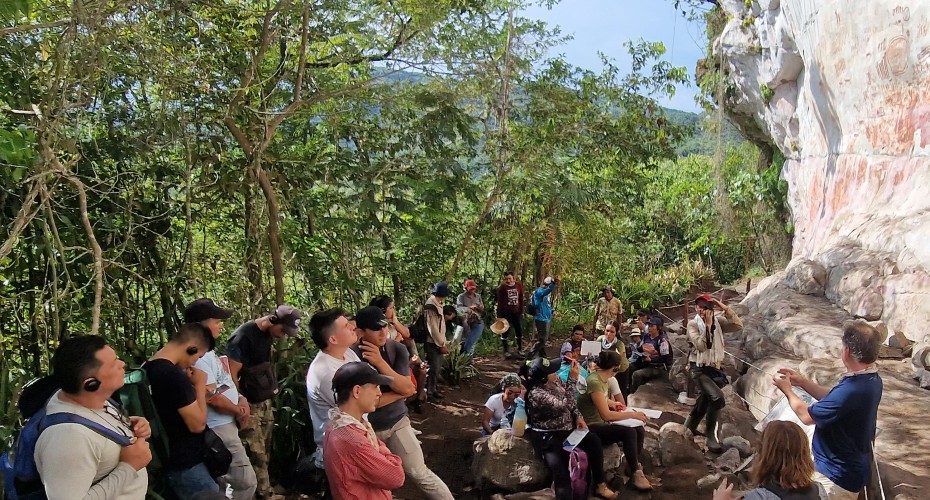
"Indigenous groups have been telling stories about the moon and other celestial bodies for tens of thousands of years," said Professor Hampson. "One of the strands of this interdisciplinary project focuses on cultural perceptions of the moon through time - perceptions that remind us that there are many ways of reflecting on how and why the moon matters."
Further public engagement activities are being developed, including a series of podcasts, an anthology of stories, and a public event for September's International Observe the Moon Night celebrations.


