
A relatively small share of agricultural land is responsible for a large proportion of biodiversity loss and the loss of natural carbon storage. This is shown by a new study by Leiden researchers. The results reveal where targeted measures could deliver the greatest benefits for climate and nature.
Agriculture covers more than 40 per cent of the Earth's habitable land and plays a central role in both climate change and biodiversity loss. Yet the impact of agriculture is far from evenly distributed across space. In a new study published in Nature Food, Baoxiao Liu and her colleagues from Leiden's Institute of Environmental Sciences (CML) mapped where agriculture causes the greatest damage worldwide.

Maps show where agriculture causes the greatest damage
Liu and her colleagues combined data on agricultural land, biodiversity and carbon storage (see info box) with information on different food products. This allowed them to create global maps showing where agriculture places the greatest pressure on climate and nature.
What does loss of carbon storage mean?
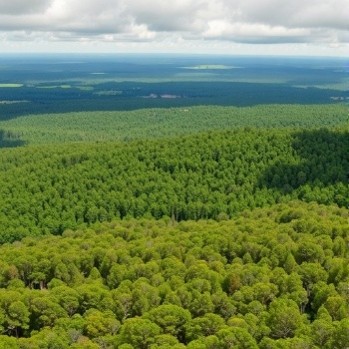
Forests, grasslands and other natural areas store carbon in plants and the soil. When these areas are cleared or converted for human use, part of that stored carbon is released as CO₂. As a result, the amount of CO₂ in the atmosphere increases.
The maps reveal that the impact is highly concentrated: around two-thirds of biodiversity loss and the loss of natural carbon storage occur on just one-third of agricultural land.
The largest hotspots are found Mexico and Central Americal, parts of Brazil, West Africa, India, China and South-East Asia. 'These are mainly regions where agriculture is either very intensive or takes place in ecosystems that naturally store large amounts of carbon and are rich in biodiversity, such as tropical forests,' Liu explains. 'When these areas are converted into farmland, both values are lost at the same time.'
'Animal-based products have a disproportionately large impact.'
Cattle farming causes the most damage
The researchers not only mapped where the damage occurs, but also which food products contribute most to these impacts. Products from cattle farming, such as beef and milk, are among the largest contributors to environmental damage worldwide.
Together, beef and milk account for 41 per cent of biodiversity loss and 29 per cent of the loss of carbon storage caused by food production. 'Animal-based products, and especially products from cattle, have a disproportionately large impact,' says Liu. 'Cattle require large amounts of agricultural land, both for grazing and for growing feed crops.'
Targeted measures can deliver major benefits
Previous studies often examined either carbon loss or biodiversity loss, and usually at a much coarser spatial scale. This study is the first to map both types of environmental loss simultaneously at a global scale, at a detailed resolution and linked to different food products.
'By targeting a relatively small share of agricultural land, we can already achieve major benefits.'
'If we target a relatively small share of agricultural land, this can already deliver major benefits for climate and nature,' says Liu. Because the greatest losses are concentrated in specific areas and products, targeted measures can have a substantial impact. These could include improving agricultural practices, protecting vulnerable areas, and changing food consumption patterns so that less land is needed for food production, allowing areas to recover into natural ecosystems where possible.
'The losses we see also represent potential gains,' says Liu. 'Agriculture can therefore not only be part of the problem, but also offer major opportunities to address both crises.'


