Physicist Prof. Frank Pollmann was awarded the 2026 Gottfried Wilhelm Leibniz Prize on March 18. In this interview, he explains why matter sometimes follows its own laws, what that means for quantum computers, and how quantum research is perceived by the public.
 Andreas Heddergott / TUM
 Professor Pollmann, the physics of individual quantum particles is well understood today. Why does it become so much more complex once many particles begin to interact?
Since the complexity of the equations increases exponentially with each additional quantum mechanical particle, they can rarely be solved with pen and paper. Even today's supercomputers can only accurately simulate around 30 interacting particles - far too few to capture the underlying physics.
When many such particles interact, sometimes you get new collective properties that cannot be derived from the behavior of individual particles. A classic example is water: a single molecule is neither liquid nor solid. Only when many molecules come together, ice crystals form or waves arise in the ocean.
We're seeing similar effects in the quantum world, where collective interactions give rise to new and often highly unusual states of matter that follow an order of their own. These include quantum liquids, where charge carriers carry only a fraction of the elementary charge; materials that conduct electricity without loss at low temperatures; and systems that form exotic topological phases.
What exactly are these topological phases?
A topological phase is a special state of matter where its most important properties are not determined by the microscopic arrangement of particles. A well-known analogy from geometry is that a coffee mug and a donut are considered equivalent in topology despite their different appearances, because each has exactly one hole. Similarly, certain properties of topological materials remain unchanged even when the system is distorted.
In physical terms, this means that some materials can be exceptionally robust . For instance, electrical currents can flow along the edges of a topological material without being scattered by defects, impurities, or disorder. This robustness does not come from engineering perfection, it is based on fundamental mathematical principles.
 Google Quantum AI
 Why are these phases being researched so extensively?
The work on topological phases has fundamentally changed our understanding of matter. It revealed that conventional solid-state theories fail to capture entire classes of possible states. These insights have led to a re-evaluation of how matter is classified, and they were recognized with a Nobel Prize in 2016. At the same time, these states are of great technological interest. They therefore combine fundamentally new physics with the potential for transformative technologies.
Which technologies are we talking about?
Topological phases of matter are exceptionally robust in the face of noise, disorder and imperfections. This robustness addresses key practical limitations of modern technologies, such as energy loss in electronics and the fragility of today's quantum systems.
While many applications are still in the research phase, the long-term potential ranges from low-loss electronics and ultra-precise sensors to new approaches to information processing.
So these phases are also relevant for quantum computing?
There are certainly concrete ideas about how this could work in theory. Certain quantum states allow information to be stored non-locally, making them more resistant to errors. This principle forms the basis of topological quantum computing. The goal is to develop qubits that are stable due to their underlying physics, rather than relying on extensive external error correction.
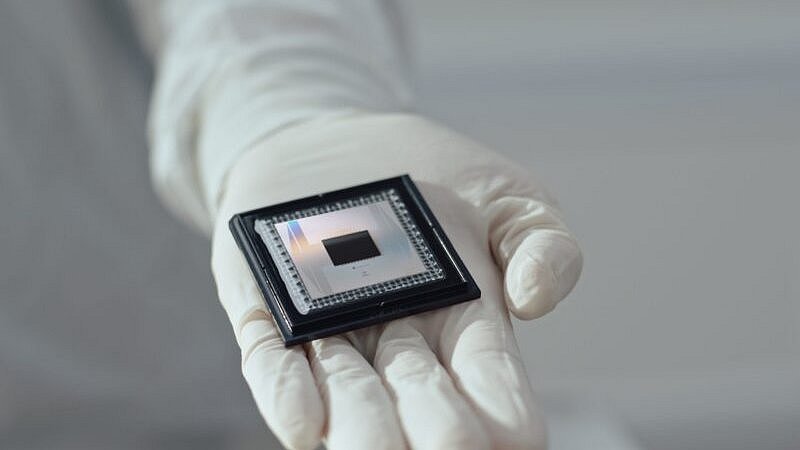
Meanwhile, quantum computers are becoming increasingly important research tools. Many complex quantum systems are extremely difficult to simulate on classical computers, but quantum processors can, in principle, emulate them directly. In our current research, we have succeeded in simulating topological phases of matter using today's quantum computers . This expands our theoretical toolbox and provides access to quantum states that are near impossible for classical algorithms.
A strong link between fundamental quantum physics and technological development is crucial.
Frank Pollmann
2025 was the International Year of Quantum Physics. What impact did this have on your field?
The Quantum Year clearly increased the visibility of quantum research. In particular, quantum computing is now widely perceived as a potentially transformative technology rather than being seen solely as an academic niche.
Despite the increased attention, it is important to emphasize that many quantum technologies are still in the early stages of development. Although expectations are high, it is unclear which problems quantum computers will be able to solve efficiently or what their long-term advantages will be. For this reason, long-term fundamental research remains essential.
How do you see the field developing in the coming years?
In the coming years, it will be essential to strengthen the link between fundamental quantum physics and the development of new technologies. One key objective will be to determine which materials provide the most favorable conditions for realizing quantum technologies.
Another goal is to develop new algorithms, both for classical computers and for quantum processors, that will give us access to areas that are currently beyond reach.
What does the Leibniz Prize mean to you?
My motivation is to develop tools that will genuinely advance our ability to understand and control complex quantum systems. In this context, the Leibniz Prize is particularly significant. It provides the freedom to pursue ambitious and high-risk research in the long term, to foster interdisciplinary collaboration and to actively help shape the future direction of the field.
Professor Frank Pollmann is a theoretical physicist at the TUM School of Natural Sciences . His research focuses on strongly correlated quantum systems and topological phases of matter. In 2026, he received the Gottfried Wilhelm Leibniz Prize, which is considered the most important German research prize and is endowed with up to 2.5 million euros.
His groundbreaking numerical methods for simulating complex quantum models were particularly recognized. The algorithms he developed and made openly accessible have significantly advanced international research in this field.
- This article was published in the third issue of the TUM Magazine.