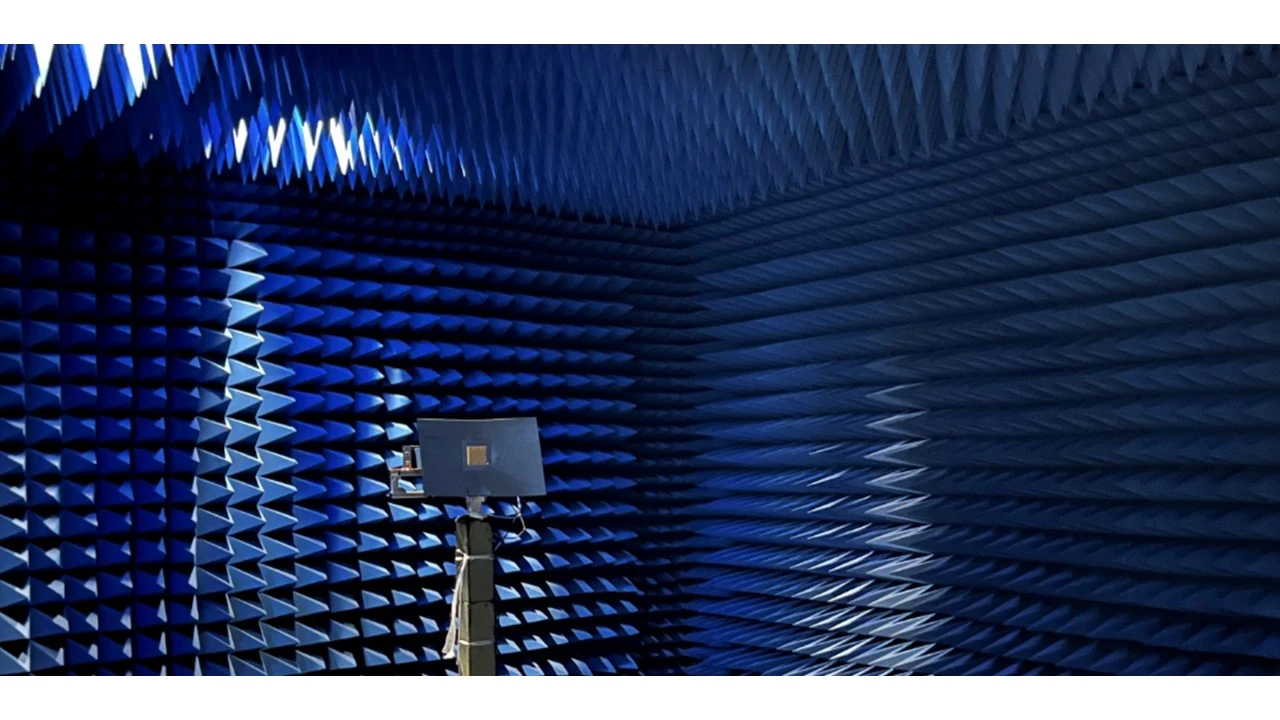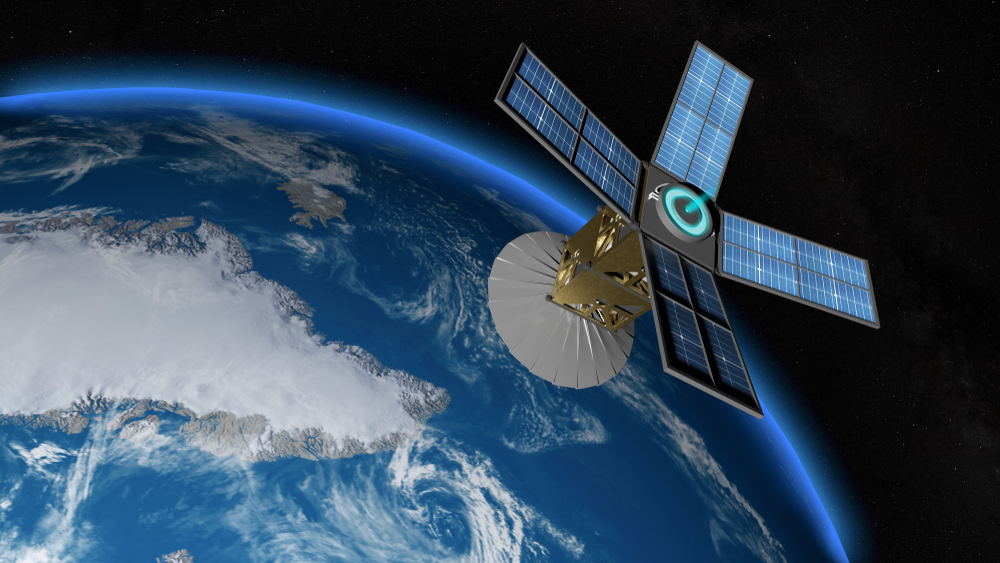
At Science Tokyo's Ookayama Campus, researchers waited for a signal from OrigamiSat-2*, an ultracompact satellite orbiting about 540 kilometers above Earth. The satellite passes over the campus only three or four times a day, with each communication window lasting just around ten minutes. In that brief span, the team must check the status of the satellite they launched into space.
"Waiting to receive that first signal is incredibly tense," says Associate Professor Takashi Tomura. "You cannot help wondering: What if it never comes?"
OrigamiSat-2 was launched aboard a rocket from New Zealand on April 23, 2026, and placed into orbit around Earth. Now the team is conducting an in-orbit demonstration to find out whether the satellite functions and performs as designed.
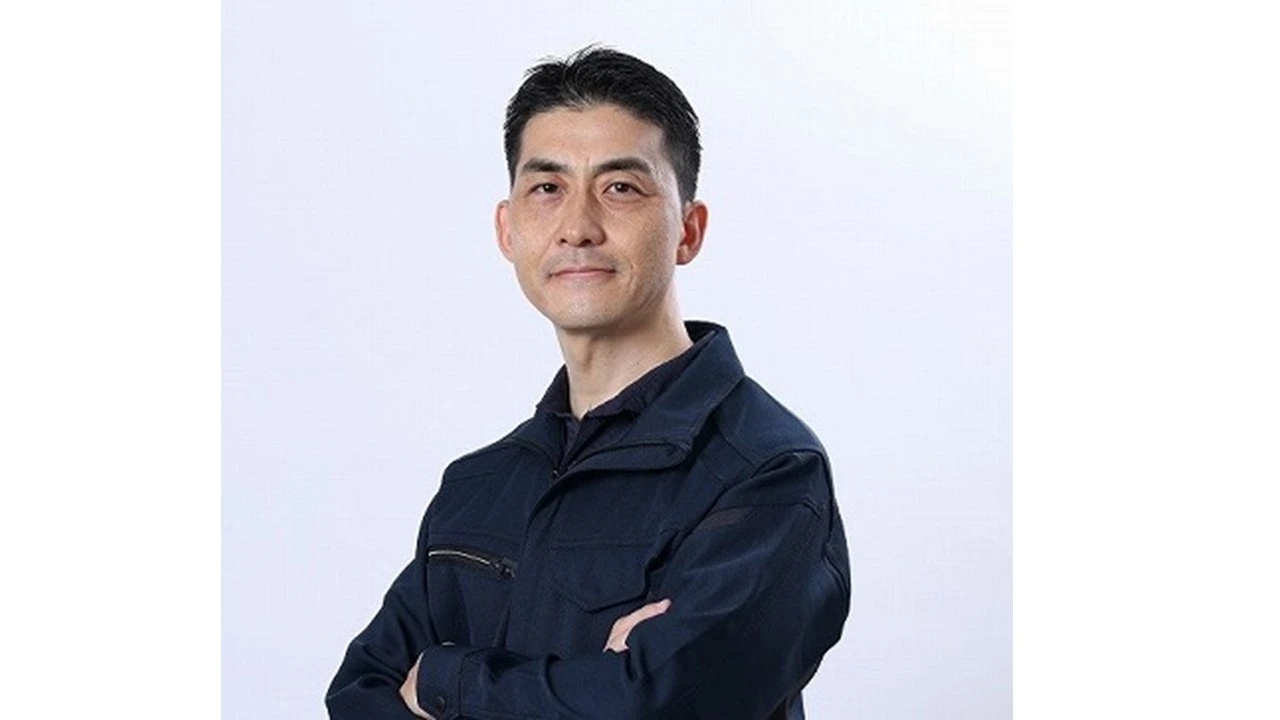
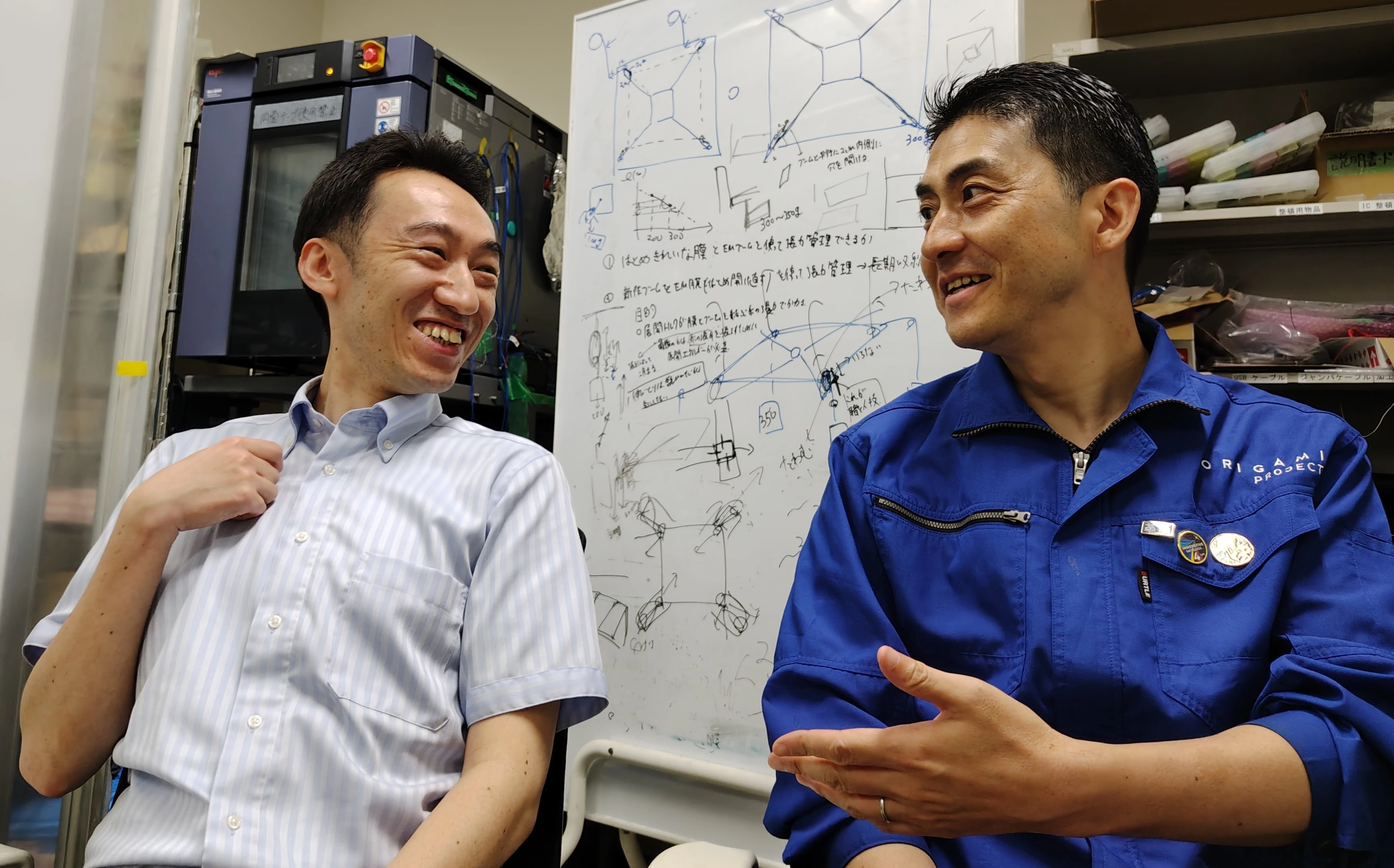
Professor Hiraku Sakamoto and Associate Professor Takashi Tomura take us behind the scenes of this effort to test OrigamiSat-2 in space.
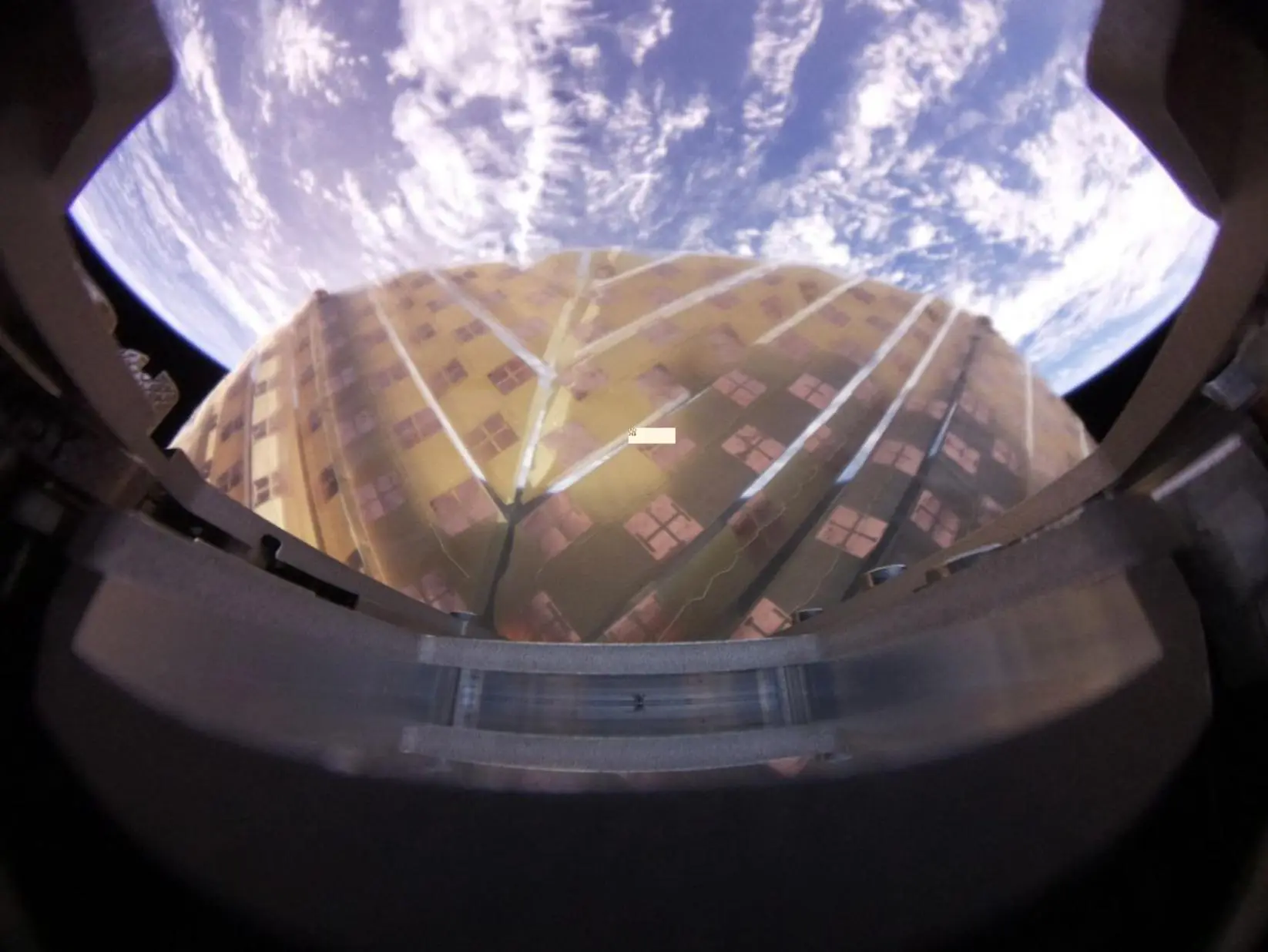
* Origami Reflectarray Antenna Demonstration Satellite "OrigamiSat-2" : An ultracompact satellite equipped with a deployable antenna that folds like origami.
Just ten minutes to communicate with a satellite
By calculating the satellite's orbit, the team can predict exactly when it will pass over Science Tokyo. At those designated times, the researchers stand by at the ground station and wait for a signal from the satellite. Once they detect it, they transmit commands from the ground and check the data the satellite sends back.
The communication window lasts only about ten minutes-from the moment the satellite rises above the horizon until it disappears beyond the other side. During that limited time, the team uses the ground station antenna to track the satellite as it moves across the sky, exchanging data whenever possible.
Small for launch, large in space
For a satellite communicating with Earth, a larger antenna can generally provide better performance. But every rocket has strict limits on the size and weight of its payload. The challenge, then, is to fold the antenna into a compact form for launch and deploy it into a much larger structure once it reaches orbit.
Sakamoto has long applied origami engineering to the study of membrane structures and large structures that unfold in space. Tomura, meanwhile, studies a wide range of antennas-from those used on satellites to those supporting high-speed smartphone communications.
OrigamiSat-2 was born from the fusion of these two fields: deployable structures that open wide in space, and radio-frequency engineering that enables those structures to function as antennas.
A collaboration that began with "we need your help"
The collaboration began during the development of OrigamiSat-1, which was launched in 2019. The team discovered a problem with an antenna on the ultracompact satellite that Sakamoto was helping to develop. They turned to Tomura, who worked at the same university but whom Sakamoto barely knew at the time.
"They contacted me because I specialize in antennas and said they needed my help," Tomura recalls.
A student from Sakamoto's laboratory then designed an antenna in Tomura's laboratory, and the team installed it on OrigamiSat-1. That satellite carried a folded membrane designed to deploy in space, but the membrane itself did not function as an antenna. Tomura therefore proposed OrigamiSat-2, in which the deployable membrane would also serve as an antenna. Sakamoto and his colleagues, meanwhile, realized that combining a small antenna with the membrane might greatly amplify radio signals.
What began as a request for help with a single technical problem brought together two different fields and eventually led to OrigamiSat-2-a satellite whose deployable membrane also functions as an antenna.
Students entrusted with the final launch preparations
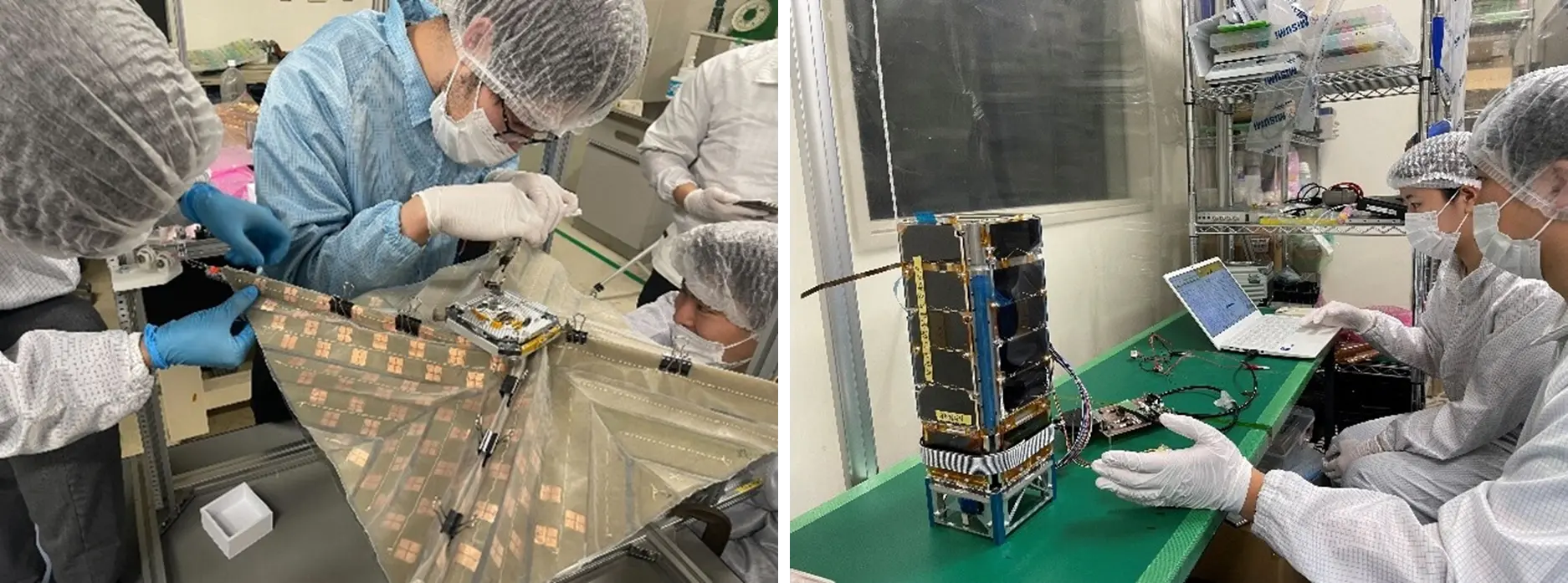
Preparing OrigamiSat-2 for launch also marked a major handoff within the laboratory. The students who had spent years developing the satellite were approaching graduation, so two newer students were entrusted with the final preparations on-site in New Zealand.
For its launch as part of Innovative Satellite Technology Demonstration-4, conducted by the Japan Aerospace Exploration Agency (JAXA), OrigamiSat-2 was handed over at JAXA's Tsukuba Space Center and then flown overseas. The satellite carries a battery for use after launch. For safety reasons, however, air transport regulations required the battery charge to be reduced to about 30 percent. Before the rocket could launch, the battery had to be fully recharged. Determining exactly when to recharge it was therefore another important part of the launch preparations.
In New Zealand, the students had to unpack OrigamiSat-2, inspect it for damage during transit, charge its battery, and place it inside the case used to mount it on the rocket. To ensure that the two relatively inexperienced students could complete every step reliably, the laboratory held repeated rehearsals before they left. With senior students who knew the satellite well looking on, the two students practiced the procedures and prepared a detailed manual. They revised it again and again, incorporating every issue uncovered during rehearsal.
Then launch day arrived. The researchers watched the livestream from different parts of the world.
"I was in Dublin, Ireland, for an international conference," Tomura says. "The launch was around noon in Japan, but it was five in the morning there. I got up early to watch the broadcast, though I had been nervous since the night before."
Sakamoto, meanwhile, was thinking about the students who had traveled with OrigamiSat-2 and handled the final preparations in the field.
"A satellite is extremely delicate," Sakamoto says. "If you do not work with one regularly, even touching it can be frightening. If you break it, there is no way to undo the damage. Our students had devoted an enormous amount of time to developing OrigamiSat-2. Two newer students inherited that work, traveled to the launch site, and completed every part of the preparation. I was truly impressed by how dependable they were. On launch day, I watched with the two students, who had already returned from New Zealand, believing that everything would be all right."
Carrying forward the knowledge and responsibility built up by the students before them, the two students made sure OrigamiSat-2 was ready to launch.
The real demonstration begins after launch
After launch, the first task at the ground station is to determine whether a signal is reaching Earth from OrigamiSat-2. If the team receives the signal, it sends a command back to the satellite. The first command halts the antenna deployment sequence. If the command arrives successfully, OrigamiSat-2 returns an acknowledgment. This initial communication is known as the "critical phase"-the crucial stage in which the team confirms that the satellite can receive and respond to instructions from Earth.
The researchers then check the battery voltage, the amount of electricity being generated, the temperature inside the spacecraft, and other data. Are the solar cells generating enough power? Is any equipment becoming hot or cold enough to sustain damage? Following an operations plan and command list prepared in advance, they examine the satellite's health and status one item at a time.
On Earth, engineers can touch a device, adjust it, or repair it on the spot. Once a satellite has been sent into space, however, no one can reach it directly. The team must infer its condition from the limited information received during each ten-minute communication window and decide which command to send next. A launch may look like the dramatic climax of a space project. For the members of the Sakamoto and Tomura laboratories, however, it marks the beginning of the real demonstration.
Connecting a small satellite to the next era of space exploration
If OrigamiSat-2's technology can be put into practical use, it could one day enable high-speed communications in places still underserved today, including mountaintops and the open ocean. Tomura is also looking farther ahead-to antennas that could be used on the Moon or Mars.
"When people eventually live on the Moon or Mars, communication with Earth will be essential," he says. "If we can take an antenna that is extremely light and compact and deploy it into a much larger structure in space, I believe we can achieve high-speed communications across those vast distances.
"Imagine creating a communications environment on Mars fast enough to stream video as smoothly as we do on Earth. OrigamiSat-3 is our next goal on the path toward that future. This time, we aim to demonstrate an antenna in space that can freely steer the direction of its radio waves."
Sakamoto also imagines going beyond simply unfolding a large membrane. His longer-term goal is to connect multiple structures in space to build something larger still. Achieving that will require not only expertise in deployable structures but also robotic technologies capable of assembly in space. He is now discussing these possibilities with robotics researchers.
Space projects bring many fields together at once, including structures, antennas, communications, operations, and robotics. Sakamoto emphasizes that expertise alone is not enough to create something with people from other disciplines. What matters is the ability to recognize ideas that collaborators have not yet found the words to express and give those ideas a form everyone can understand and share.
"Learning from failure is essential in engineering," Sakamoto says. "But in space, repairs are impossible, so failure is not an option. That is why we test repeatedly on Earth and continue verifying our work until we are confident in it. It is part of taking responsibility for what we have built."
OrigamiSat-2 was made possible by more than new technology. It was also made possible by people who bridged different areas of expertise, accepted responsibility, and passed their research on to the next generation.
OrigamiSat-2 is still circling Earth and sending messages back to the ground. That small satellite carries the accumulated efforts of researchers and students who kept taking on new challenges together. Its in-orbit demonstration is leading toward OrigamiSat-3-and the space technologies that will come after it.
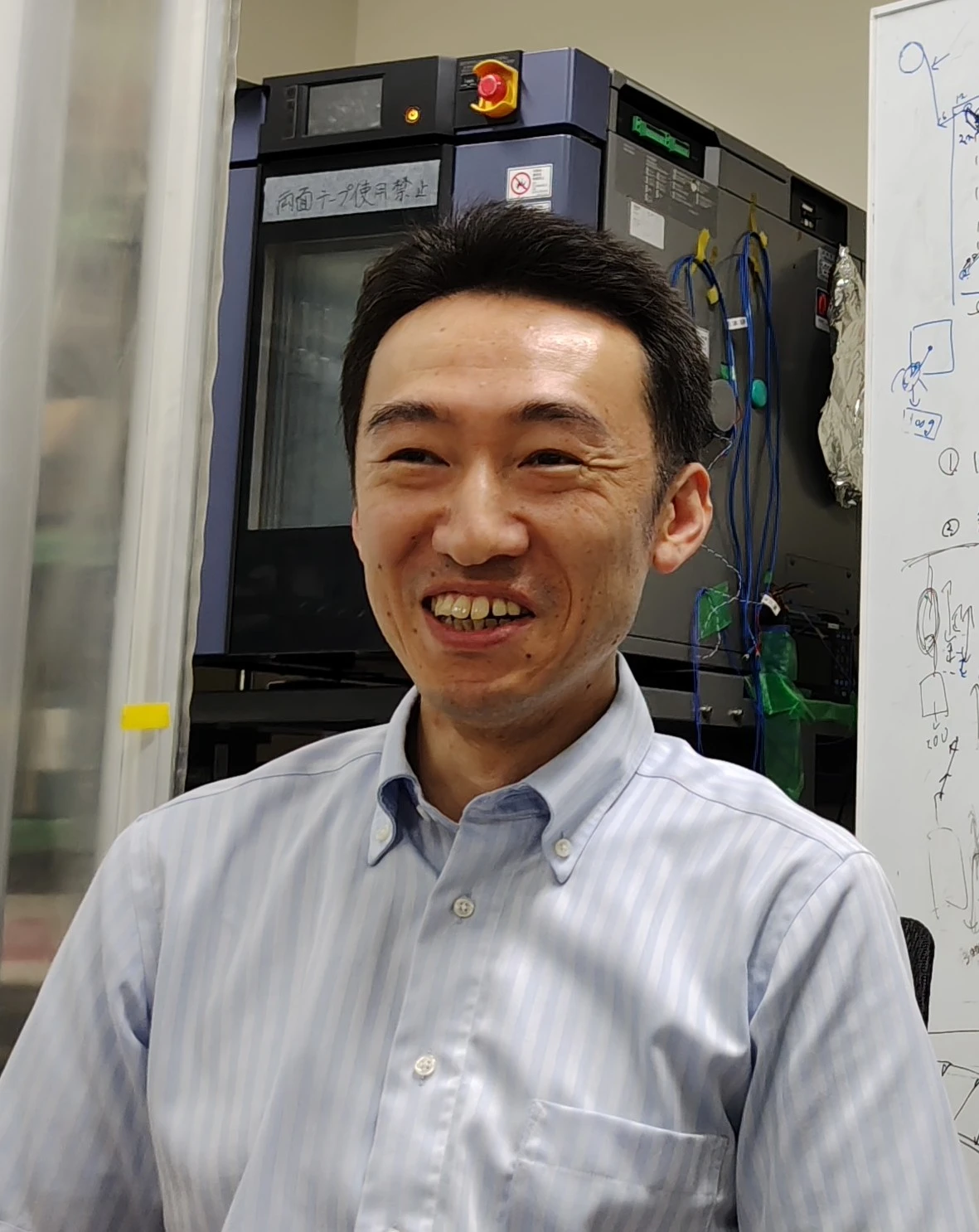
A message from Associate Professor Takashi Tomura
We have been developing antennas for space applications for many years. One example is the antenna used on Hayabusa2, one of Japan's best-known space missions. It was designed by our predecessors, when the laboratory was led by Professor Makoto Ando and Professor Jiro Hirokawa.
Our laboratory traces its history back to 1957, when Professor Toshio Sekiguchi established the original group. Its research and educational traditions were carried forward over several generations by Professor Naohisa Goto, Professor Makoto Ando, and Professor Jiro Hirokawa.
Many students have also contributed to building our satellites. In fact, students performed most of the assembly work on OrigamiSat-2, with about 30 students participating in total over the course of the project. If you would like to build a satellite yourself, we hope you will join our laboratory and take on the challenge with us.
A message from Professor Hiraku Sakamoto
When you work with researchers from other fields, subject-matter expertise alone is not enough. Team building is particularly important in a field like space engineering, where many people must apply many different technologies at the same time.
That is why Science Tokyo offers a graduate major in Engineering Design Course. Students learn how to approach collaboration with people who do not share the same background or foundation of knowledge. Science Tokyo is committed to this kind of hands-on education, and we hope many students will come and take part.
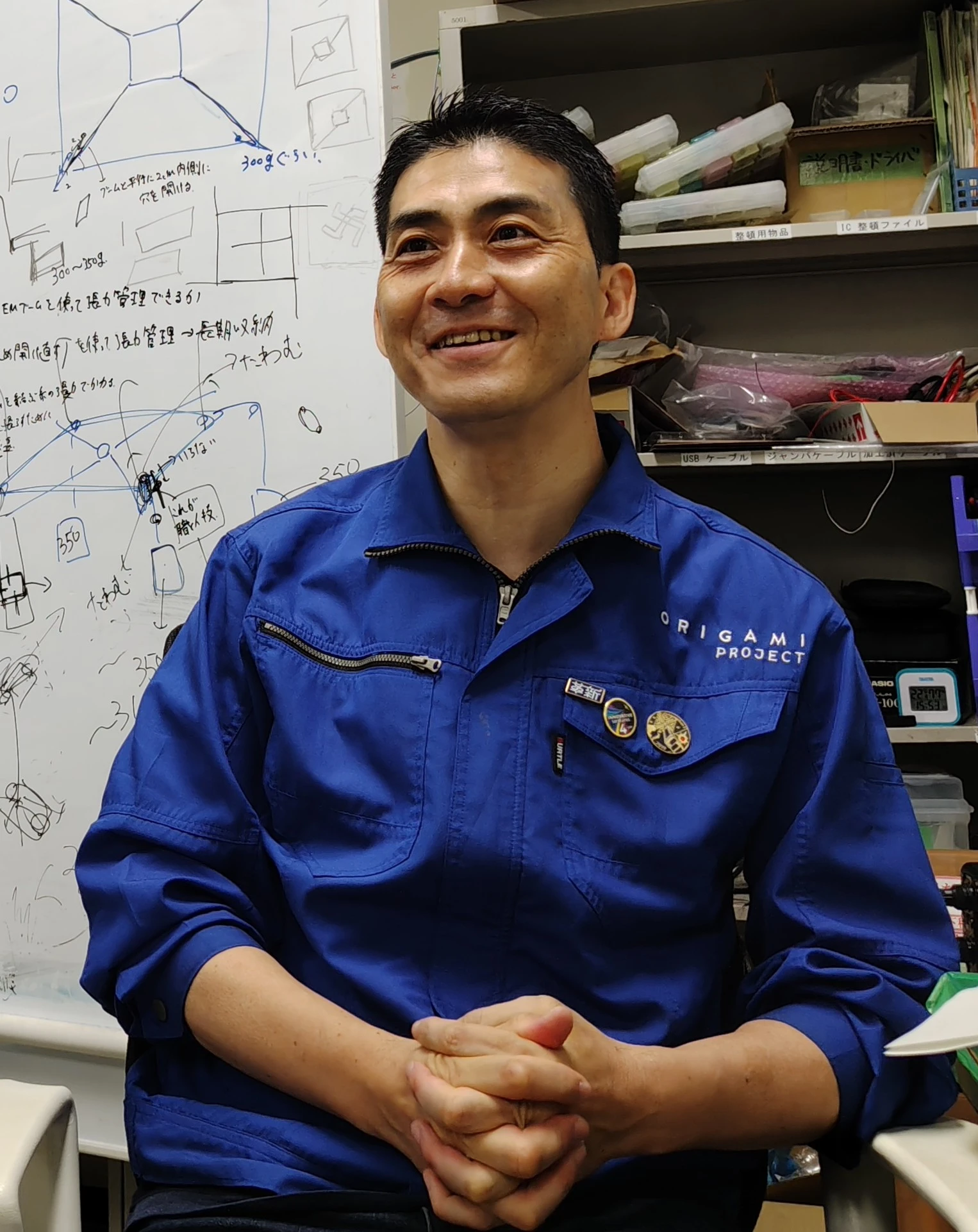
Interview conducted on July 9, 2026, at the Sakamoto Laboratory