
Key points
- Per- and Polyfluoroalkyl Substances (PFAS) are a group of more than 15,000 human-made chemicals.
- Dubbed 'forever chemicals', PFAS don't break down naturally, accumulating in the environment.
- Our researchers are part of international efforts to fight back against PFAS, using the latest technology.
Per- and Polyfluoroalkyl Substances (PFAS) are human-made chemicals that don't break down naturally. That's why they're often called 'forever chemicals'.
There are more than 15,000 types of PFAS. They are used in all sorts of commercial, consumer and industrial products because they are very stable, heat-resistant and repel both oil and water.
Examples include things like non-stick cookware, waterproof textiles, cleaning products, building materials and legacy firefighting foams.
But the properties that make them useful, also make them challenging to clean up.
From 'forever chemicals' to 'everywhere chemicals'
When PFAS get into the environment, they can travel vast distances through air, water and soils. They can accumulate in ecosystems and living organisms. Over the past few decades, they have spread right across the globe. They've even been detected in Antarctica .
Senior Research Scientist Dr Divina Navarro said that because PFAS appear in so many more products now, it's not always possible to pinpoint the source.
"These days we're talking about PFAS less as a 'forever chemical', and more as an 'everywhere chemical'," Dr Navarro said.
"PFAS molecules are made up carbon-fluorine bonds, which are very strong and stable – that's what makes PFAS so persistent in the environment.
"The molecules also feature what we call a 'water-loving head' and a 'water-repelling tail', which helps them to move through interfaces between air, water and soil with ease.
"Concentrations of PFAS vary from place to place, and part of our work is measuring that so we can advise governments and regulators what a background concentration of PFAS looks like, compared to contamination."
Are PFAS dangerous?
Being exposed to high levels of PFAS impacts human, plant and animal health.
For example, recent studies of freshwater turtles showed that exposure to high concentrations of PFAS coincided with higher rates of deadly diseases, deformities in hatchlings and population decline.
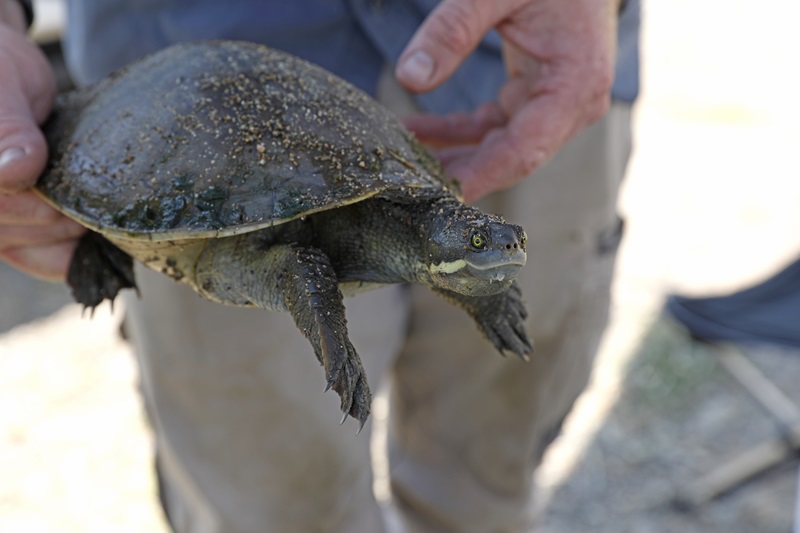
There is still a lot of research underway – in Australia and around the world – to understand how this happens, and what concentrations of PFAS pose greater risks to health.
But one thing is clear – PFAS pose a global problem, and innovative solutions are needed to detect, contain and destroy them safely.
How do we track down PFAS in the environment?
In some cases, it's clear where to look for PFAS. For example, legacy firefighting foams containing PFAS were once commonly used at airports and military bases.
That's why CSIRO researchers are working with the Department of Defence to better understand how PFAS move through the environment. They have also helped develop ways to limit their spread .
PFAS can also accumulate in surface and groundwater, eventually reaching wastewater treatment plants. This presents a big challenge for water utilities around the world.
Since most treatment processes are not designed to remove PFAS, they often end up in biosolids – a byproduct of wastewater treatment that is sometimes used as fertiliser for agriculture.
"You're trying to understand the cycle and follow the fate of the material, so that you can target the places it might be," Dr Navarro said.
"Our team is building models based on what we have discovered about how PFAS move through surface and groundwater, as well as different types of soils.
"Whether PFAS leach quickly through soils or more slowly depends on the amount of organic carbon, clay, and minerals present.
"By gathering more data about how well different soils retain PFAS, we can train and test our models to help predict where PFAS might end up."
How can we tell if PFAS is in our soils and water?
Because PFAS are used in so many products, it's not always possible to trace them from their source. Another way scientists can detect PFAS is by testing samples of soil and water.
But testing for a group of more than 15,000 chemicals is no easy feat. Senior Research Scientist Dr Robert Young said that for some methods to work, scientists need to already know the chemical make-up of the substances they're trying to detect.
"Sometimes, the way that PFAS are manufactured is not very selective. So, the products could contain a huge number of different fluorinated compounds," Dr Young said.
"Other testing methods cast a wider net but aren't always very good at telling apart individual molecules in a mixture."
That's why, in 2025, CSIRO invested in a new Ion Cyclotron Resonance (ICR) facility in Adelaide. It's capable of detecting up to tens of thousands of chemicals in a single sample, to help manage contamination.
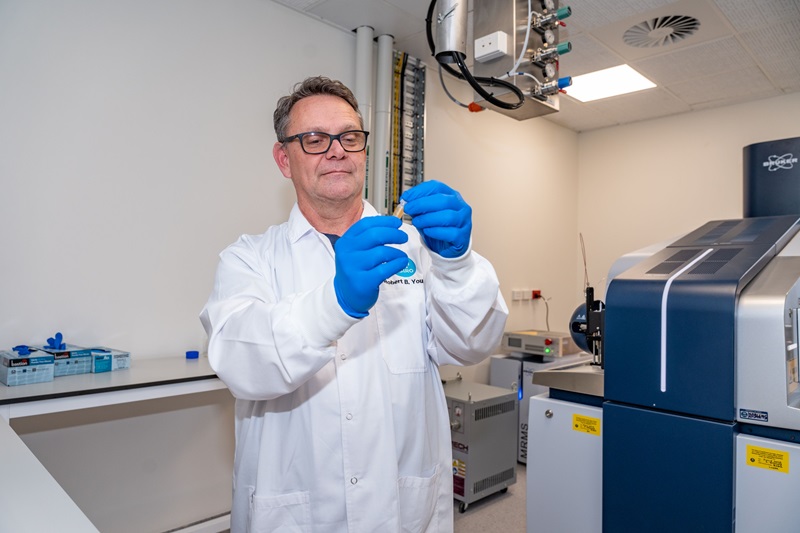
The ICR excels at telling apart individual molecules by mass, even when they're in really complex mixtures, such as soils. It looks for useful patterns in the data – like the long carbon-fluorine chains that make up PFAS.
This precision allows scientists to detect contaminants like PFAS much faster and more effectively than other methods.
"The ICR has potential for rapid response applications – in the case of chemical spills we could get a sample and analyse whether high priority pollutants are present in as little as one day," Dr Young said.
How can we remove PFAS from the environment?
Taking PFAS out of the environment and destroying them is an enormous challenge – and an expensive one.
In the case of hot spots – where PFAS are known to be present in higher concentrations – soil and other matter can be removed and destroyed. In soils, PFAS can be bound in place by adding sorbents. In contaminated water, floating wetlands are proving effective at removing PFAS.
Principal Research Scientist Dr Jens Blotevogel and his team are working with partners in Australia and overseas to test ways of getting rid of PFAS for good.
"To put it into perspective, we are talking about extracting the equivalent of a few drops of water from an Olympic sized swimming pool," Dr Blotevogel said.
"We can't remediate the whole world, so we need to be smart and targeted about how we treat PFAS.
"Typically, we filter PFAS through granular activated carbon, ion exchange resin, or a membrane to create a more concentrated waste stream.
"Then we can treat that waste using destructive technologies – and this is the expensive part."
Can 'forever chemicals' be destroyed?
The strong chemical bonds of PFAS were created specifically to withstand the tests of heat, UV, oxidation and time, which cause lesser molecules to break down.
So, scientists around the world are exploring a range of different ways to destroy PFAS.
There's pyrolysis (heat without oxygen), gasification (heat with a bit of oxygen), supercritical water oxidation (heat and high pressure – like a pressure cooker) and hydrothermal alkaline treatment (heat and high pH), among others.
Many of these methods are still being tested for their effectiveness in destroying PFAS, or in their scale-up stages. So along with colleagues from the US and Germany, CSIRO researchers are zeroing in on two of the most promising treatments for destroying large quantities of PFAS safely and at scale.
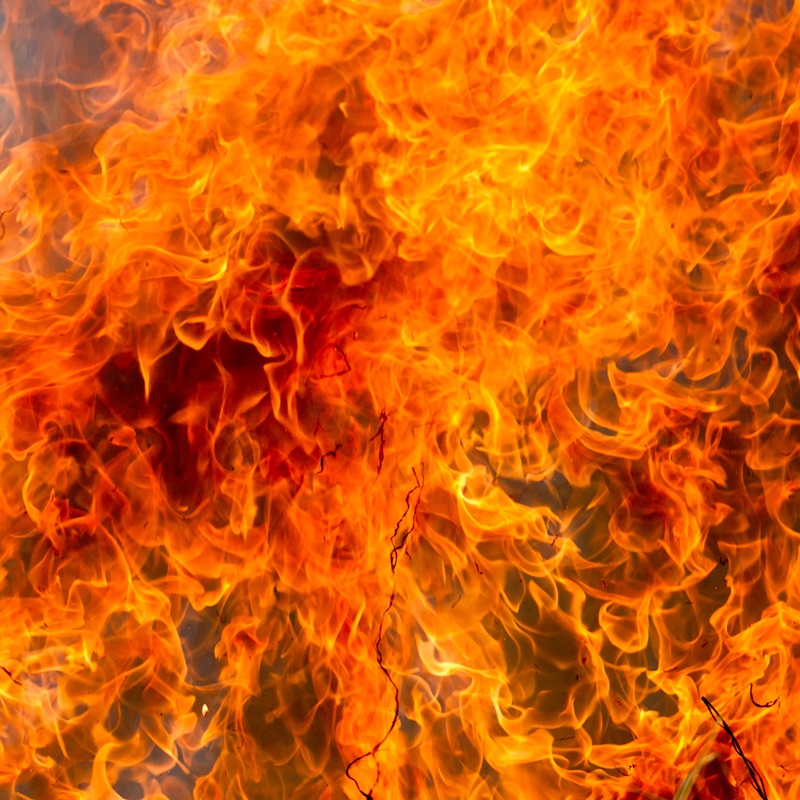
One involves burning matter containing PFAS at high temperatures around 1,000°C inside a specialised hazardous waste incinerator. Once completely mineralised, all that's left are inorganic compounds like calcium fluoride, carbon dioxide and water.
The other – called thermal desorption – involves vaporising the contaminants, leaving soil structure intact so it can be reused.
Is it really safe to incinerate PFAS?
There's one final piece of the puzzle to ensuring PFAS are destroyed safely and completely.
"With all thermal treatments, you need to tackle the emissions," Dr Blotevogel said.
"Treating PFAS at high heats breaks their carbon-fluorine bonds but may also create harmful airborne chemicals, which can cause their own problems if they get out into the environment.
"Our main goal is to understand every step of the mechanism through which PFAS break down, and how variables like the amount of oxygen, water and surfaces impact that process.
"That way we can translate our knowledge across diverse thermal technologies, and make sure PFAS are destroyed safely and completely."
The international team has already traced the entire chain of chemical reactions as PFAS break down during incineration. They've also successfully helped recyclers find a way to destroy PFAS in batteries , while recovering valuable metals.
With international collaborations and cutting-edge technologies, CSIRO researchers are tackling the greatest challenges to take the 'forever' out of 'forever chemicals'.


