
RICHLAND, Wash.-Open-source graphics processing unit (GPU) acceleration is coming to quantum-classical computing through a framework being developed by a team at the Department of Energy's Pacific Northwest National Laboratory using NVIDIA NVQLink.
Announced today at NVIDIA GTC 2026, this collaboration aims to lower barriers for scientists and engineers who want to explore quantum control and measurement in more detail than is typically possible through cloud-based services.
Specifically, the research team is developing a tight integration between NVIDIA GH200 Grace Hopper Superchips and a measurement and control system based on a field-programmable gate array (FPGA).
An FPGA is a type of reconfigurable, programmable logic device that is often used inside a quantum instrumentation control kit that offers fast signal processing.
Adding a direct connection with GPUs introduces a powerful new element: high-throughput computing that can accelerate demanding numerical tasks with minimal delay. This so-called "tight integration" matters for quantum experiments where timing can be unforgiving and where the ability to process measurement results is crucial for achieving meaningful results.
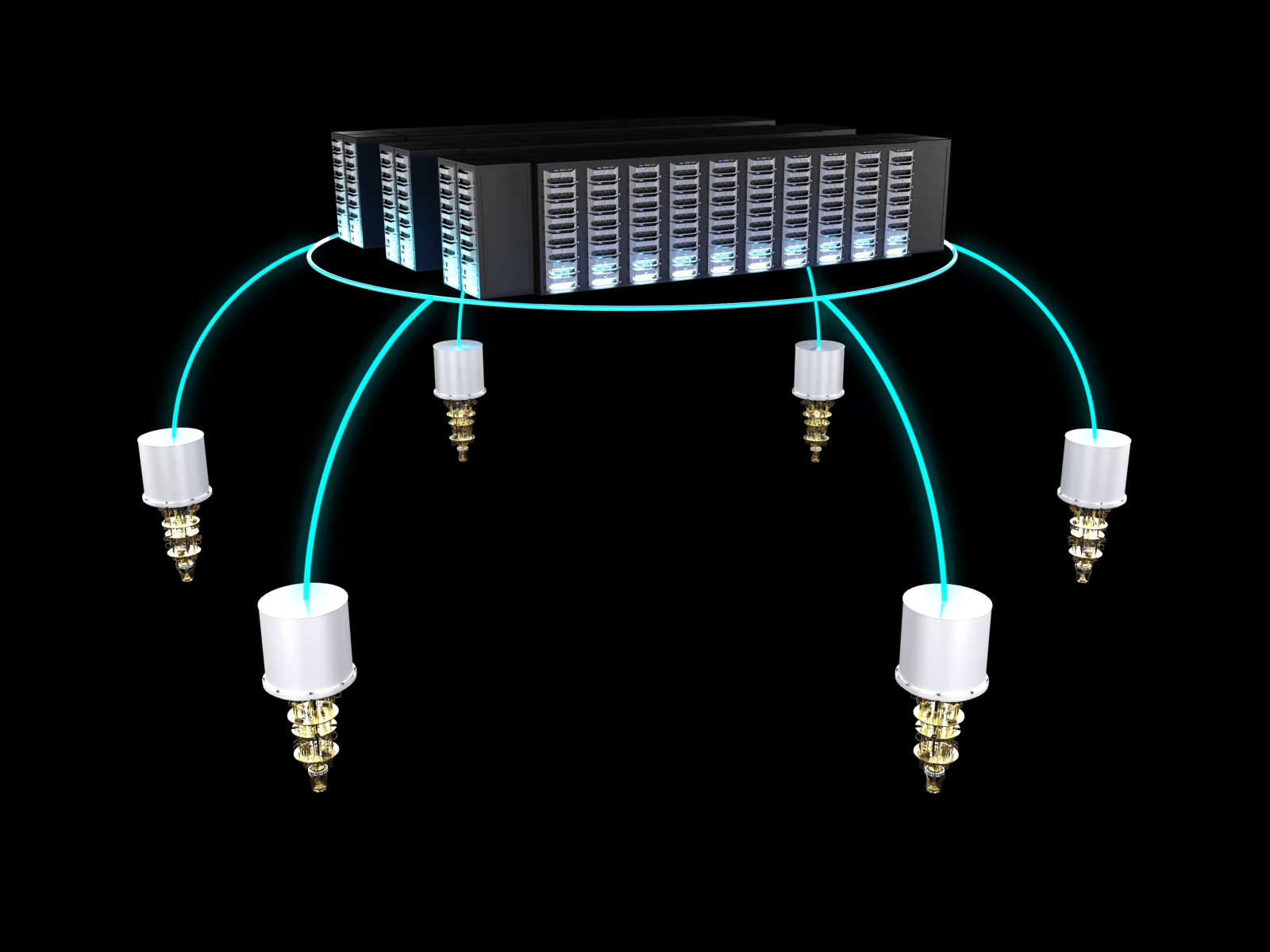
The bridging model provides a practical path toward testing and debugging near-term quantum computers, an advance that could immediately be useful across science and industry applications.
"This collaboration employs the NVIDIA NVQLink platform to leverage high-performance classical GPU processors that meet the demanding real-time computational requirements of quantum processors," said computer scientist Sam Stein, PNNL's project lead. "We are excited to provide an open-source system grounded in accessible components that can be shared, extended and improved by researchers beyond PNNL."
Making quantum computing fast and stable
PNNL is leading the next generation of computing for scientific discovery.
The next-generation hybrid classical-quantum integration sets the stage for exploring how accelerated computing and AI integration can better support quantum measurement, control and software development. It will allow researchers to conduct more reliable quantum simulations that can eventually be applied to solving complex problems in science and creating new energy solutions for the nation.
Next steps include GPU-accelerated quantum error correction, where rapid decoding of quantum measurements is essential to keeping fragile quantum information intact.
"Control tasks like quantum error correction are one of the key steps in scaling quantum computing to useful applications, and their success hinges on real-time information flow between quantum processors and GPU supercomputing," said Tim Costa, Vice President and General Manager for Quantum, NVIDIA.
The integration of GPU and the FPGA-based quantum measurement and control system is supported by DOE's Quantum Science Center, which is led by Oak Ridge National Laboratory.
PNNL's research is aimed at the quantum computing community's goal of making calculations on a quantum computer practical in the next five years. The PNNL team continues to actively address critical gaps in quantum software tools. In addition to Stein, the team includes PNNL researchers Drew Rebar, Chenxu Liu, Aaron Hoyt, Sean Garner, Chunshu Wu, Marvin Warner, Mark Raugas, and Karol Kowalski.


