
Local 12 highlighted a new study by biomedical engineers at the University of Cincinnati that examined how well new football helmets provide protection from impacts that could cause concussions.
UC College of Engineering and Applied Science Professor Eric Nauman and doctoral student Sean Bucherl found that the latest generation of Vicis and Riddell football helmets do a better job of protecting players from impacts that can cause concussions.
Despite the improved helmet performance, players still are most susceptible to blows to the back of the head, testing found. And the position-specific helmets fared worse than traditional helmets, the researchers found.
The work was conducted at UC's Human Injury Research and Regenerative Technologies Lab at the university's Bioscience Center. The study was published in the Journal of Visualized Experiments.
"The biggest thing that we found recently was that the position-specific helmets are not actually protecting the players that they are intended to protect," Nauman told Local 12.
"The linemen's helmets, the ones designed specifically for linemen, actually did worse when we tested them for frontal hits, and the quarterback helmet actually did worse when we looked at the impact to the back of the helmet," he said.
Featured image at top: UC doctoral student Sean Bucherl was lead author of a study that examined how well some of the newest helmets can protect players from impacts that can cause concussion. Photo/Michael Miller
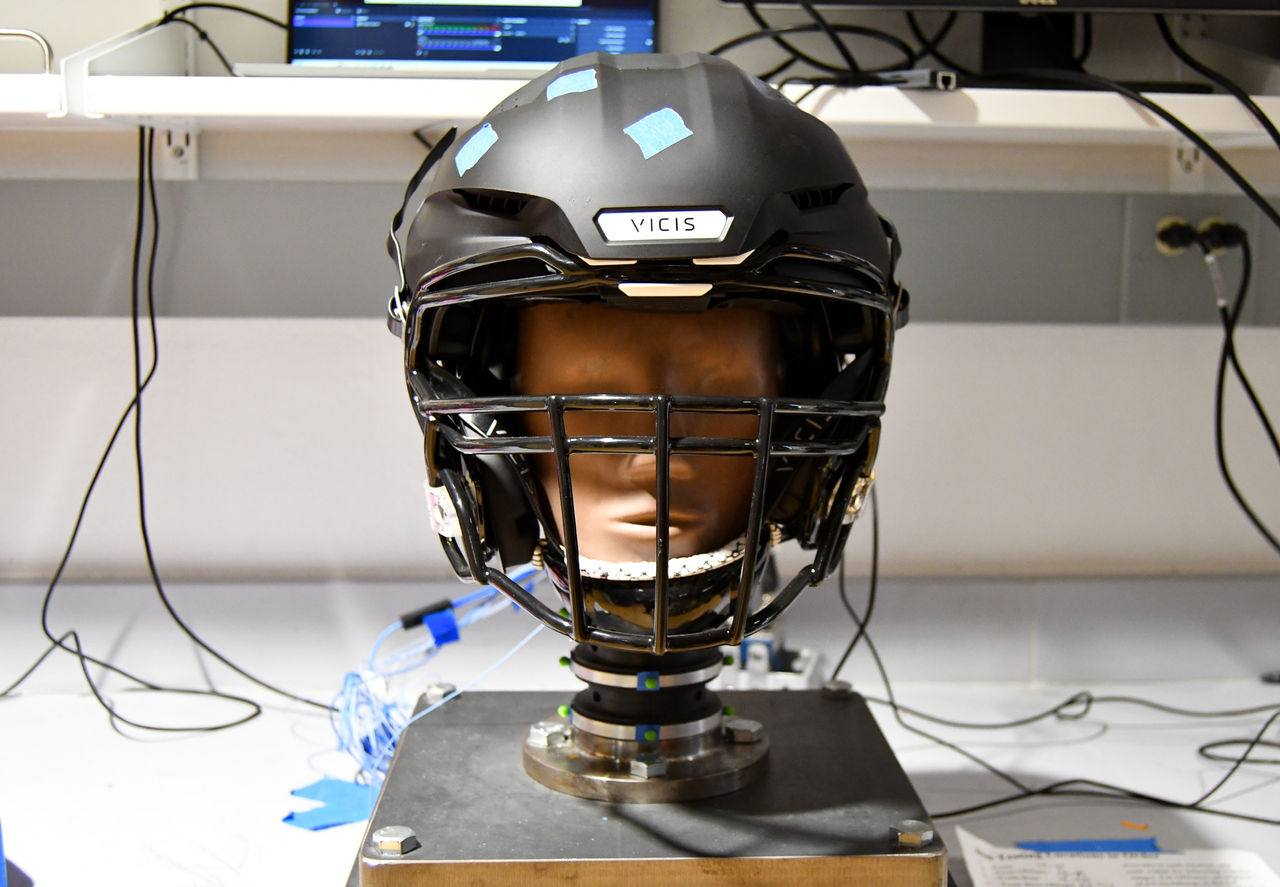
UC biomedical engineering researchers studied the latest generation of football helmets to see how well they protect players from impacts that could cause concussion. Photo/Michael Miller


