
In Brief
- AI is disrupting traditional entry-level technology careers, making continuous learning and skill development increasingly important.
- LaunchCode and Per Scholas are adapting through employer partnerships, flexible training and ongoing education for alumni.
- Higher education can broaden AI-driven opportunity by combining technical training, durable skills and innovative learning.
Artificial intelligence (AI) is rapidly reshaping the workforce, raising important questions about how education can prepare people for an evolving job market. Jason Jabbari, an associate professor at the Brown School at Washington University in St. Louis, offers some ideas.
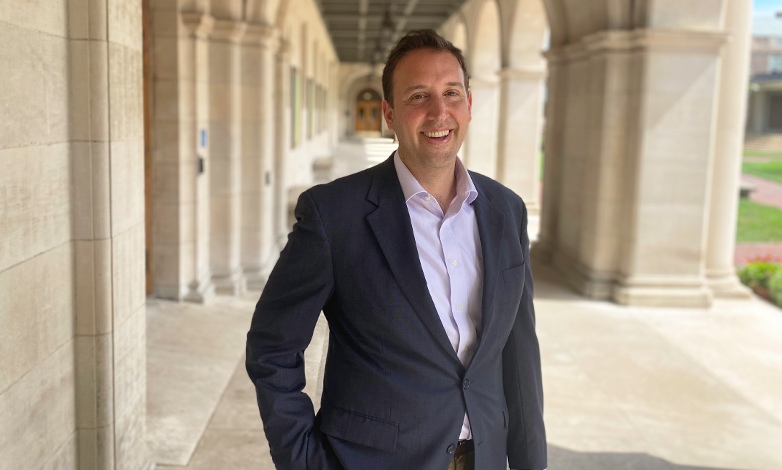
He argues that education must combine up-to-date technical training with durable skills such as critical thinking, adaptability and collaboration to help workers succeed in an increasingly AI-driven economy.
Jabbari is a co-author of a recent book chapter, "Rethinking Human Capital Development in the Age of AI," which examines how workforce training organizations are adapting to AI. He studies how policies, programs and practices can strengthen human capital and promote social mobility.
The chapter is in a book called "Learning Curves: Rethinking Education from Classrooms to Careers in an AI-driven World," published in October by Wiley.
How is AI changing the path into technology careers, and what does that mean for economic mobility?
The rate of change is fast. Experienced workers are using AI to perform tasks that would normally go to new workers, and some coding tasks are becoming less essential. Even though fundamental knowledge is what allows people to use technology tools well, there is probably some truth to the idea that the most common computer science language is now English.
At the same time, workers also need to know how to incorporate AI into their workflows, and because AI is a general-purpose technology, this likely won't be confined to technology sectors. Thus, if coding is an early indicator of future labor market trends, economic mobility will probably require learning new skills quickly, and learning more advanced skills earlier, whether formally or informally.
In the chapter, you examine the processes by which LaunchCode and Per Scholas, two leading education providers in technology, are adapting to keep pace with an increasingly AI-driven labor market. What are LaunchCode and Per Scholas doing differently?
Both organizations work directly with employers, which allows signals about in-demand skills to reach their programs much quicker than in traditional education. Per Scholas has started serving as an upskiller as well as an initial skill provider, offering alumni courses so that previous graduates can keep up with new labor market demands. LaunchCode is focused on broad access through its Hire Human initiative, which works to match people to roles where they can use AI to be more efficient rather than be replaced by it. In essence, both are shortening the feedback loop between what employers need and what students learn.
If technical skills have a shorter shelf life, what should students learn?
Students need to learn how to learn new things. As LaunchCode describes it, students don't just learn to code; they learn how to learn how to code. Technical skills are still important for getting one's first job, but current technical skills may soon be replaced by more advanced technical skills. Durable skills, such as adaptability and a growth mindset, may be what allow workers to keep learning the next set of technical skills.
How can higher education help make sure AI expands opportunity, rather than inequality?
Now is a good time to innovate because AI is influencing both how we teach and what we teach, and these two can work in tandem. For example, AI can be used to personalize learning in a way that ties directly to an individual student's career aspirations. Traditional institutions have the infrastructure to scale, while organizations like LaunchCode and Per Scholas have shown how to adapt quickly through employer partnerships, shorter training and alumni upskilling. If higher education can bring these together, it can help develop human capital broadly instead of letting much of the gains from AI go to people who are already most advantaged.


