
This blog is available in Spanish.
Every year, specifically in June, Pride Month fills social media, streets and institutional spaces with flags, messages, speeches and celebrations. Important dates are commemorated, celebrating advances in LGBTQ+ rights and making visible identities that have long been denied.
But this global image doesn't always feel universal. From the Global South - especially from African and diasporic contexts - many of us experience this month with a complex mix of emotions: recognition, yes, but also distance, tension, and questions that don't always find a place or space in dominant narratives.
What does the acronym LGBTQ+ stand for, and why is it not neutral?
The acronym LGBTQ+ (a condensed version of LGBTQIA2S+) is an umbrella term used to describe a person's sexual orientation or gender identity. It stands for Lesbian, Gay, Bisexual, Transgender and Queer with the + representing other diverse sexual orientations and gender identities. This acronym has been fundamental in building political visibility and articulating common struggles. However, it is also necessary to recognise that it is a historical construct situated in specific Western contexts, shaped by languages, categories, and ways of understanding gender and sexuality that are not universal.
When these categories are presented as the only possible framework for naming diversity, they risk rendering invisible other forms of existence, identities that do not fit within them, and our relationships and connections. Because naming is not just describing: it is also ordering the world.
Coloniality of language and the erasure of memory
Prior to European colonisation, across the African continent, there were multiple ways of understanding gender, the body, and sexuality that did not conform to a rigid binary model. These understandings were not homogeneous or identical, but they did share something important: they were deeply connected to spirituality.
For example, we could talk about Logun Ede, a minor orisha of the Yoruba pantheon, known as the crown prince, son of Oshun and Oshosi. He represents duality, beauty, youth, and transformation, living six months in the river (feminine characteristics) and six months in the forest (masculine characteristics).
In the community context, we could talk about "Female Husbands": Historically, some Nigerian women assumed the role of husbands (an economic and social perspective) to marry other women, thus perpetuating lineages. With the process of colonisation, a legal, religious, and administrative system was imposed that reorganised all these realities according to a binary and punitive logic. Anything that did not fit into this order was often reinterpreted as sin, deviation, or crime.
Anything that did not fit into this order was often reinterpreted as sin, deviation, or crime.
- Rusly Cachina
For example, there is the story of Francisco Manicongo, a person forcibly transported from the Kingdom of Kongo - today part of the Democratic Republic of Congo and Angola - to Brazil during the 16th century, in the context of the transatlantic slave trade. The reason for his persecution was not only his status as a slave, but also his gender identity and expression, since he dressed and acted according to Congolese traditions associated with the Imbandas, which the colonial authorities interpreted as "sin" (sodomy). His case illustrates how colonial violence not only exploited people but also persecuted and punished sexual and gender dissidence. In this process, not only were bodies criminalised, but memory was also rewritten.
What I am writing goes beyond seeking "proof", beyond trying to find an African queer history. What emerges is something more complex: the evidence that multiple ways of life exist, which were systematically filtered, erased by colonial logic, or reinterpreted.
Africa is not a territory without queer history
Stating this does not mean idealising the past or denying internal conflicts or tensions. It implies recognising that diversity is not a recent import.
The problem lies not in a lack of history, but in who has the power to narrate it.
- Rusly Cachina
In various African contexts, there have been non-normative gender roles, diverse relational practices, and historical figures whose existence challenged modern categories. Many of these memories unfortunately survive only in oral narratives, cultural practices, or local languages; others have simply been fragmented by centuries of colonisation and continue to be so due to neocolonialism, radicalisation, religious extremism and the statisation of law.
The problem lies not in a lack of history, but in who has the power to narrate it.
The queer present: violence, war and inequality
Discussing decolonisation cannot be relegated to the past. The here-and-now, the present, armed conflicts, political instability, and resource exploitation continue to shape the lives of billions of people in various territories of the Global South.
In regions like the Democratic Republic of Congo, armed conflicts - including the presence of groups like the M23 - cannot be understood without the broader context of extractive economies, decades of structural violence, and geopolitical interests. In these contexts, violence is embodied. It is not abstract.
These people - whom Western categories reduce to the acronym LGBTQ+, but who in their territories are known as Woubi, Mashoga, or Shoga, among many others - face social stigmatisation, a lack of institutional protection, and, in many cases, direct violence in contexts where state collapse and militarisation exacerbate all forms of abuse.
War is not only territorial. It is also bodily.
The climate crisis and global inequality
Climate crises add multiple layers of complexity. They don't affect everyone equally. In the Global South, their effects translate into displacement, food insecurity, loss of livelihoods, and forced migration. Within this scenario, people in our community face specific vulnerabilities: unequal access to shelter, dehumanisation in humanitarian contexts, and exclusion from protection networks.
The climate emergency is not just environmental: it is profoundly political and social.
Pride as a contested space
Pride, as it is celebrated today in many parts of the world, can be both a space for celebration and a space for exclusion.
For many bodies from the Global South - migrants, racialised, black, or trans, as is my direct case - recognition is often partial: we are made visible at specific moments, or to put it bluntly, we are "exposed" or "displayed", but we are forgotten within everyday structures.
We are invited to be part of it, but under conditions of legibility: fitting into pre-defined categories, translating into languages that do not always belong to us, molding ourselves to frameworks that do not always fully include us.
Toward a decolonisation of Pride
Decolonising pride doesn't mean rejecting global struggles. Decolonising also means recognising that there isn't just one way to experience diversity. It means accepting that acronyms, while necessary, aren't enough. And above all, it means opening spaces for other memories, other languages, and other ways of naming who we are.
The history of diversity doesn't begin in a single place or at a single moment. And because justice, to be real, must also be able to understand what has been silenced.
So what now?
If pride wants to be more than a celebration, then it should also be a practice of responsibility. For those who live in the so-called "global minority", that means going beyond symbolic support or visibility during a specific month. It means facing the contradictions head-on.
IIt is inconsistent to celebrate progress while participating in systems that perpetuate violence in other territories.
- Rusly Cachina
It's not enough for states to guarantee rights within their borders if, at the same time, they finance, negotiate, or maintain economic and political relationships with governments that persecute our community. It is inconsistent to celebrate progress while participating (directly or indirectly) in systems that perpetuate violence in other territories.
Responsibility is also political
It translates into demanding consistency from governments themselves: in their trade agreements, in their role in armed conflicts, in their foreign policies, and in their relationship with extractive industries that sustain economies of violence. It means getting informed, questioning, and not settling for a comfortable narrative where rights forget about the wars outside their own borders.
But it also means something closer: listening without imposing, leaving room for other ways of naming, not translating all realities into one's own categories, and living diversity. It is not about "giving a voice", but about stopping occupying all the space. Because decolonising and de-Westernising Pride is not an abstract idea. It is a daily practice.
And it begins by accepting that the struggle for diversity cannot be separated from the global structures that continue to produce violence, inequality and silencing.
We're asking governments to put wellbeing at the top of the agenda. Join our global movement and let's demand wellbeing for all!
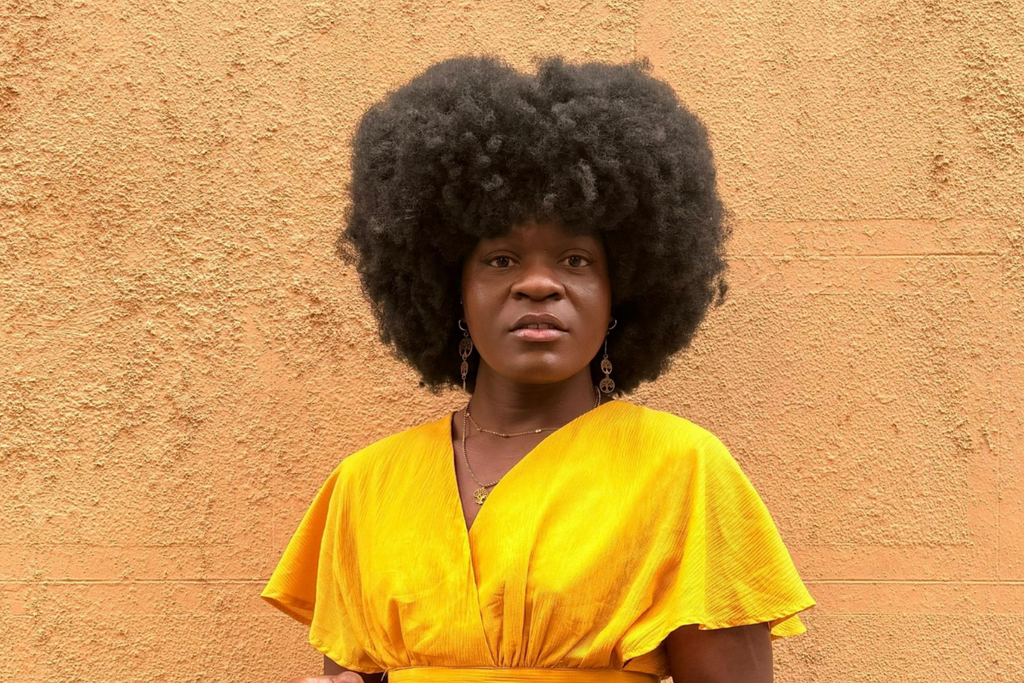
Rusly Cachina is a Member of Migrantia, Equality Technician, Head of Afro-Queer Migrations, Coordinator of Voz Migrantia Lavapiés, Coordinator of AMIGRAS, Activist, and Trans Expert Peer.
Guest authors work with Greenpeace to share their personal experiences and perspectives and are responsible for their own content.


